Repairs · Bramalea Woods
Garage Door Perimeter Weatherstrip in Bramalea Woods
With the door closed and the garage lights off, a thin bright line runs down the whole left side of the opening.
In plain words
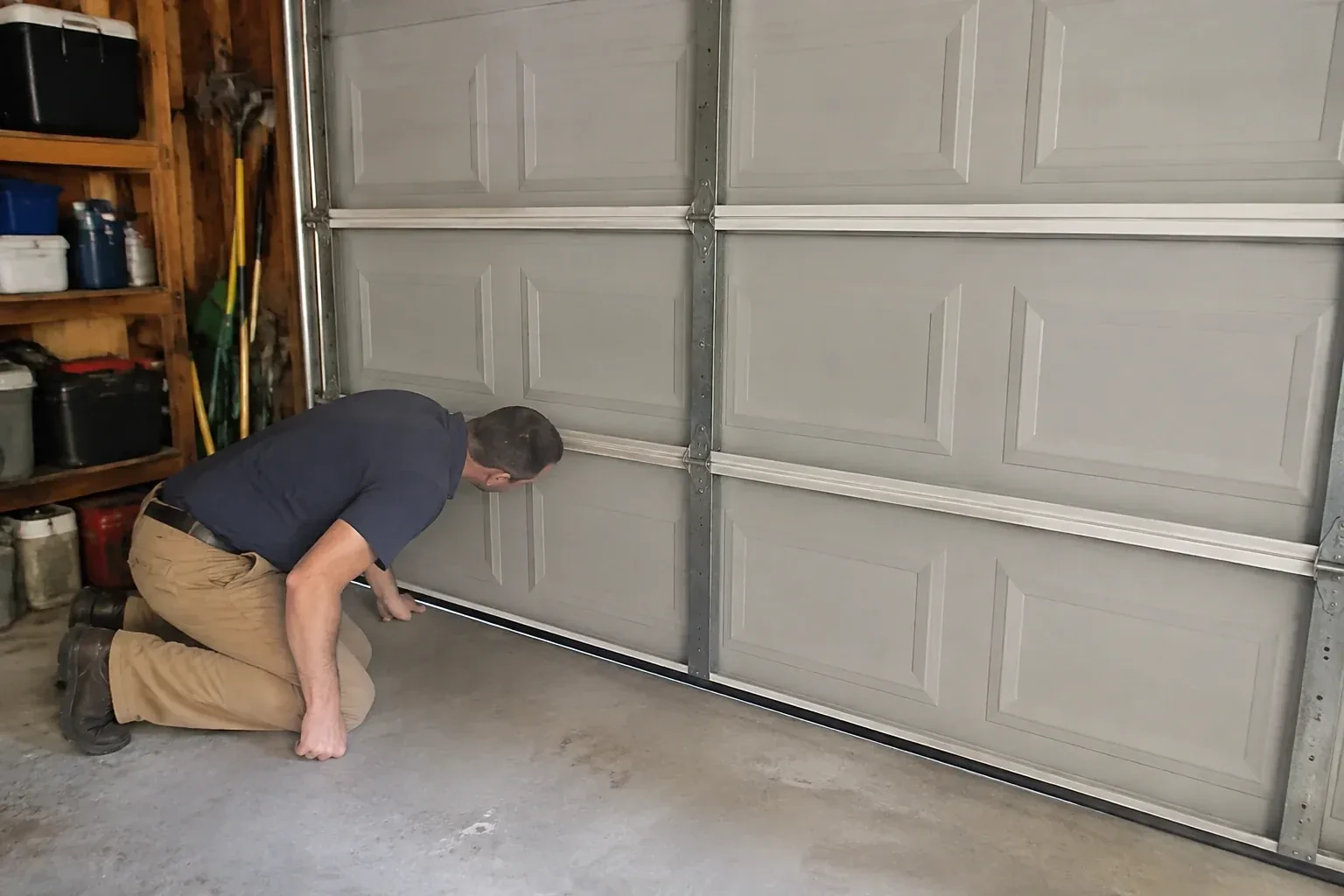
The job follows a steady order. First the door is closed and the gaps are found from inside, by daylight and by feel. Then the door itself is checked for how it sits in the opening, since a seal only works against a door that is square to the frame. The jambs and header are inspected for rot and for how the old strip is fixed. The old material comes off, the surface is cleaned and repaired where needed, the header piece is fitted first and the sides after it, and the door is cycled several times to confirm nothing catches. You are shown the result with the lights off.
How the visit goesA length of weatherstrip along the right jamb has pulled away, nails and all, and it slaps against the trim every time the wind picks up. The wood behind it is dark and soft where it meets the floor.
Garage Door Perimeter Weatherstrip
How the visit goes
How the door sits in the opening
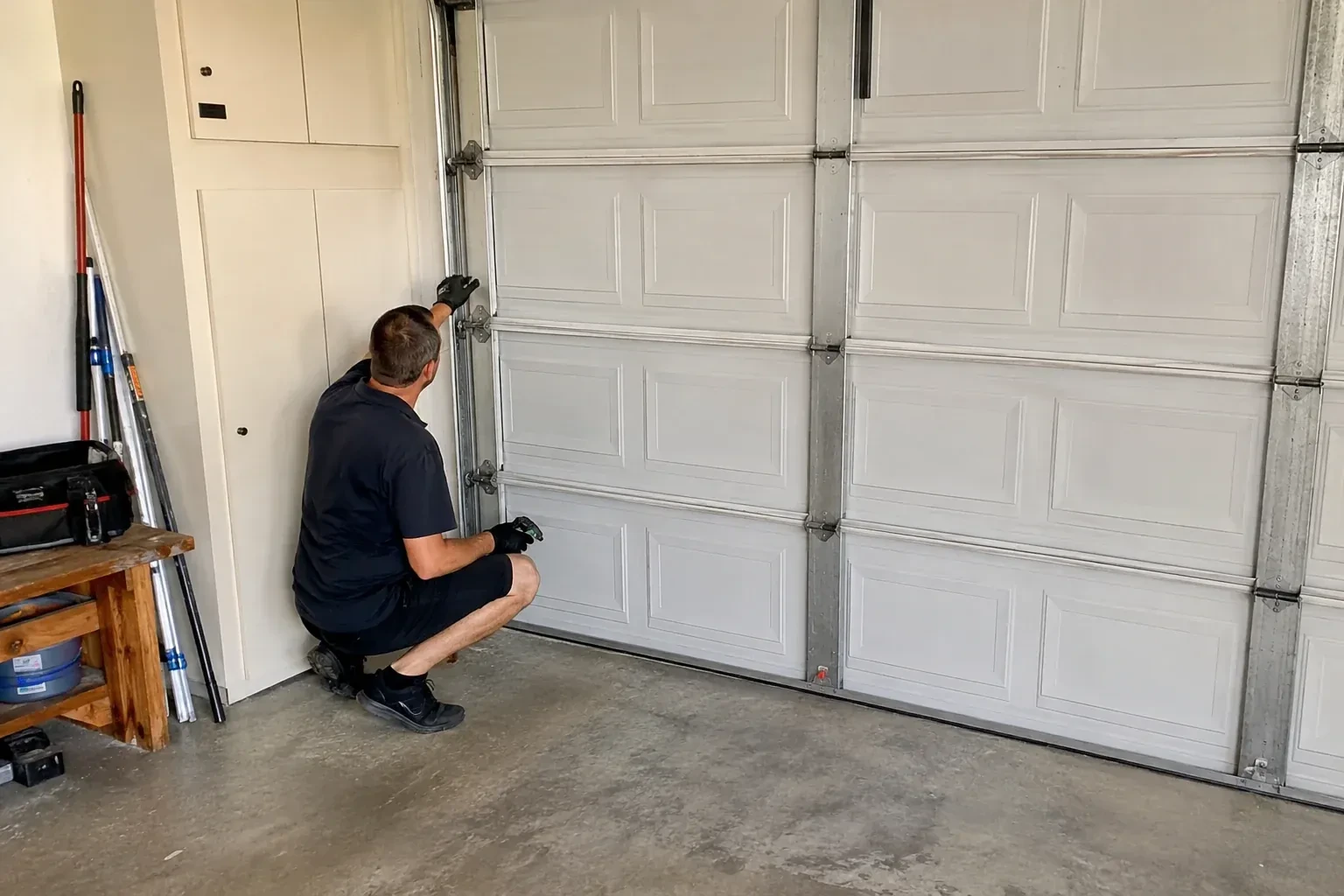
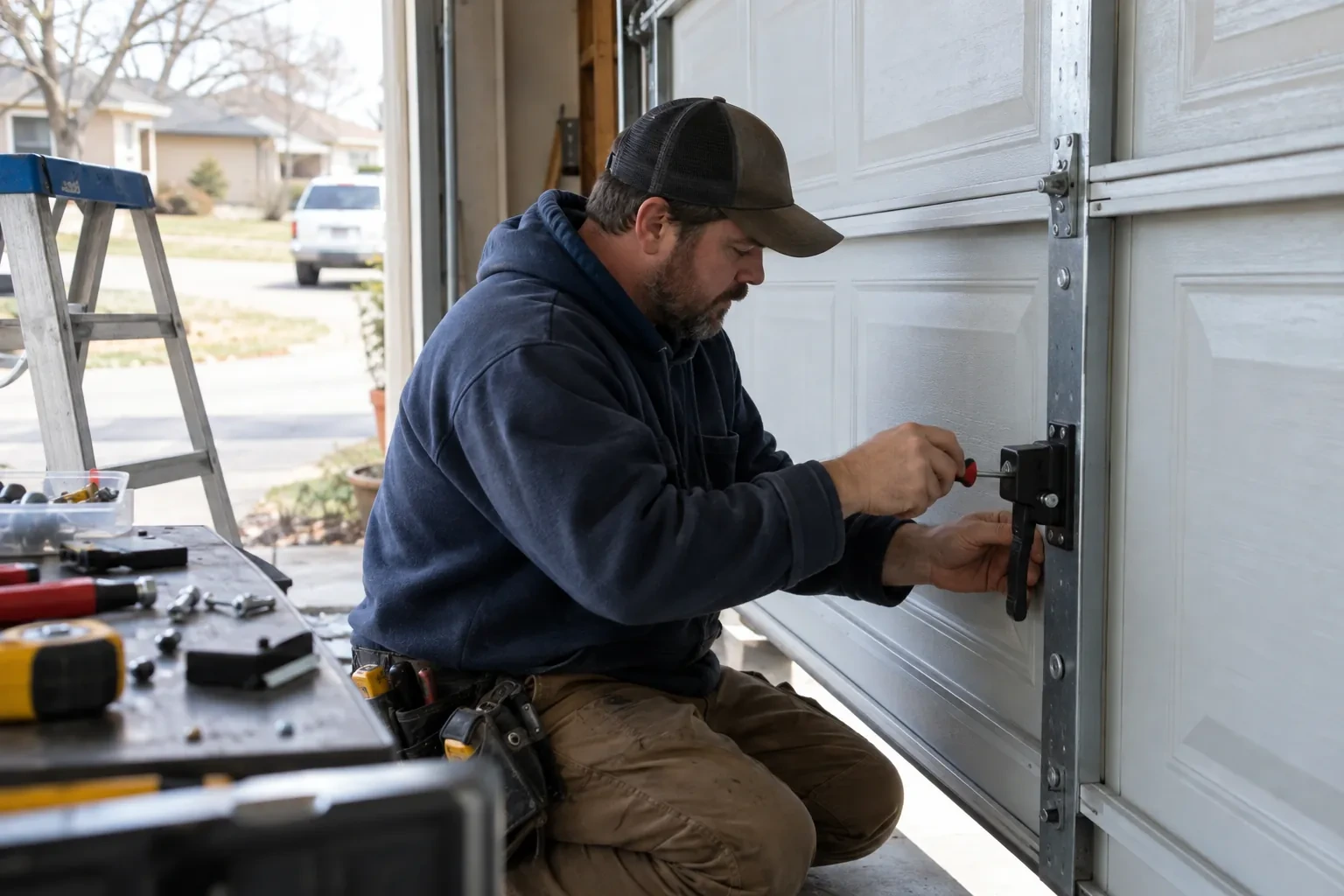
A perimeter seal can only follow a door that sits where the frame expects it, so the door is checked before any strip is ordered or cut. Each edge is checked for plumb, the gap to both jambs is compared, and the top section is watched as it meets the header to see whether it bows away or leans in. Rollers, hinges and the spacing of the vertical tracks are looked at because any of them can shift the door face toward one jamb and away from the other. Small corrections, such as re-setting a track bracket, are noted so the new seal is fitted to a door that closes square and stays that way.
Making the jamb sound
Where probing found soft wood, it is dealt with before the seal. Rot at the base of the jamb is cut back to solid material and a matching piece of lumber or PVC trim is spliced in, fixed and primed. Minor soft spots are hardened with an epoxy consolidant and filled. Fasteners that will hold the new stop are then going into wood that grips them, which is what keeps the strip tight through years of the door pressing on it. Where the jamb is clad, the technician finds the solid framing behind the cladding and fastens through to it rather than into the thin skin.
Keep paint off the fin
When the trim is next painted, the flexible fin stays bare. Paint fills the flexible material and stiffens it, and a stiff fin cracks well before its time once the cold takes hold. If the rigid part of the stop is wood, it can be painted, but with the brush kept off the fin or the fin masked. One-piece vinyl stop needs no paint at all and simply washes clean. This single habit is the difference between a seal that stays soft for many years and one that fails early, and it is the most common cause of early failure the technician sees.
Garage Door Perimeter Weatherstrip
In the van
Silicone spray lubricant
Vinyl stop moulding with integral seal
Exterior screws and weatherproof staples
Utility knife and mitre saw
Epoxy consolidant and exterior primer
Garage Door Perimeter Weatherstrip
What affects the quote
Partial replacement
Replacing one damaged length rather than all three is a smaller job, provided the remaining pieces are still soft and the profile can be matched.
Corner detailing
Mitred corners on a one-piece stop, or fitting round an unusual trim profile, take more cutting and fitting than butted corners on a plain jamb.
Commercial or oversized openings
Wider and taller commercial doors often carry an aluminum retainer with a rubber insert or a brush seal, and the material and fitting time differ from a residential vinyl seal.
What to have ready
- Does the door rub or catch on the seal when it moves?
- Is your garage attached to the house, and is it heated?
- Is the existing seal a flexible strip on a wood stop, or a one-piece vinyl moulding?
Garage Door Perimeter Weatherstrip: questions
QuestionsHow should I look after the new seal?
Four times a year, check for daylight from inside with the lights off and press the fin to feel that it is still soft. Wipe the seal with a damp cloth to clear grit and salt, keep paint off the fin, apply a silicone wipe before winter, and keep slush and bins away from the bottom of the jambs. Press any lifted corner back and call if a length has come loose.
How can I tell the side and top seal needs replacing?
Close the door, turn off the garage lights and look along the edges for daylight. Then press the fin with a thumb: it should be soft and spring back. Hardness, cracks, pieces missing, a strip hanging loose, snow or leaves inside along the edge, or a fin that has folded under and torn are all signs. A rubbing squeal as the door moves is another.
Will a new seal make the room above my garage warmer?
It can help. Drafts around the garage door cool the garage, and the garage cools the floor above it and the wall it shares with the house. Closing the perimeter cuts those drafts, though how much warmer the garage runs depends on the door's own seal, the ceiling insulation and how the space is heated, not the perimeter alone. A technician can talk through those as separate steps if the room stays cold.
Related services
- Garage Door Tune-UpHalfway up, the door shudders.
- Off-Track Garage Door ResetThe morning after a thaw the opener groaned, the door stayed stuck to the icy floor for a second, then lurched up crooked.
- Garage Door Panel ReplacementAfter an overnight freeze the door stuck to the slab, the opener strained, and something gave.