New Doors · Bramalea Woods
Commercial Rolling Door Repair in Bramalea Woods
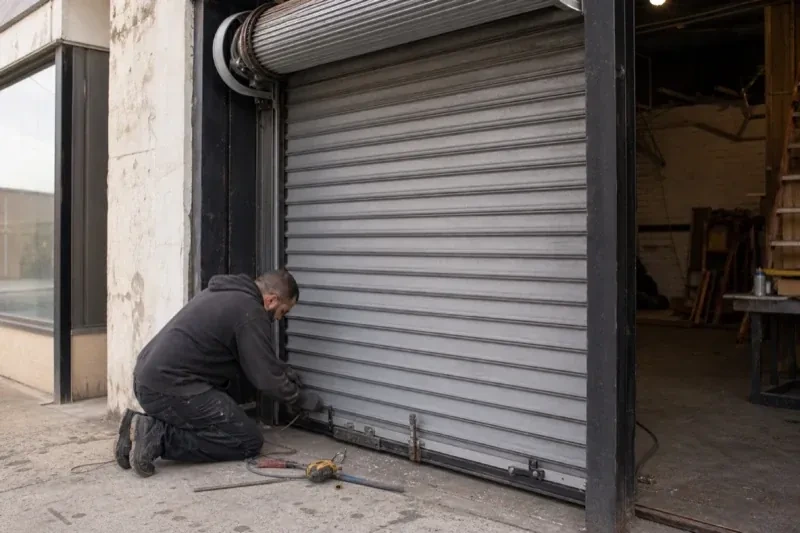
Cold-weather moisture has frozen the bottom seal to the sill, and salty grit has collected along the guide entrances.
In plain words
Powered rolling doors add controls and protective devices to the mechanical assembly. A closing complaint may begin at the control station, interlock, sensing edge or photoelectric sensor rather than inside the operator. The visit checks the curtain's free movement first, then follows control response, brake action, limit settings, manual disconnect or hoist and external protection suited to that system. Compatible repairs are completed with the operating instructions in hand. Testing covers normal commands, stopping points, manual operation and protective-device response so staff understand how the restored door is intended to behave.
How the visit goesAt closing time, the bottom bar reaches the floor on one end while daylight remains under the other. The slide bolts miss their keepers, leaving staff unable to secure the business opening in its usual way.
Commercial Rolling Door Repair
How the visit goes
Read the curtain from bottom to coil
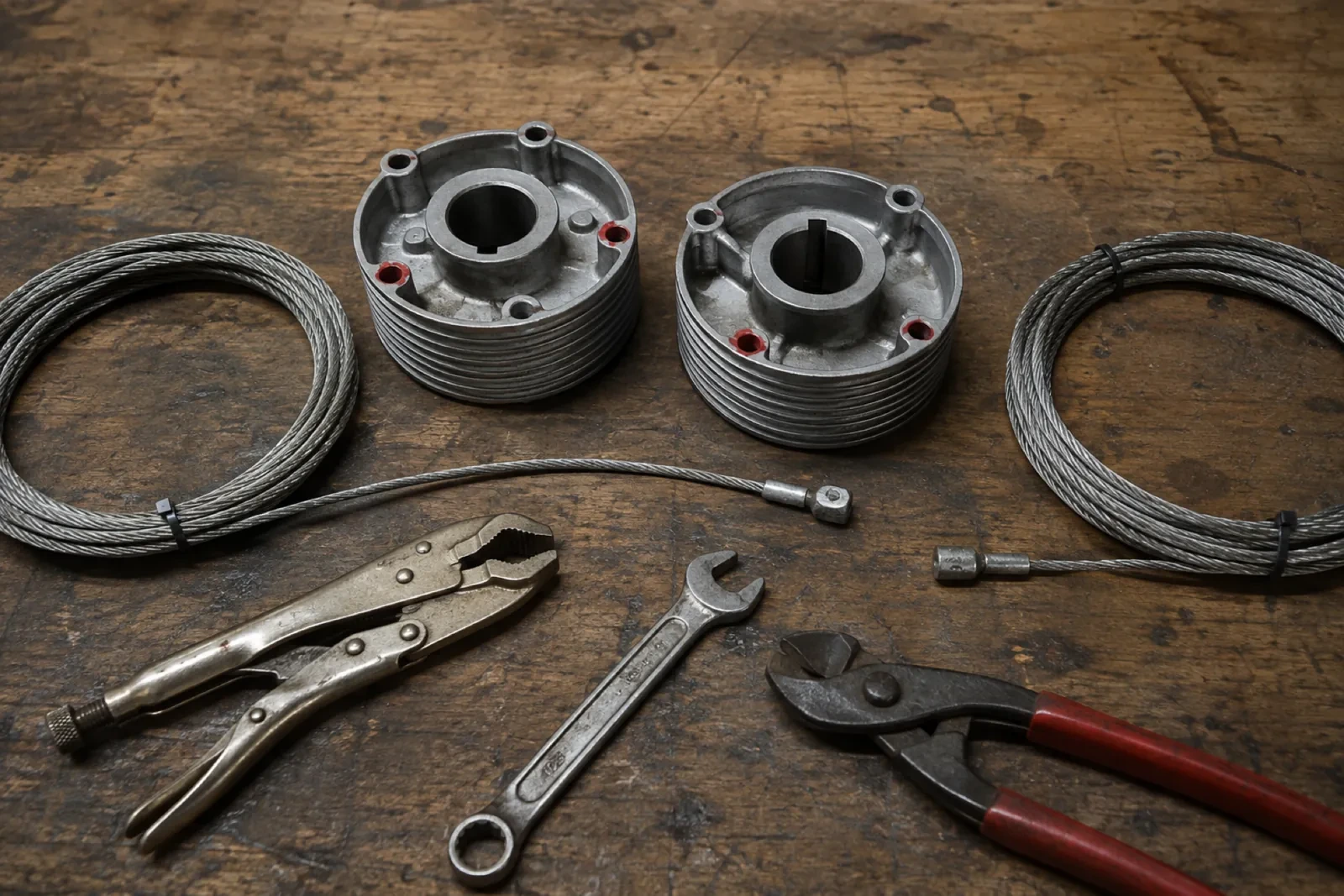
The curtain reveals how the door has been travelling. The bottom bar is checked for level, twist, impact marks and even contact with the sill. Moving upward, the inspection follows interlocking slats or sheet material, endlocks and windlocks for dents, separation, missing fasteners, polished rub marks or sideways shift. At the hood, the technician observes how the material enters the coil and whether it stacks evenly on the barrel. These clues show whether a damaged section can be renewed locally or whether distortion has spread far enough to affect guides, brackets and counterbalance.
Renew damaged curtain sections
When damage is confined to serviceable slats or a section of sheet curtain, the affected material is brought to an accessible position and supported. Endlocks, windlocks or fasteners are removed in the sequence suited to that construction, the distorted pieces are separated, and compatible replacements are fitted with the correct orientation and spacing. Adjacent material is checked because impact can stretch joints beyond the obvious dent. The repaired curtain is guided through the opening by hand under control, confirming that the new section flexes into the coil and travels past the guide entrances without catching.
Documentation for a labelled fire door
When the assembly carries a fire-protection label, the customer receives a record that keeps ordinary operation and fire-door responsibilities connected but distinct. It identifies relevant labels, compatible repaired parts, closing-path observations and the inspection or test activity included in the authorised scope. Any release-system, alarm-interface or building-fire-plan item assigned elsewhere is named clearly. The facility can retain this with its fire-safety records and continue the inspection schedule required for closures in fire separations. Guides and the doorway remain free of storage so the door can follow its intended closing path.
Commercial Rolling Door Repair
In the van
Hand-chain hoist components
Photoelectric sensors
Operator brake and limits
Windlocks and curtain fasteners
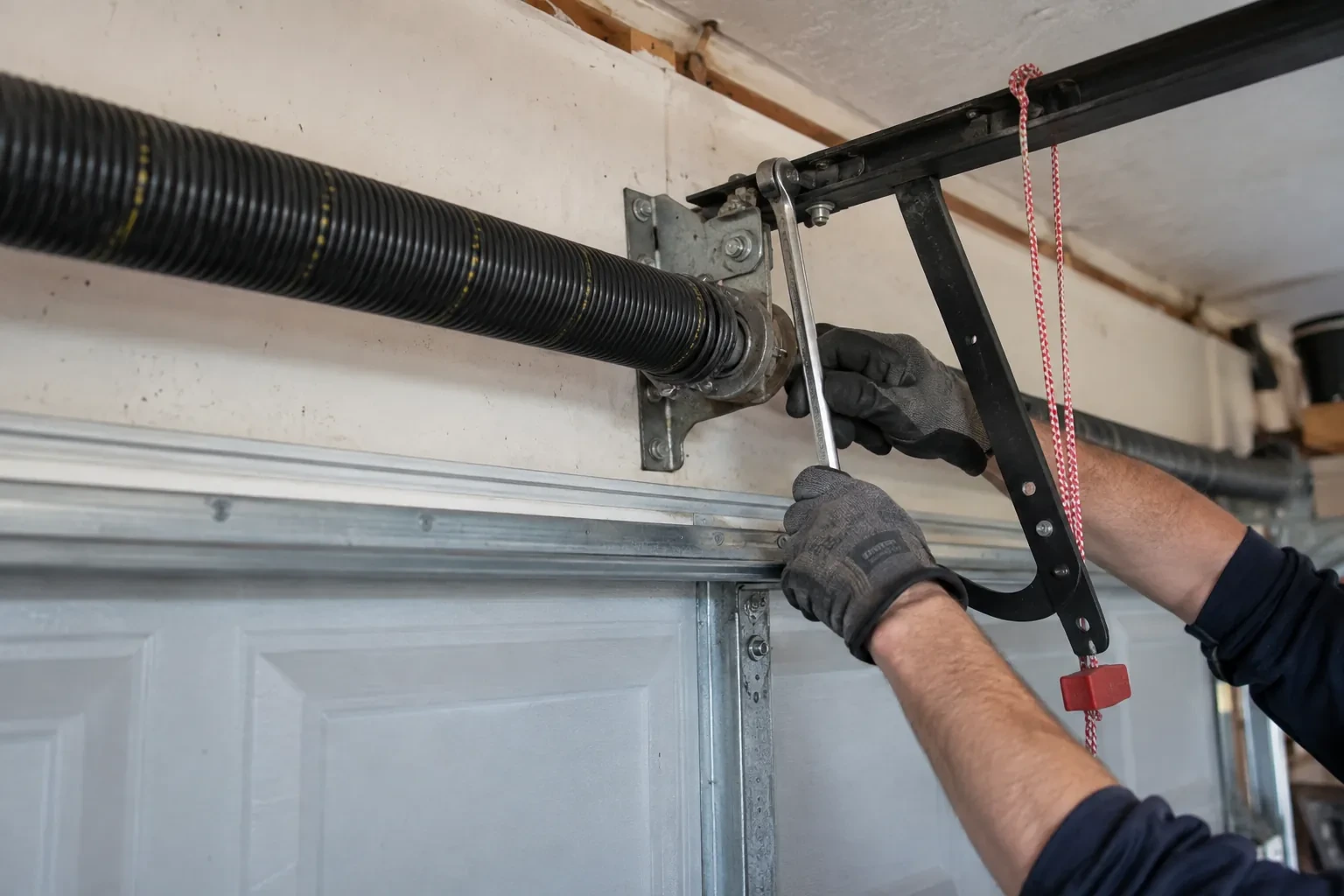
Counterbalance spring assembly
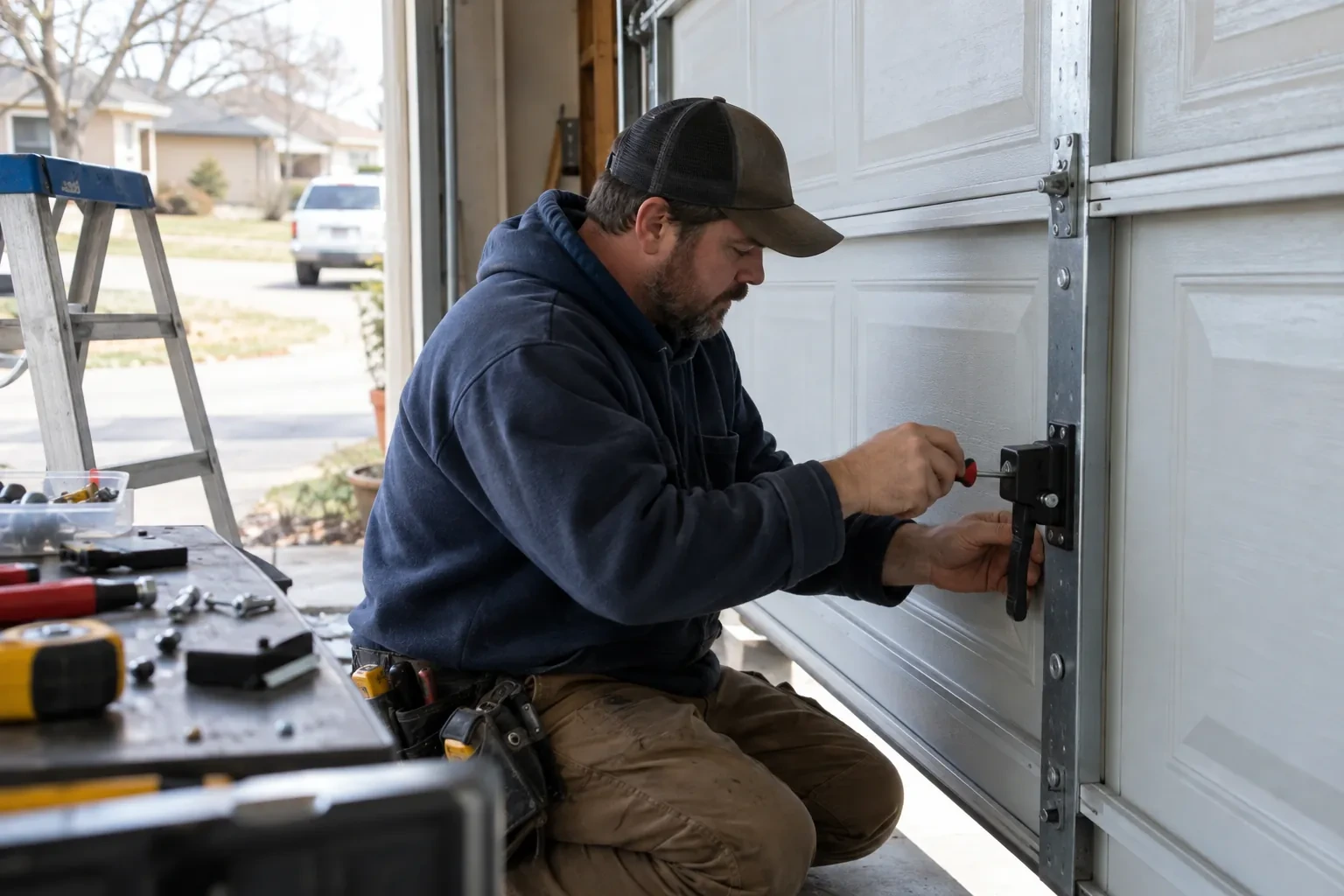
Commercial Rolling Door Repair
What affects the quote
Protective device scope
Photoelectric sensors, sensing edges, light arrays and vehicle-detection accessories serve defined roles. Quantity, mounting, wiring condition and operator requirements determine repair and test work.
Counterbalance condition
Spring adjustment, bearing service and replacement of worn barrel-related parts require different labour and controls. Door weight, spring arrangement and operating position shape the counterbalance plan.
Curtain position when work begins
A curtain resting closed, stopped mid-travel or held near the hood presents a different securing and access plan. Its position affects how components can be reached and supported.
What to have ready
- What happens when staff use the normal control?
- Has manual effort, noise or travel changed gradually?
- Are door, operator or previous service records available?
Commercial Rolling Door Repair: questions
QuestionsWhy is there a grinding or clattering sound near the hood?
Noise at the head can come from worn barrel bearings, loose brackets, misaligned drive chain or sprockets, shifting slats, an uneven coil or hardware contacting the hood. The pattern matters: once per revolution suggests something different from continuous guide scrape. Controlled observation locates the source before a specific part is selected.
What information helps before the visit?
Useful details include the opening size, curtain material, manual or powered operation, model labels, current door position, recent impact or weather event and the exact point where travel changes. Photos of the full opening, bottom bar, controls and labels can clarify the system. Mention a fire-protection label at the outset so that scope is recognised.
Why does the door stop and reverse while closing?
A photoelectric beam may be blocked, a sensing edge may be active, the curtain may meet resistance, or the operator may be responding to a monitored-device or limit condition. The inspection keeps these possibilities separate. Sensor placement, alignment and response are checked alongside free mechanical travel and the operator's documented control logic.
Related services
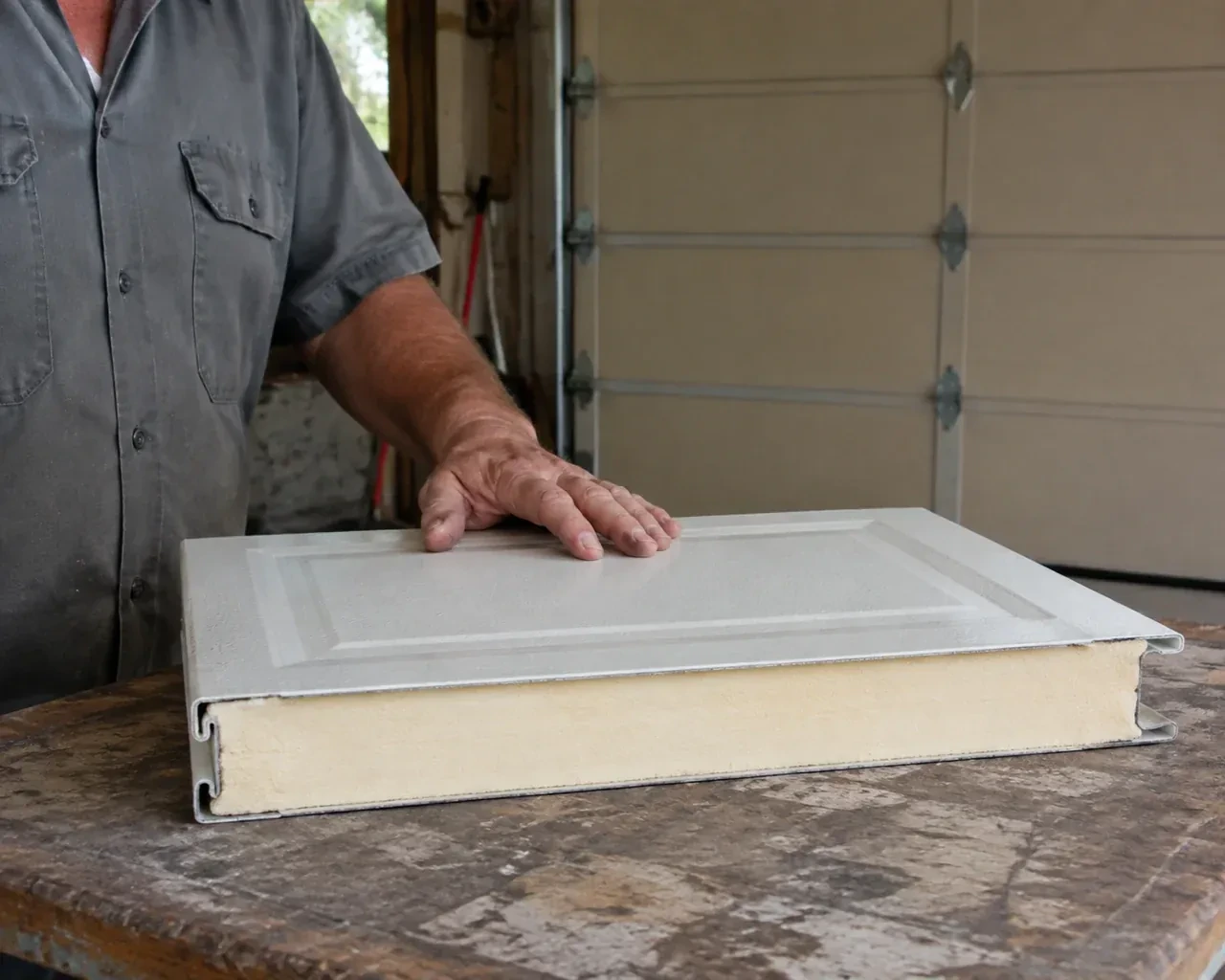
- Insulated Steel Garage Door InstallationA refreshed exterior has made the faded garage door stand out.
- Wind-Rated Garage Door ReplacementStrong gusts make the centre of your wide garage door bow inward and the rollers chatter in their tracks.
- Carriage-House Garage Door InstallationThe existing door has reached the point where panels, rollers and finish all look tired.