Openers · Brampton
Belt-Drive Opener Repair
There is a new squeal from the front of the rail, up near the header, on every cycle.
In plain words
Winter is a good season to have a belt drive looked at. Rubber stiffens in a cold detached garage, so a belt tensioned on a warm day can run tight and noisy in January, and a bottom seal frozen to the slab makes the operator reverse before the door has moved. Belt-drive opener repair in cold weather sets tension to the maker's specified measurement, frees a trolley release that has stiffened, frees a door frozen to the floor before the opener moves it, and puts a cold-rated lubricant on the door hardware. The belt stays dry; the hinges, rollers and springs get the care.
How the visit goesIt is minus twenty in the detached garage and the door climbs in jerks, the belt stiff as a board. By the afternoon, when the sun has been on the door, it runs almost normally again.
Belt-Drive Opener Repair
How the visit goes
Rail, joints and whatever is rubbing
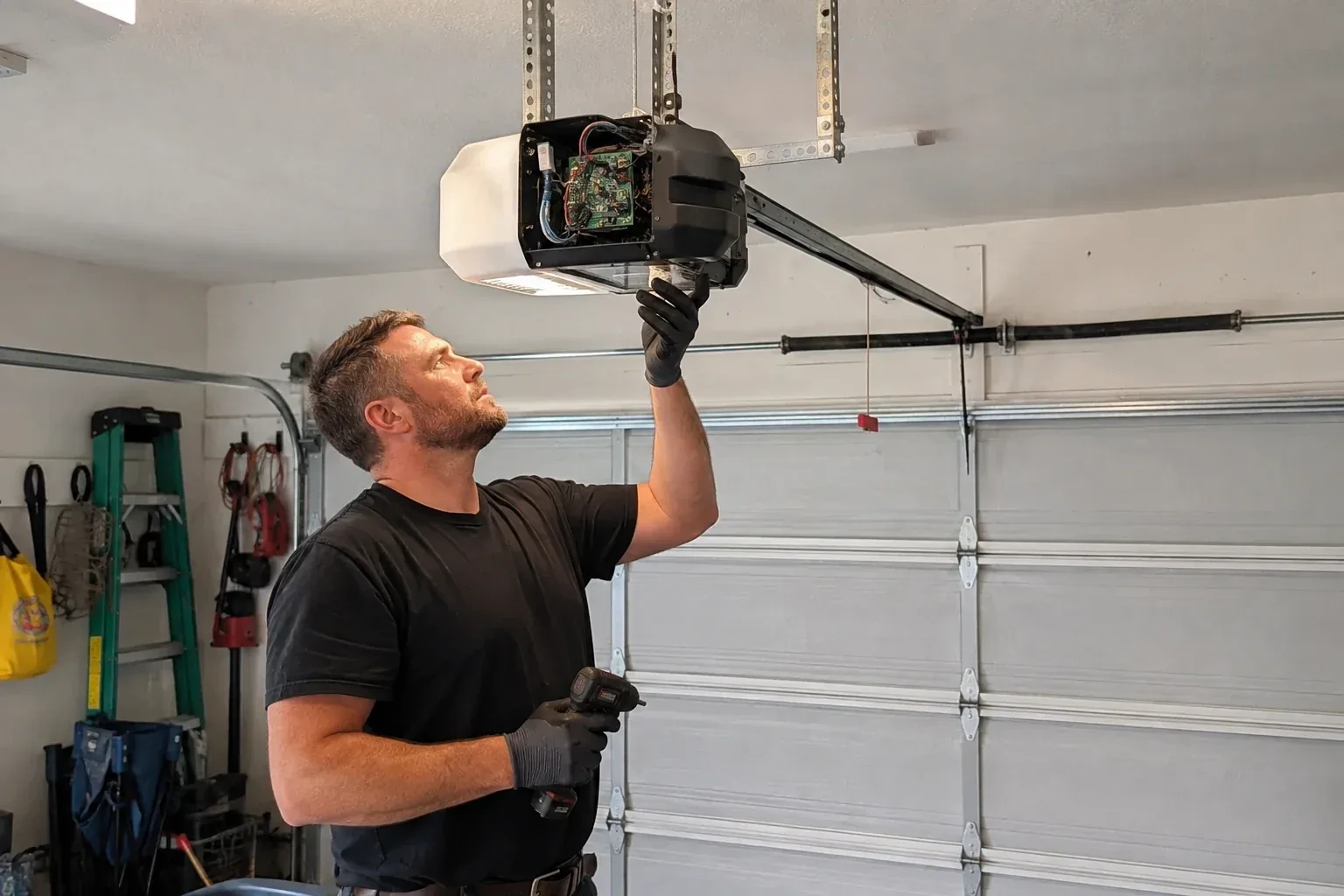
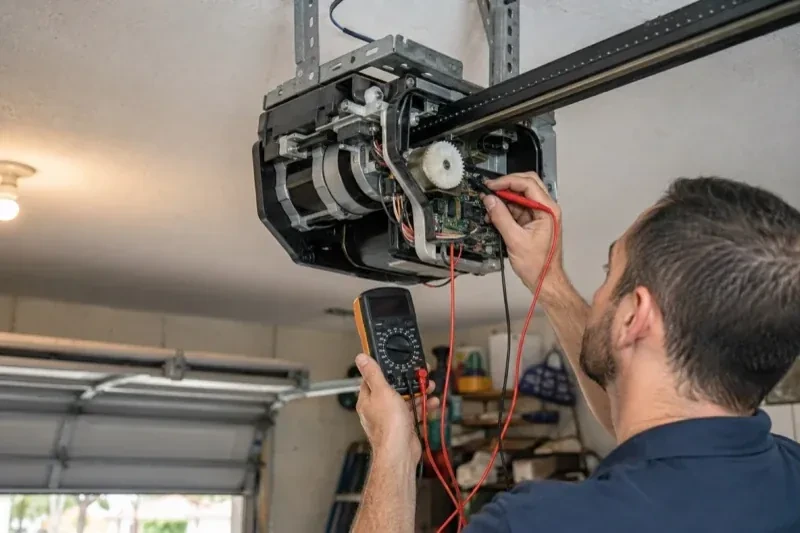
A belt frays for a reason, and the reason is usually somewhere along the rail. The technician sights the rail from the header to the motor head for a bend, a sag where a hanger has loosened, or a joint between rail sections that has stepped out of line and is catching the belt teeth each pass. Marks inside the rail show where the belt has been touching. Storage racks, a bicycle hook or a truck's roof rack lifting the rail are frequent finds. A straight, true rail lets a belt run for years without touching anything, so any of these is corrected as part of the repair rather than left to wear the new belt.
Re-tensioning a belt that has stretched
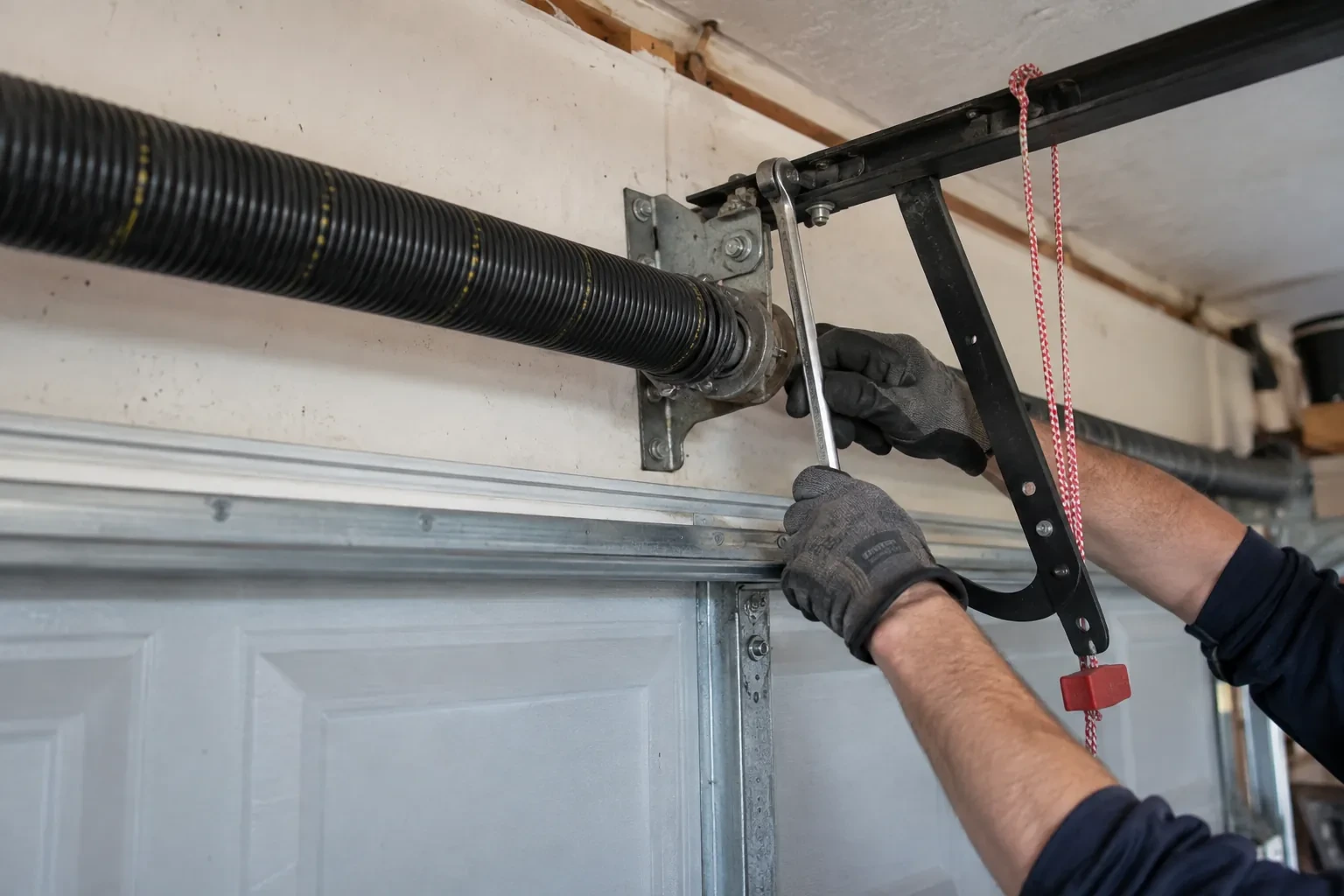
With the operator unplugged and the trolley released from the door, the technician turns the square nut on the inner trolley a little at a time, drawing the belt up until the tension spring reaches the length the maker specifies. Each turn lifts the belt slightly. They press the belt at mid-span to feel for the small give that means it is neither slack nor strained, then reconnect the trolley and run the door by motor, listening at the sprocket for the rattle that says the belt is still loose or has gone too tight. A belt that will not reach its spring length with the adjuster at its limit has stretched too far and is replaced instead.
The hush is back
What you notice first is the sound, or the lack of it. A belt drive in good order starts softly, hums along the rail and eases to a stop, and after the repair it should sound the way it did the week it was installed. The clack of a loose belt, the squeal of a dry pulley and the growl of a stripped gear are gone because their causes are gone, not masked. Listen for that baseline over the next few weeks; a new noise arriving is the earliest warning you will get, and a belt drive tends to announce trouble months before it stops. A short call at that stage is a small adjustment.
Belt-Drive Opener Repair
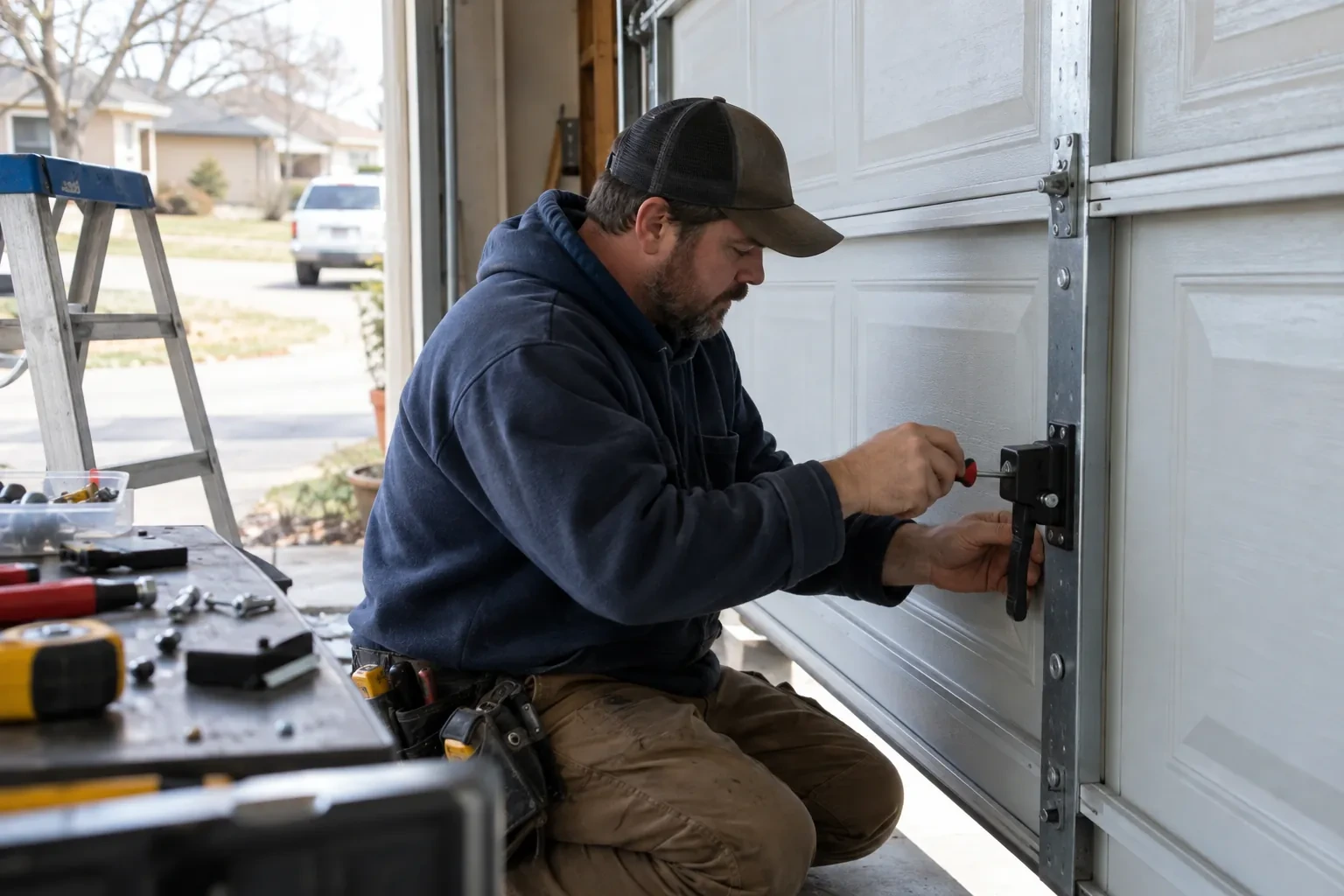
In the van
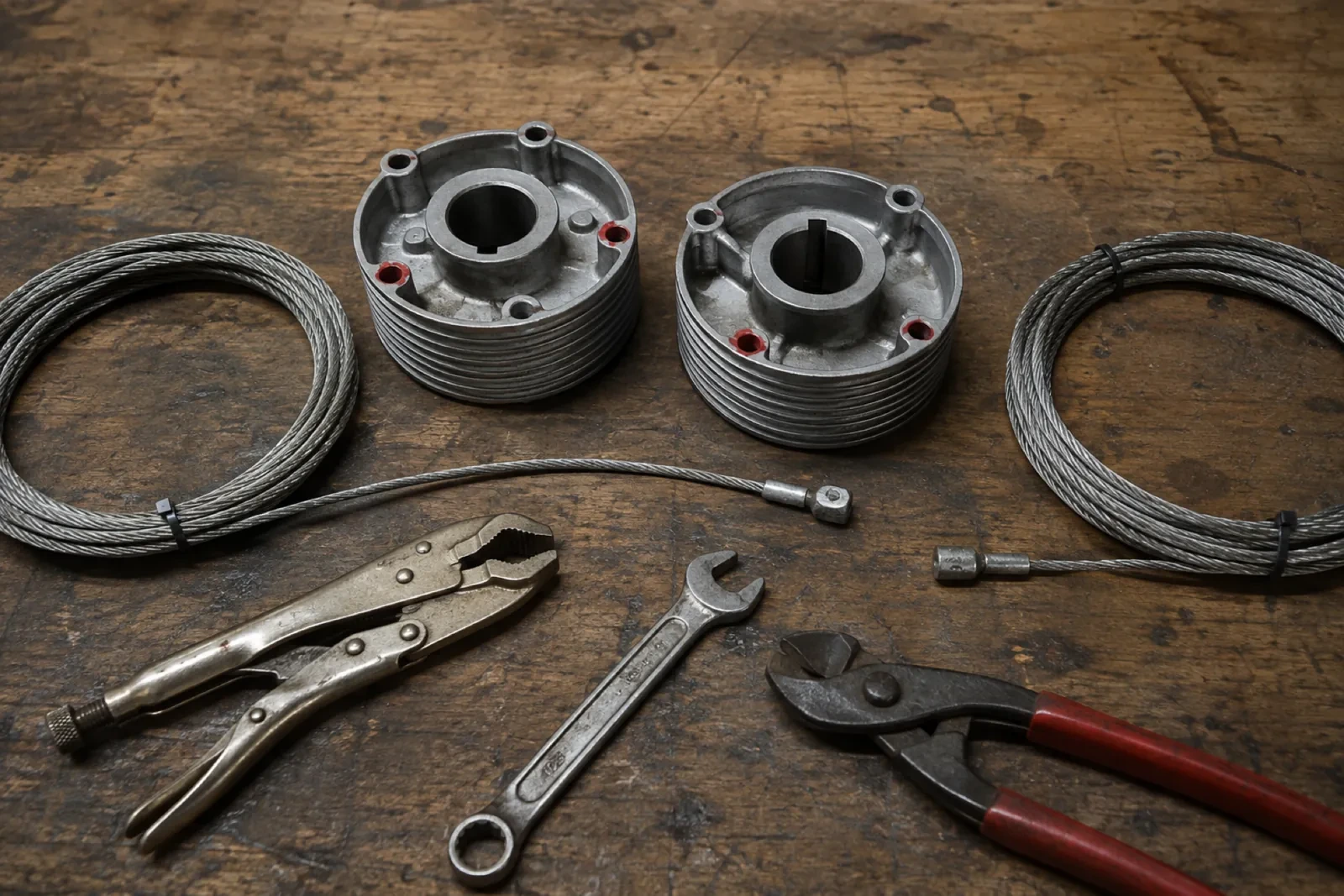
Idler pulley and bearing
Rail hanger straps and fasteners
Drive gear and sprocket kit
Belt tension spring and square nut
Inner and outer trolley
Belt-Drive Opener Repair
What affects the quote
Trolley condition
A trolley that releases and re-engages cleanly stays. One that is cracked, stuck or loose on the rail is replaced during the same visit and listed as its own part.
Idler pulley
A squealing or wandering pulley at the header end of the rail is a separate part and a few extra minutes with the belt slack, quoted only when the inspection finds it.
When you call
An evening, weekend or holiday visit costs the same amount as a weekday one for a belt-drive repair. The technician looks at the belt, trolley and rail once on site, and the exact figure follows from what is actually found, not from the day of the week.
What to have ready
- Is the garage heated and attached to the house, or a cold detached one?
- What make and model is printed on the motor head, and roughly how old is it?
- Can you send a photograph along the rail showing the belt, and one of the label?
Belt-Drive Opener Repair: questions
QuestionsThe motor runs but the door stays still. What has happened?
Something between the motor and the door has let go. On a belt drive the usual suspects are a broken clip where the belt joins the trolley, a belt that has jumped off the sprocket or idler pulley, a trolley that failed to re-engage after the red cord was pulled, or a stripped drive gear inside the motor head, which leaves plastic shavings on the housing. Each is a specific repair.
What is the difference between belt-drive repair and opener replacement?
Repair keeps the operator you have and renews the piece of the drive that has failed: the belt, its tension, the trolley, the idler pulley or the gear and sprocket at the motor head. It suits a unit with a sound motor and board, photo eyes near the floor and rolling-code remotes. Replacement is the answer when the operator predates those features or when its board or motor has failed and is no longer made.
Can the belt just be tightened, or does it need replacing?
Tightening is the first thing tried. Tension is set at the inner trolley by a square nut that compresses a spring to the length the maker specifies. If the belt reaches that setting and runs without sprocket noise, it stays. If the adjuster is wound to its end and the belt still sags, or the rubber is cracked, glazed or missing teeth, a new belt is the right repair.
Related services
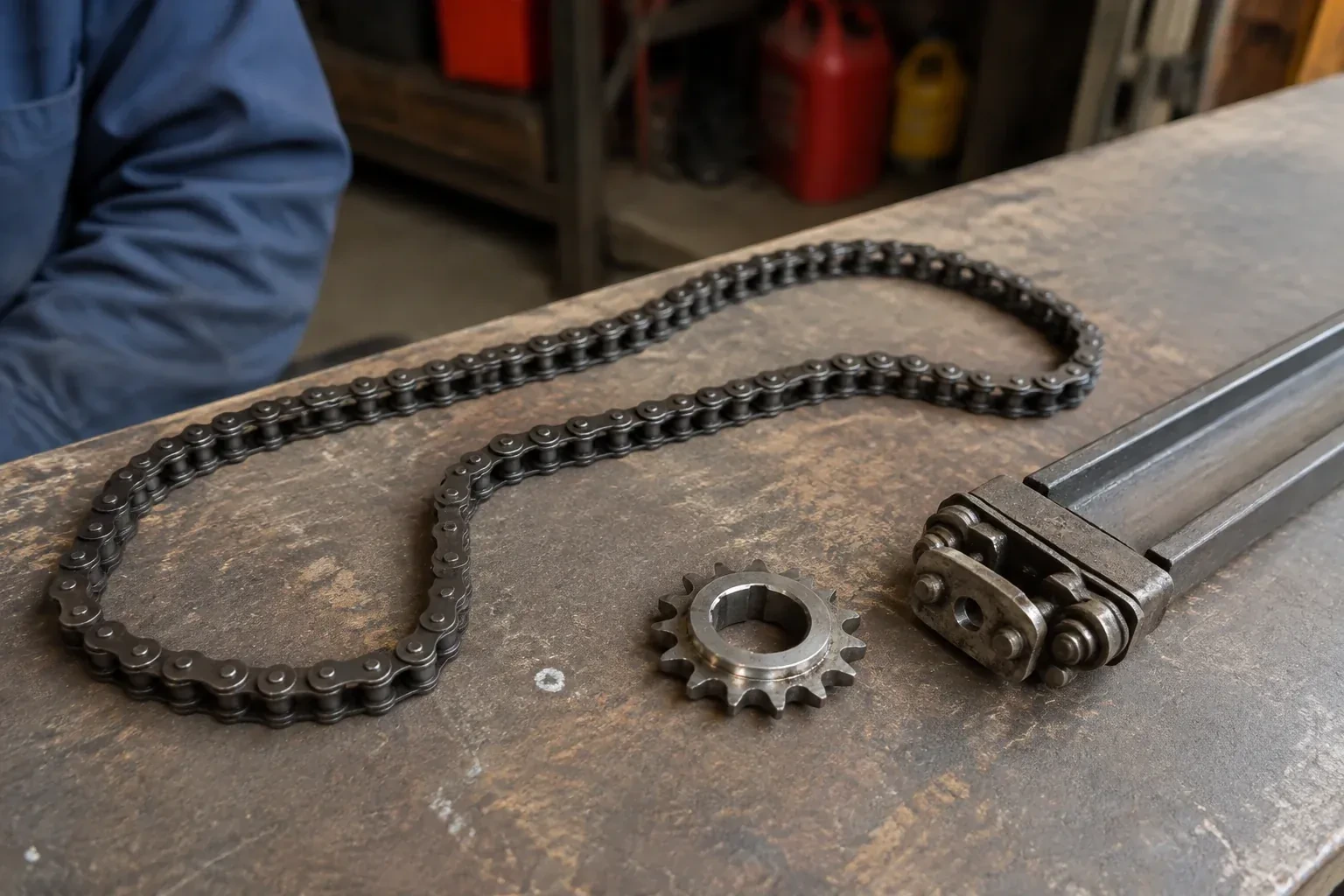
- Chain-Drive Opener RepairThe motor runs, you can hear it working, but the door never moves.
- Garage Door Opener ReplacementYou swapped the old wooden door for a heavier insulated steel one, and the twenty-year-old opener that was kept has never settled.
- Photo-Eye Sensor Alignment or ReplacementThe small light on one of the sensors near the floor has gone dark, or it flickers when someone walks past the track.