New Doors · Brampton
Commercial Sectional Door Repair
Each opening cycle brings a metallic knock followed by a shudder through the horizontal track.
In plain words
Unusual sound is useful diagnostic information on a commercial sectional door. A knock at the track curve suggests different issues from a steady bearing growl, a scraping section or operator-chain chatter. The technician listens during a controlled cycle, then inspects the hardware at the point where the sound appears. Worn rollers, loose hinges, dry bearings, displaced track and drive components can each be dealt with directly. The completed repair finishes with lubrication where specified and repeated observation of the previously noisy part of travel.
How the visit goesCold weather has exposed a widening gap below the closed door. The bottom retainer is bent, the rubber seal is split, and uneven seating lets drafts and slush enter the work area.
Commercial Sectional Door Repair
How the visit goes
Inspecting the closed opening
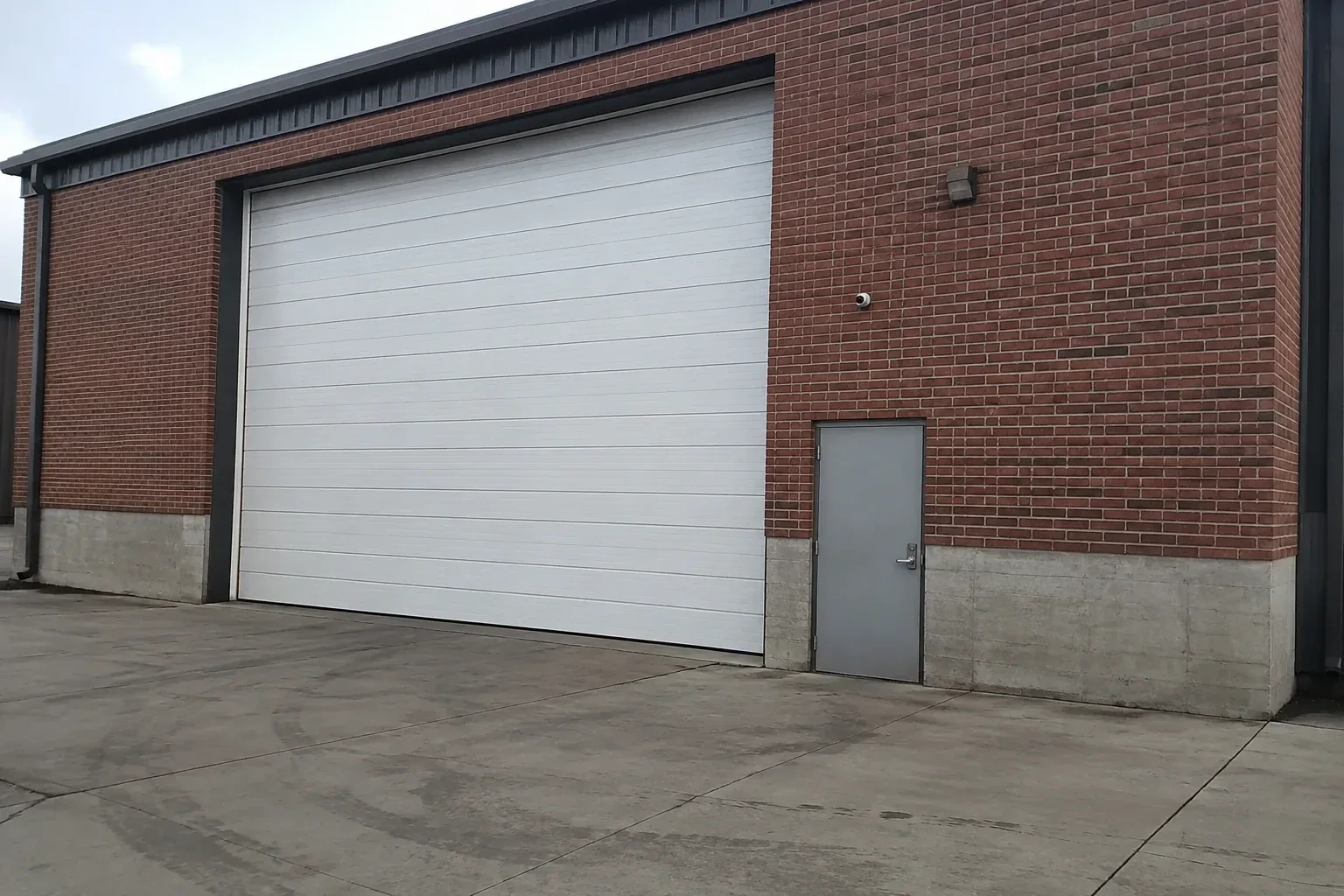
A door that leaks air or admits slush is examined in its fully seated position. The technician compares the bottom edge with the floor, checks compression along the seal and looks for a bent retainer or distorted lower section. Side and header weatherstrip contact is observed without forcing the sections against the jambs. Light gaps can also reveal a door that is out of level or a track set too far from the opening. The assessment connects seal condition with landing position so the repair improves fit without creating binding during travel.
Re-establishing the weather seal
A damaged bottom seal is removed from its retainer, and the retainer is straightened or replaced when impact has distorted it. The new seal is sized for the door and floor condition, then fed evenly so it reaches both corners without stretching. Side and header weatherstrip are positioned for continuous contact while leaving the door free to move. If an uneven landing caused the original gap, cable level or track position is corrected first. The final fit is viewed from both sides with the door closed and checked again after cycling.
A repaired section that works with its neighbours
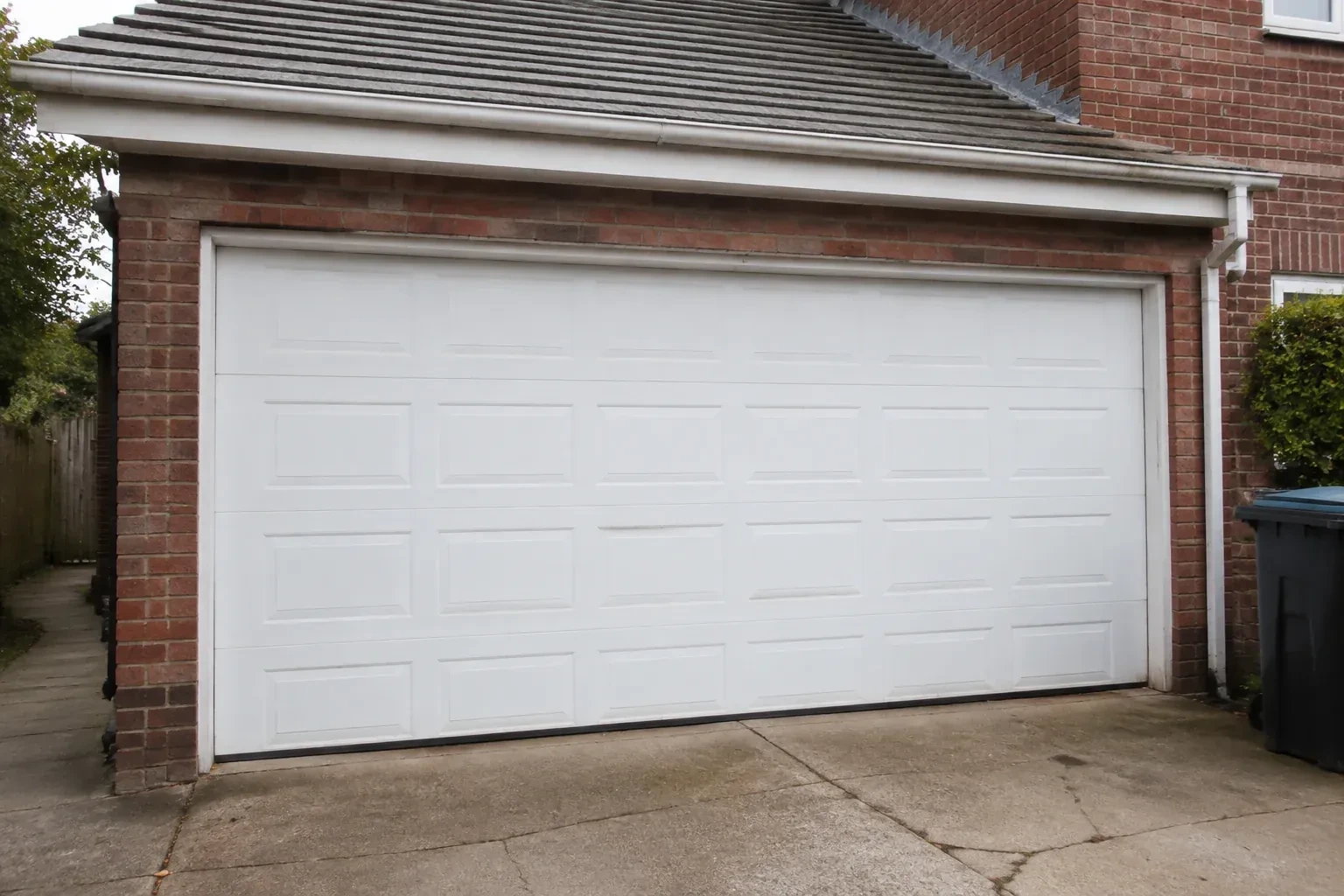
A replacement panel leaves the door with continuous joints, secure hinges and reinforcement suited to the opening. Colour and surface texture may show normal differences between new and weathered material, while the functional check focuses on articulation, roller clearance and even contact at the seals. Washing the exterior with products allowed by the door manufacturer helps protect the finish. Future impact marks near an end stile or bottom fixture deserve early attention because these areas connect the panel to the guidance and lifting systems.
Commercial Sectional Door Repair
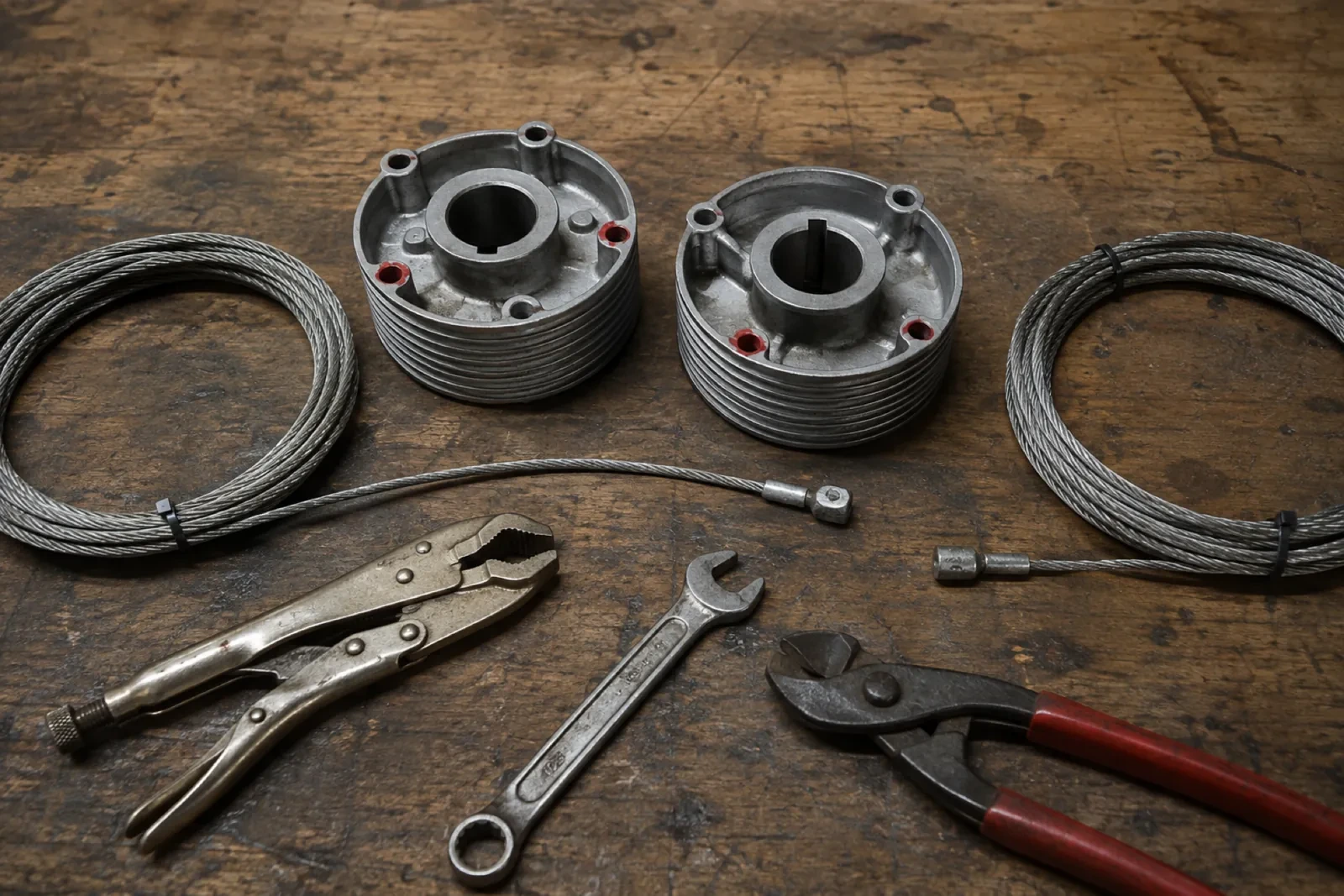
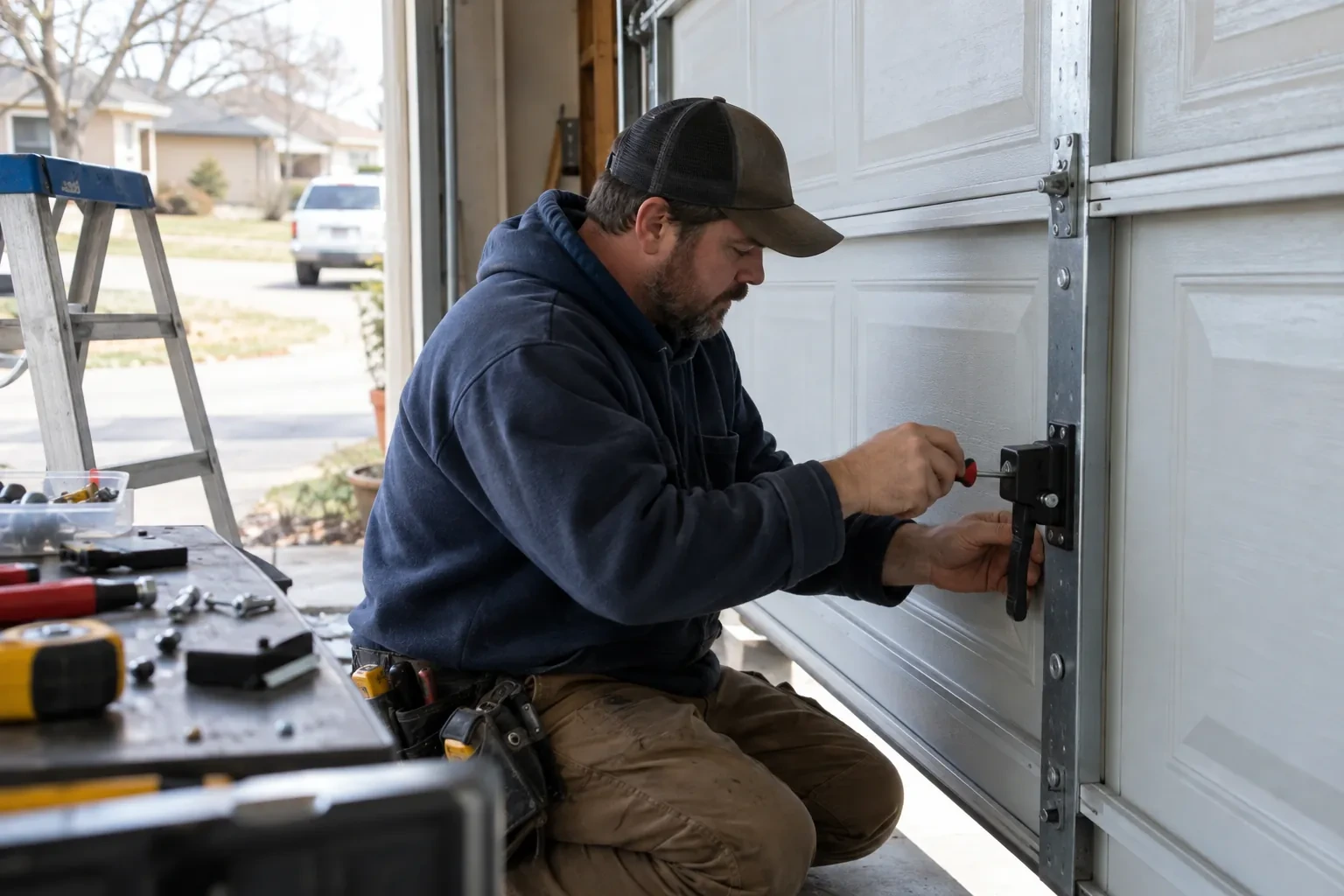
In the van
Lift cables and drums
Vertical and horizontal track
Torsion springs
Bottom seal and retainer
Numbered end hinges
Commercial Sectional Door Repair
What affects the quote
Extent of impact transfer
A dent confined to one section differs from force that also bent an end stile, roller, guide rail, jamb bracket or supporting anchor.
Door size and moving weight
Opening dimensions, panel construction, reinforcement and overall door weight determine component ratings, handling methods and how much support is required during the repair.
Lift and track configuration
Standard, low-headroom, high-lift and vertical-lift arrangements use different track geometry, drums, cables and access methods, so the installed configuration shapes labour and parts.
What to have ready
- Are any cables visibly loose, crossed or frayed?
- Is the door operated electrically, by hoist or by hand?
- Can traffic use another opening during the work?
Commercial Sectional Door Repair: questions
QuestionsHow often should commercial door hardware be inspected?
The appropriate interval follows the door and operator manuals, operating cycles, environment and facility maintenance plan. A heavily used exterior bay may need attention more often than a lightly used interior opening. Staff can still observe cables, seals, sensors, sound and travel during normal operation, while tensioned components and adjustments remain part of a technician's planned inspection.
What causes a commercial sectional door to become noisy?
Common sources include roller-bearing wear, loose hinges, dry pivots, a rubbing panel, track movement, shaft-bearing wear and operator-chain vibration. The point in the cycle where the sound occurs helps isolate it. A technician watches and listens during controlled travel, looks for play or contact marks, and services the component creating the repeatable noise.
How are springs and cables handled during repair?
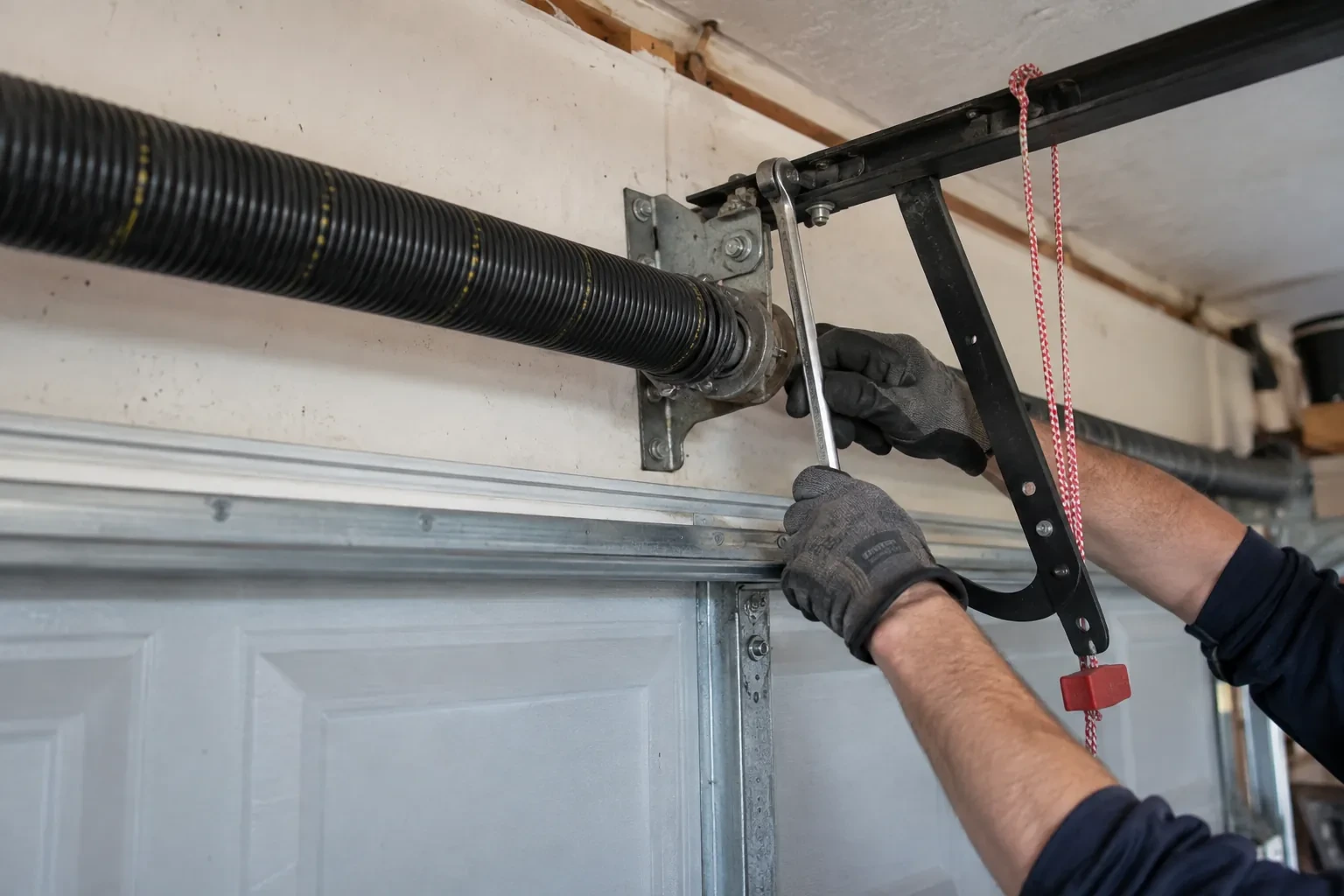
The technician first controls the door's weight and position with suitable supports or clamps. Stored spring energy is then managed with proper winding tools and a defined sequence before connected parts are loosened. Cables, drums and springs are matched to the door and lift geometry, installed with the system secured, and checked for level tension through controlled movement.
Related services
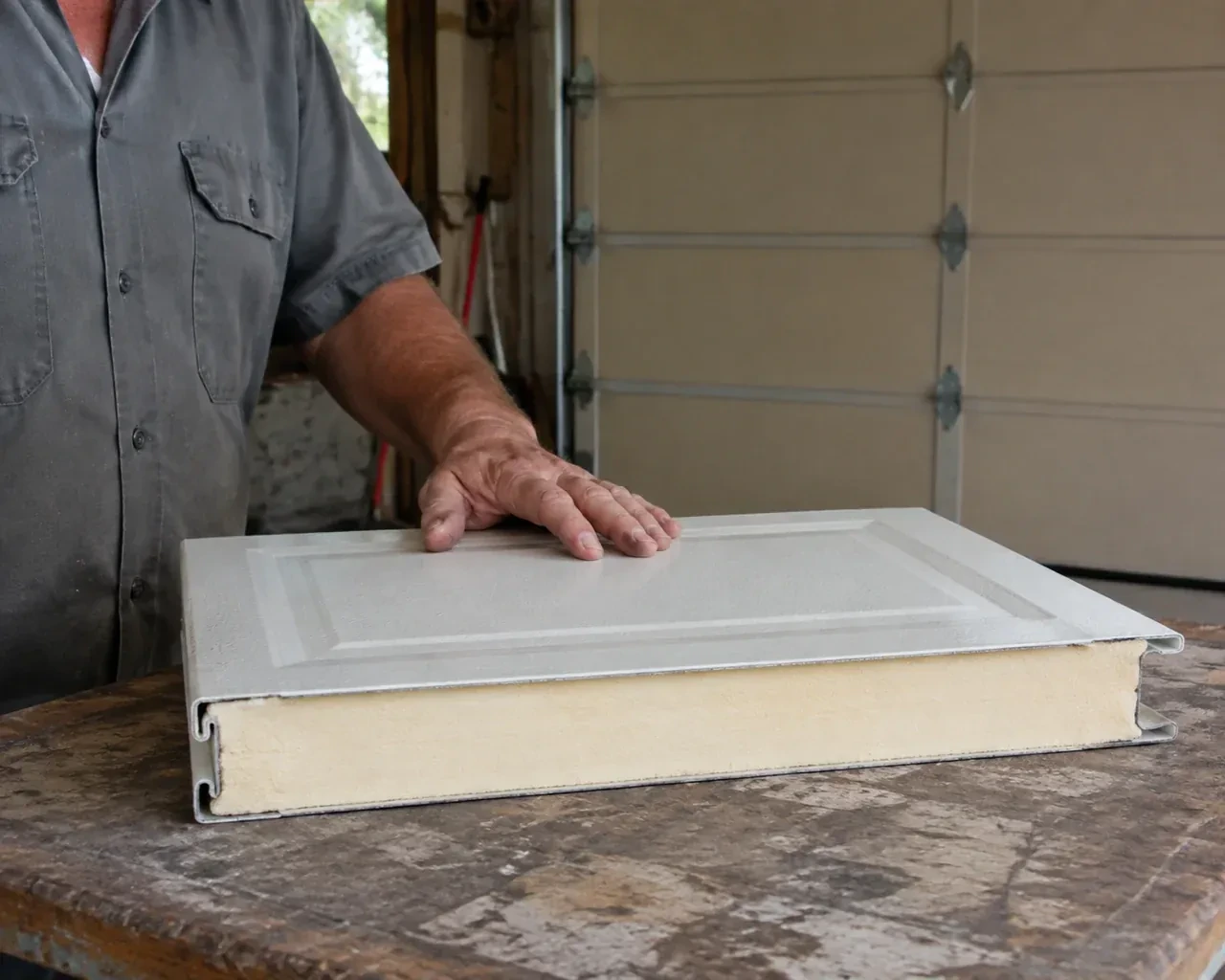
- Insulated Steel Garage Door InstallationA refreshed exterior has made the faded garage door stand out.
- Wind-Rated Garage Door ReplacementStrong gusts make the centre of your wide garage door bow inward and the rollers chatter in their tracks.
- Carriage-House Garage Door InstallationThe existing door has reached the point where panels, rollers and finish all look tired.