Repairs · Brampton
Garage Door Tune-Up
Halfway up, the door shudders.
In plain words
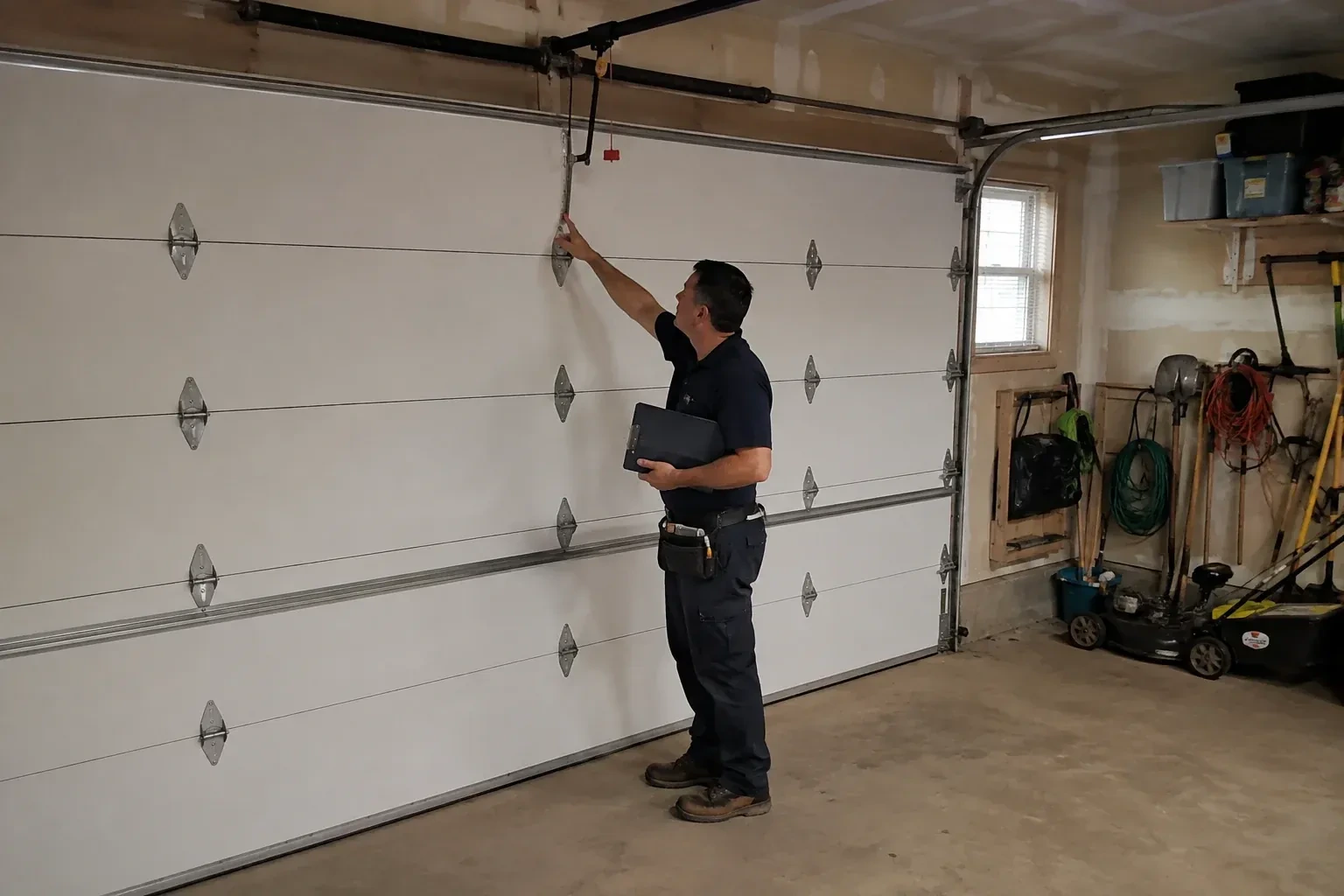
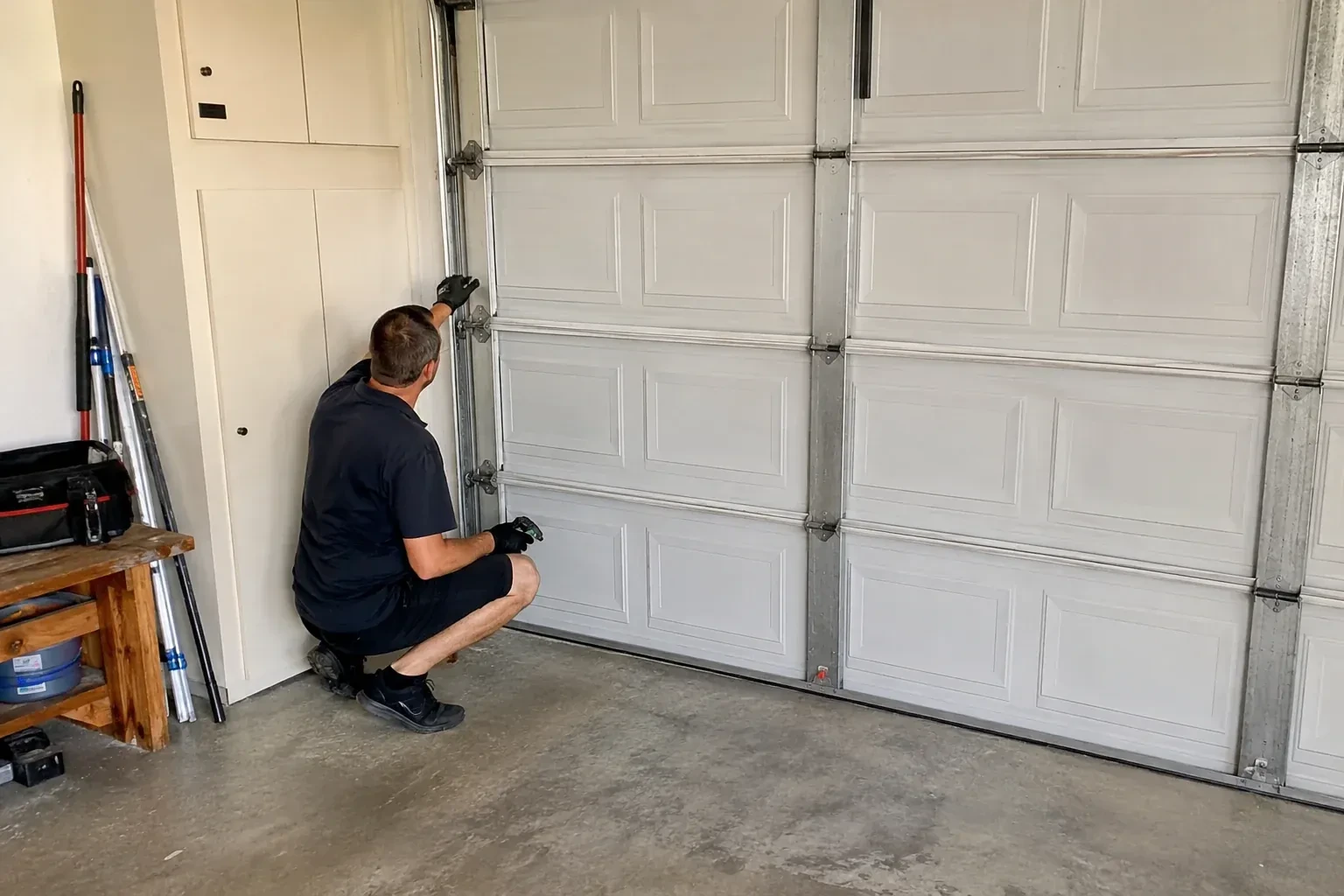
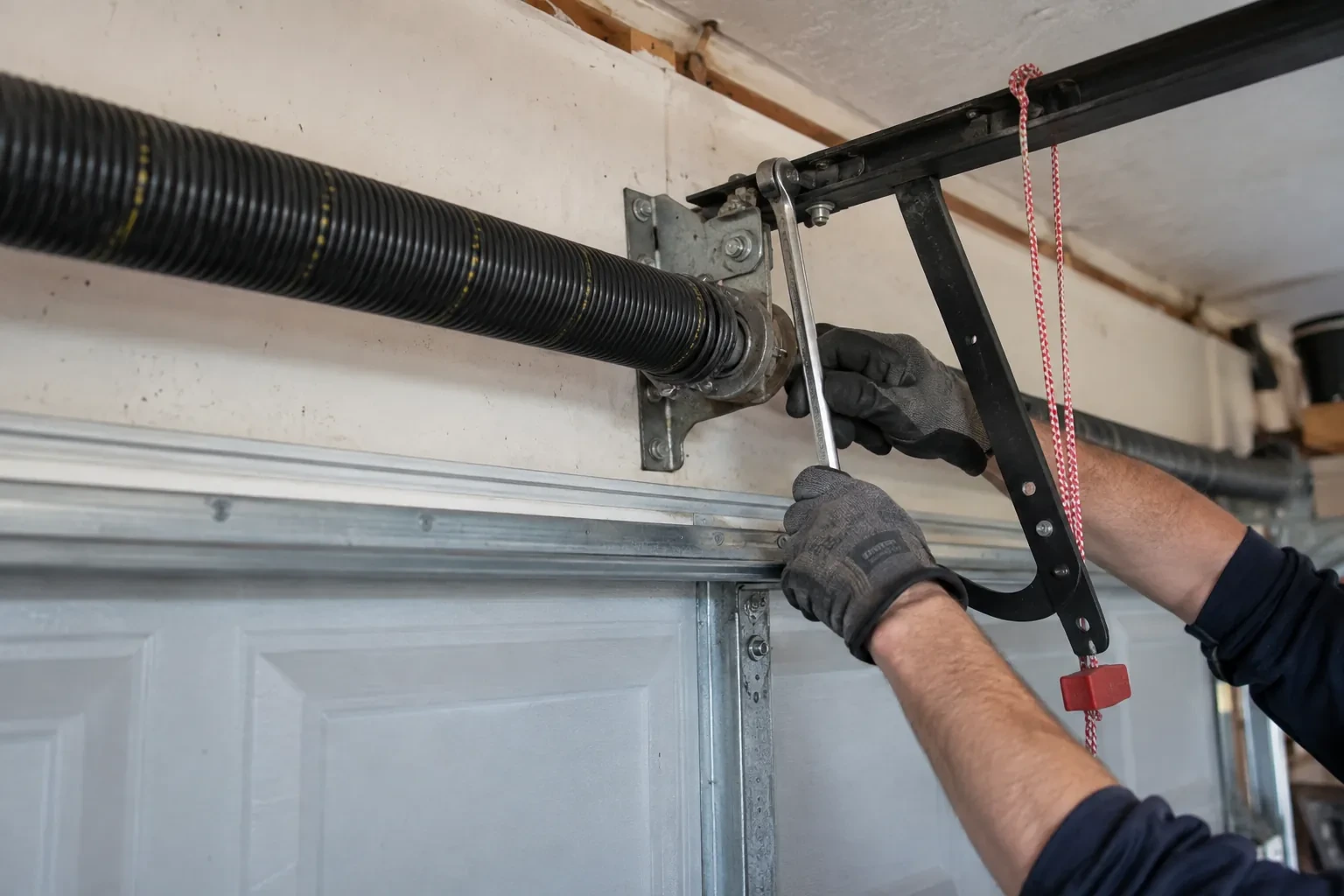
A garage door tune-up is preventive care for a door that still works. Instead of waiting for a part to fail, a technician goes over the whole system while it is operating: the hinges, rollers and tracks, the springs and cables that carry the weight, the fasteners that vibration loosens, and the opener with its sensors and reversal. Loose hardware is tightened, the right points are lubricated with the right product, the balance is checked and the safety tests are run. You end the visit with a door that runs more smoothly and a clear account of anything that deserves its own repair.
How the visit goesTwice this week the door started closing, stopped a metre from the floor and reopened on its own. One of the little sensor lights near the floor blinks instead of glowing steady, and the wall button has to be held to close it.
Garage Door Tune-Up
How the visit goes
Seals, weatherstrip and the threshold
The bottom seal is checked along its whole length for tears, flattening and stiffness, and the threshold is looked at for the low spots where water pools and freezes. The jamb and header weatherstrip are pressed to see whether the rubber or vinyl still flexes or has gone hard, and the technician notes any daylight showing when the door is closed. Because the opener's travel limit decides how firmly the door presses onto its seal, the two are read together: a crushed seal often means the down limit is set too far, and a gap often means the door is stopping early. This part of the check matters most before winter.
Seals and the threshold
Rubber and vinyl get a silicone spray, never a petroleum product, which attacks the material. A bottom seal that is torn or has flattened can be replaced in the same visit if stock is on hand: the old length is drawn out of the retainer, the retainer is cleaned, and the new astragal is fed in and trimmed to width. Jamb and header weatherstrip that has gone hard or split is renewed so the door closes against a flexible edge and stops rattling in wind. Where the threshold holds water, the technician points out the low spot and suggests keeping it clear of ice, since a seal frozen to the slab is the usual winter casualty.
A door you hear less and trust more
The most noticeable change is the sound. With the hinge pins and roller bearings lubricated and the loose hardware tightened, the squeal and the rattle that woke the household are gone or reduced to a low hum of rollers in a clean track. The door starts without the shudder and lands on the floor with a soft contact instead of a slam. Because the technician ran the same cycle before and after the work, you can hear the difference for yourself before they leave, and the sounds that remain, if any, are explained: what they are, which part they come from and whether that part is worth replacing now or watching for a season.
Garage Door Tune-Up
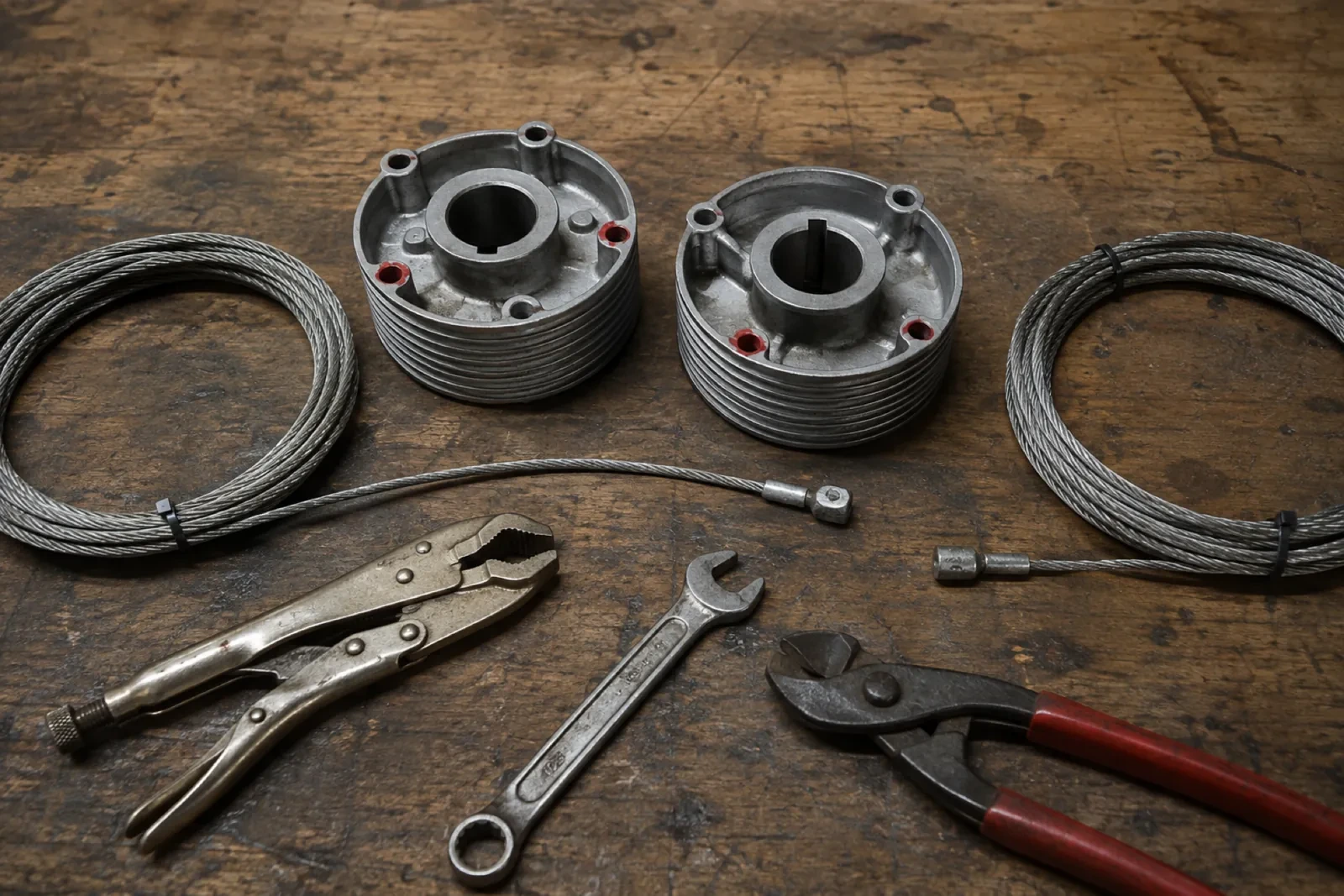
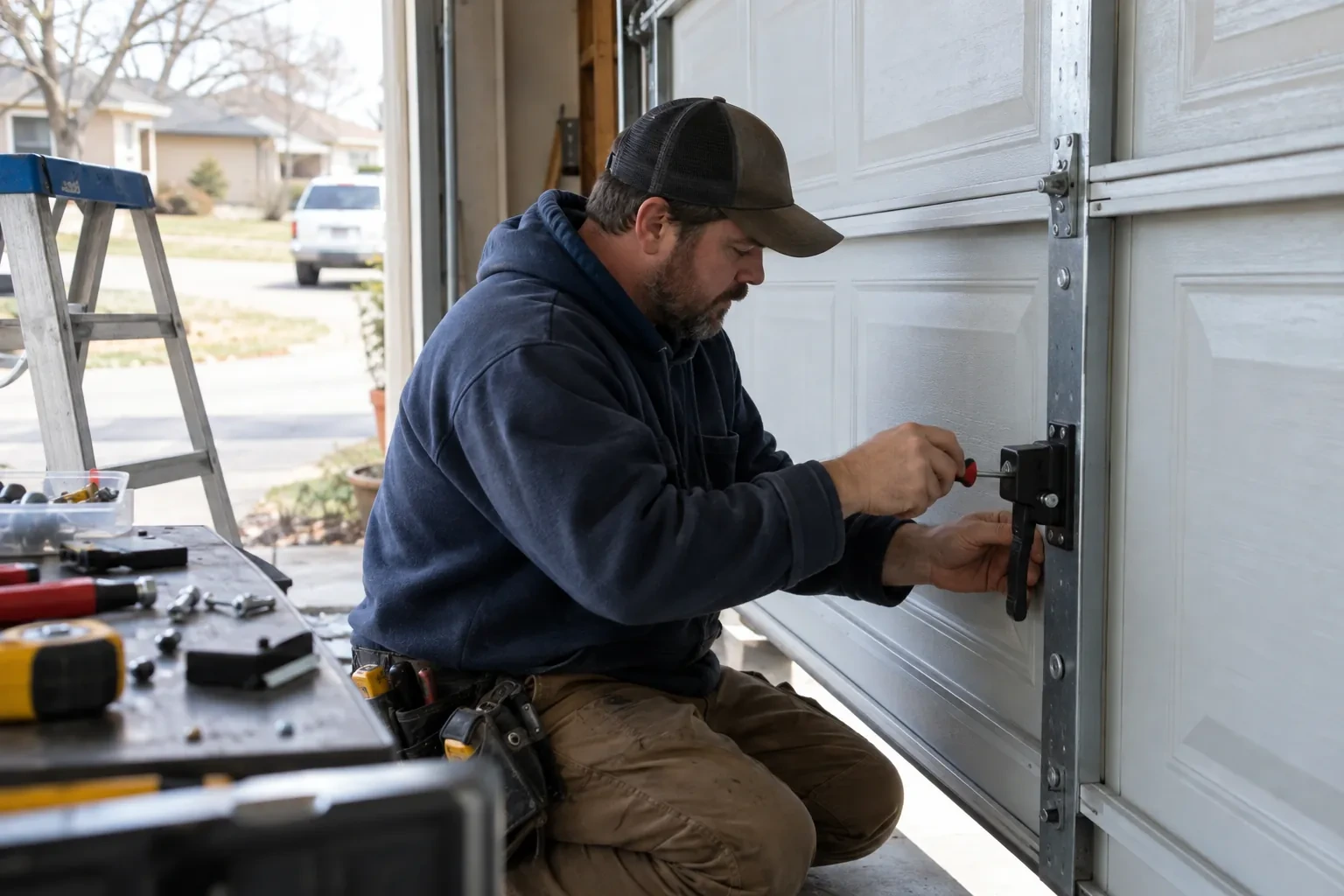
In the van
Hinge screws and track bolts
Socket set and drivers
Jamb and header weatherstrip
2x4 test block and tape measure
Silicone or lithium garage door lubricant
Garage Door Tune-Up
What affects the quote
Single or double door
A double-width door has more hinges, rollers and track to inspect and lubricate, a heavier counterbalance and usually a strut or two on the top section, so it takes longer than a single door.
Number of doors
Two or three doors on the same property are usually serviced in one visit, and the second and third door are quoted at a different rate from the first because the travel is shared.
Type of opener
Chain, belt, screw and wall-mounted jackshaft openers each have their own tension checks and lubrication points, and older units take longer to set for travel and force than newer ones.
What to have ready
- Can you lift the door by hand with the opener disconnected, and does it stay up?
- Are the springs mounted above the door or along the sides beside the tracks?
- Are the remotes, wall button and keypad all working as expected?
Garage Door Tune-Up: questions
QuestionsWhich lubricant is right for a garage door?
A silicone-based or white lithium garage door lubricant, sold for the purpose. Penetrating oils and general sprays are thin, attract dust and are gone in weeks; heavy grease traps grit. For the rubber bottom seal and weatherstrip, use only a silicone spray, since petroleum products attack rubber and make it brittle. Nylon rollers with sealed bearings need no lubricant, while ones with an exposed bearing can need a touch where their own maker calls for it. A small amount on each point, worked in by moving the door, is enough.
My door has a lock bar. Should it be used with an opener?
Not while the opener is connected. If the slide lock is engaged and someone presses the remote, the opener pulls against a locked door and can bend the top section or strip its gear. On a door driven by an opener the lock is usually disabled or removed during a tune-up, and the opener's own hold on the door provides the security. If you want a manual lock for holidays, the technician can show you how to use it safely with the opener unplugged.
What kind of doors and openers do you service?
Residential sectional doors of every common construction: steel, insulated steel, aluminum and glass, wood and composite, single and double width, with torsion springs above the header or extension springs beside the horizontal tracks. Openers of all the usual types are covered too, including chain drive, belt drive, screw drive and wall-mounted jackshaft units. If the door is a one-piece tilt-up or a commercial rolling door, mention that when booking so the right hardware comes along.
Related services
- Off-Track Garage Door ResetThe morning after a thaw the opener groaned, the door stayed stuck to the icy floor for a second, then lurched up crooked.
- Garage Door Panel ReplacementAfter an overnight freeze the door stuck to the slab, the opener strained, and something gave.
- Garage Door Bottom Seal ReplacementWith the door closed and the lights off, a bright line of daylight runs along the floor from one side to the other.