Openers · Brampton
Garage Door Remote and Keypad Programming
You bought a new remote at the hardware store, followed the little leaflet twice, and the opener light never blinked.
In plain words
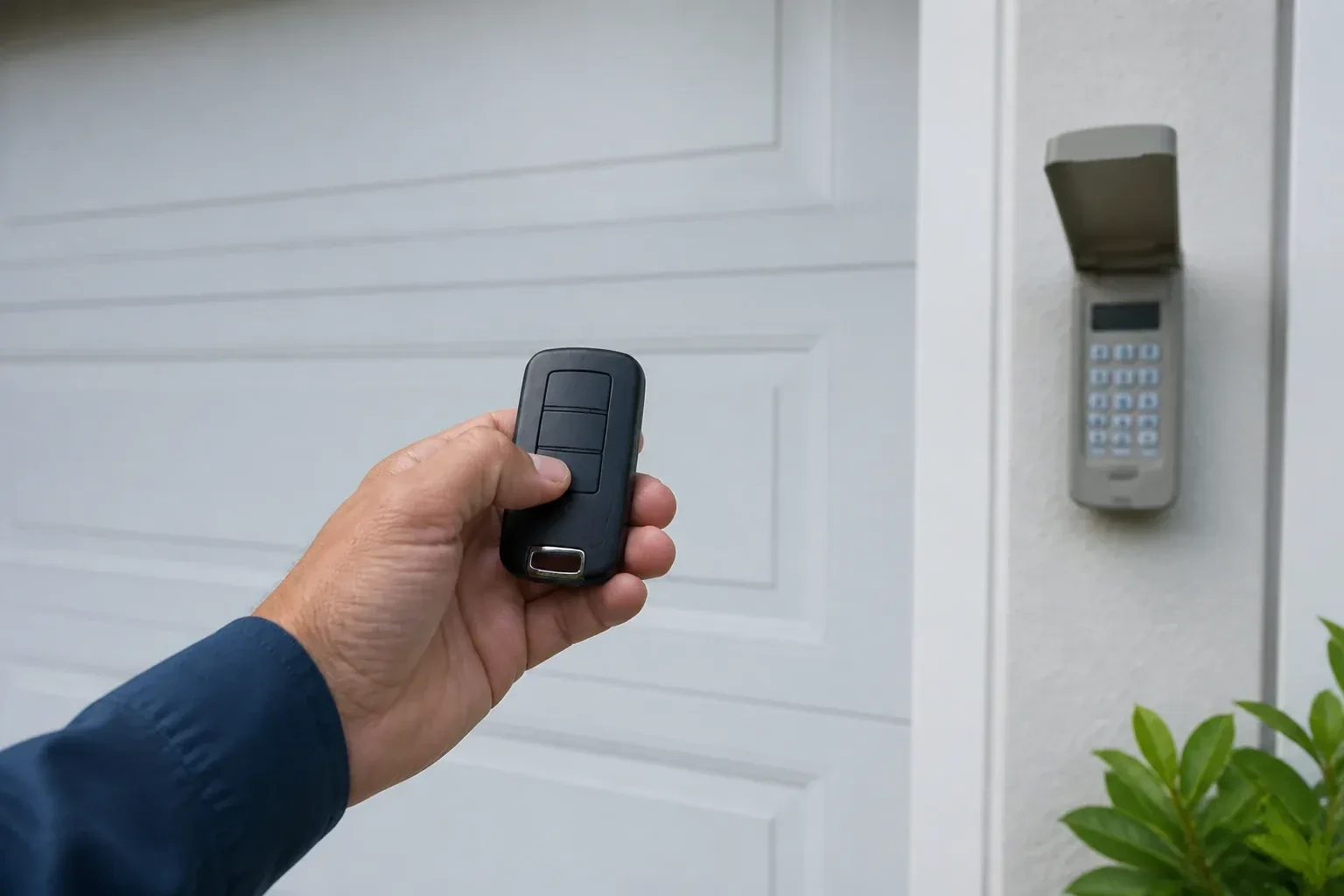
Over the years a garage accumulates controls: a remote in each car, one on a hook by the door, a keypad outside, a button in a vehicle you sold. Programming is the moment to take stock. The technician lists what exists, what works and what is missing, decides with you what should stay, and rebuilds the opener's memory to match. Each retained device is tested at the door and labelled for the door it drives. You leave with a short record of what opens the garage and what was removed, without any secret code written on it.
How the visit goesThe remote opens the door only when you are almost underneath it. From the end of the driveway you press five or six times and nothing happens. It started around the time the bulbs in the opener were changed to LEDs.
Garage Door Remote and Keypad Programming
How the visit goes
Is the opener itself ready?
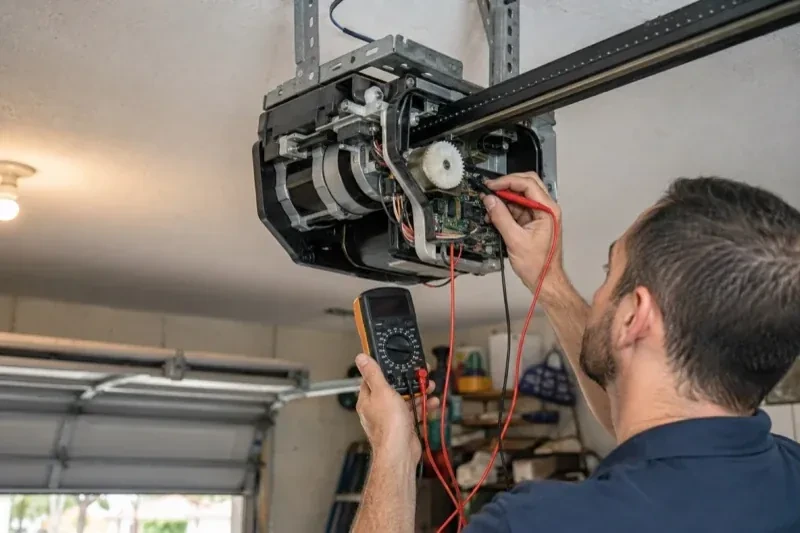
Programming only takes when the opener is in a state to accept it, so the first minutes are spent on the unit rather than the remote. The technician confirms the head unit has power and responds to the wall control, checks that the lock indicator is not blinking, and looks at the photo-eye lights near the floor to see the beam is aligned. The door is run through a cycle to be sure it travels and reverses properly. If the wall button moves the door and the remotes do not, the fault is on the wireless side and programming is likely to help; if nothing moves the door, the visit becomes a repair first.
Training the buttons in the car
A vehicle's built-in garage button often learns in two stages on rolling-code openers. First the car learns the remote: with the handheld remote carrying a fresh cell held close to the mirror or console, the vehicle button and the remote button are pressed together until the indicator changes. Second, the opener learns the car: the technician presses the head unit's learn button and returns to the vehicle inside the window that follows to press the trained button until the door moves. Some vehicle systems follow a different sequence with no handheld remote, so the vehicle and opener instructions are checked first. Where an older in-car system cannot hear a newer opener, a small bridge module is added.
Adding a control yourself next time
Because you watched the pairing, you know where the learn button lives under the light cover, what a short press does and, just as importantly, your opener's own erase sequence. Confusing the two is the cause of many surprise lockouts. You have the compatibility details for your opener written down, so the next remote you buy is the right generation, and you know that unplugging the opener during a long absence does not erase anything. Most households can add a remote themselves after seeing it once.
Garage Door Remote and Keypad Programming
In the van
Add-on rolling-code receiver kit
In-vehicle compatibility bridge module
CR2032 and CR2016 coin cells
Universal multi-generation remote
Replacement remote (one, two or three buttons)
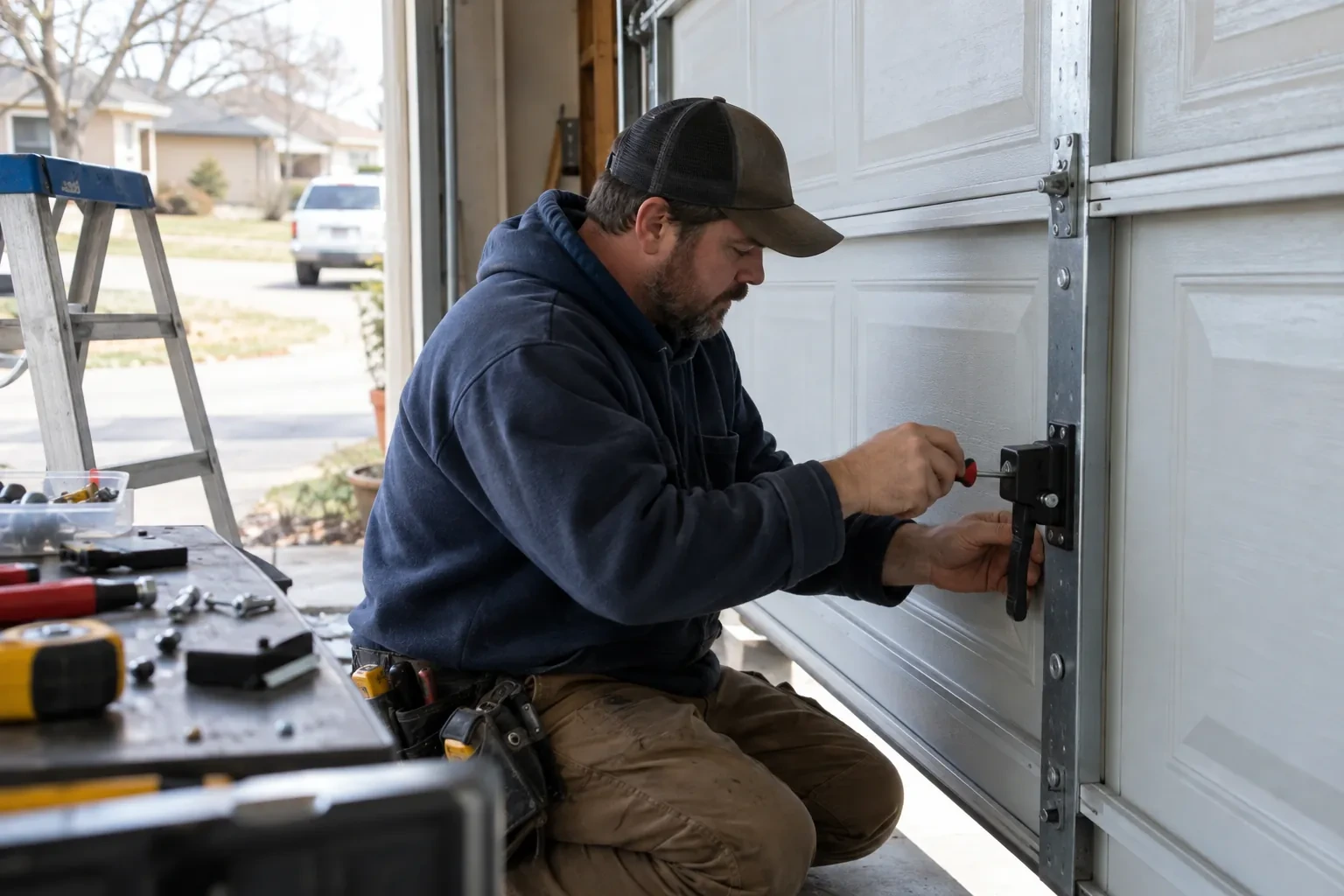
Garage Door Remote and Keypad Programming
What affects the quote
Multiple doors or a gate
A second opener or a driveway gate doubles the pairing and testing, and may call for multi-button remotes or a multi-door keypad.
Opener check-up before programming
Confirming power, lock mode, sensors and door travel is included; any repair those checks reveal is discussed and quoted before it is done.
Access to the head unit
A high ceiling, a storage loft or a car that cannot be moved from under the opener means extra ladder work to reach the learn button.
What to have ready
- What colour is the small learn or program button under the opener's light cover?
- Is the light on the wall control blinking steadily?
- Do you have a keypad outside, and does anyone still know its code?
Garage Door Remote and Keypad Programming: questions
QuestionsWhat is rolling code and why does it matter for programming?
Most openers made from the mid-1990s on change their code every time a remote is pressed, choosing from billions of possibilities, so a copied code is usually useless next time; the technician confirms the actual system from the model, not age. Programming matters because the opener has to learn each remote's sequence at the learn button; a remote cannot simply be set to match. Older fixed-code openers, set by small switches, can be upgraded with an add-on rolling-code receiver.
Is the door tested for safety after programming?
Yes, every time. Each new control is operated while the technician watches the door's full travel, then a 2x4 is laid flat under the door and the door must climb back up on touching it, and a broom handle passed through the photo-eye beam during a second close must stop and reverse the door. A remote is a way of moving a heavy door, so the visit ends only when both tests pass.
My older car's button will not learn my new opener. Why?
Some in-car systems from earlier model years cannot hear the newest opener radios directly. The usual answer is a small compatibility bridge module that pairs with the opener and relays the car's signal, or a handheld remote clipped to the visor. The technician identifies the car's system and the opener's generation and chooses whichever gives a reliable result.
Related services
- Chain-Drive Opener RepairThe motor runs, you can hear it working, but the door never moves.
- Belt-Drive Opener RepairThere is a new squeal from the front of the rail, up near the header, on every cycle.
- Garage Door Opener ReplacementYou swapped the old wooden door for a heavier insulated steel one, and the twenty-year-old opener that was kept has never settled.