Springs · Brampton
Garage Door Roller Replacement
Since the cold snap the door has been stiff and noisy first thing, and after the last thaw the bottom corner began to judder.
In plain words
A garage door opener is designed to guide a balanced door, not to haul a rough one. Rollers that bind, wobble or grind add resistance across the whole travel, and the opener answers by working harder, running hotter and tripping its force limit or reversing partway. Replacing worn rollers with a smooth-running set takes that load away, which is why the opener often sounds calmer after the same visit. The technician confirms the door holds its own weight with the opener released, then checks the opener's force and reversal settings once the new rollers are in.
How the visit goesA roller near the top corner is riding on the lip of the track rather than inside it, and the section above leans back a little more each week. The door still moves, but it looks one bump away from coming out altogether.
Garage Door Roller Replacement
How the visit goes
Counting hinges and measuring stems
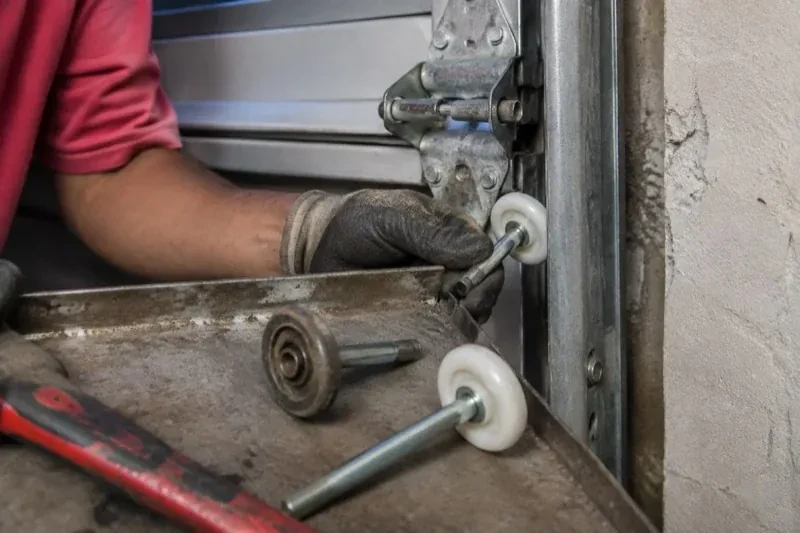
The right replacement depends on numbers taken from your door, not from a catalogue. The wheel diameter is measured across its face: residential track takes a two-inch wheel, while commercial track can take a two-inch or a three-inch wheel depending on the system. The stem is measured from the wheel to its end, and the hinges at each end stile are counted, because a single hinge takes a four-inch stem while two hinges stacked together on a heavier door call for a seven- or ten-inch stem that reaches through both. Stem diameter is confirmed too, since most doors built since the 1980s share one standard size but older doors may not. These measurements decide which set goes in.
Securing the door before a roller comes out
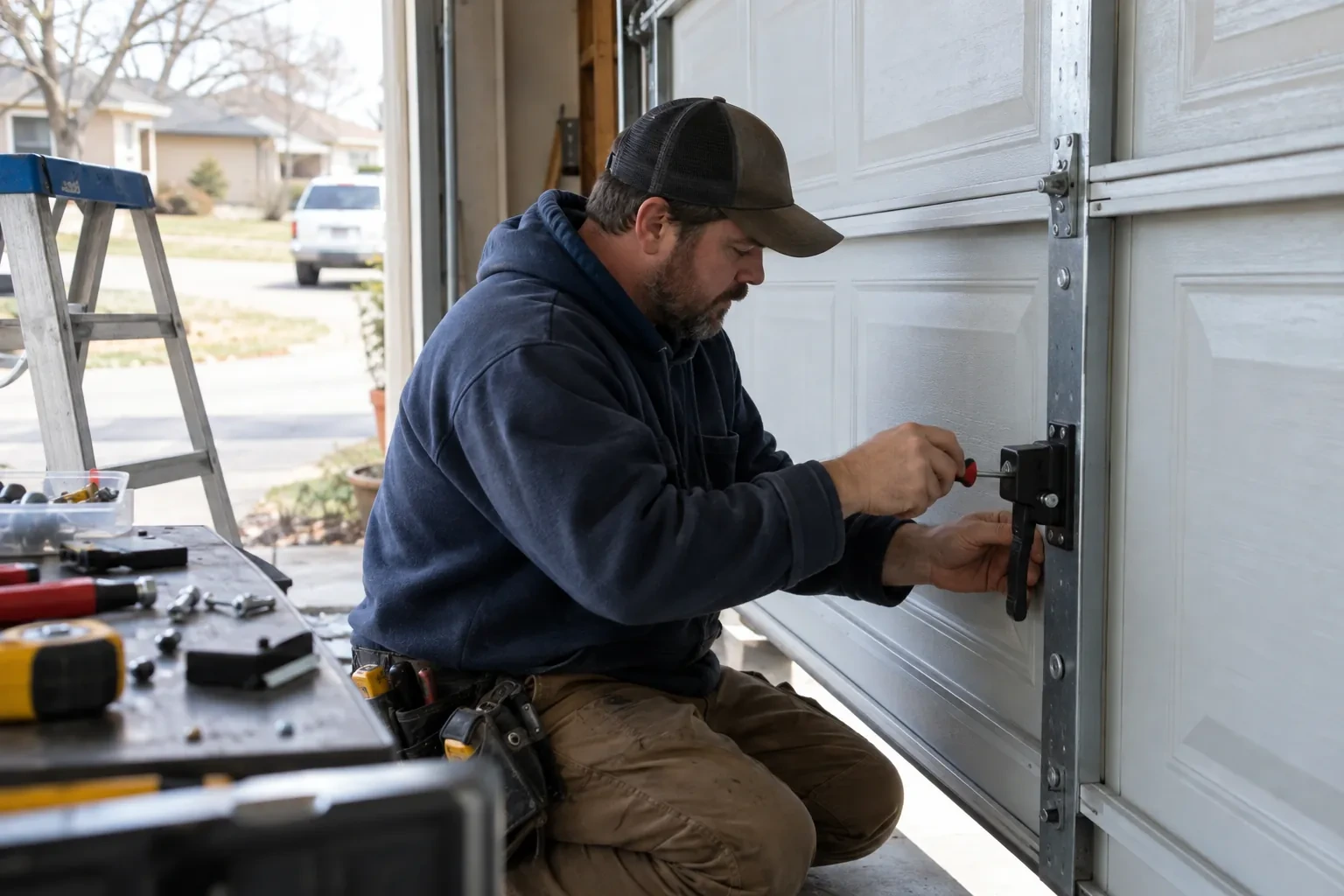
Nothing is unbolted until the door cannot move. The technician disconnects the opener, positions the door where the work is safest for the rollers being changed, and locks it there with clamps or locking pliers set in the track under the wheels so the sections cannot slide or drop. With a heavy door left in the open position, the horizontal track and its hangers are checked for a firm hold first. This set-up takes a few minutes and is the reason the rest of the job can proceed calmly, one roller at a time, without a section shifting while a hinge is loose.
An opener with less to carry
With smooth rollers under the door, the opener goes back to its intended job of guiding a balanced door rather than hauling a rough one. The technician will have confirmed the force settings and the reversal against a test block before leaving, and it is worth repeating the reversal check yourself each month: lay a 1-1/2 inch block, such as a scrap of two-by-four laid flat, in the door's path and close it; the door should reverse on contact. If the opener ever begins straining or reversing partway again, mention it at the next visit, since it is often the earliest sign of hardware wear.
Garage Door Roller Replacement
In the van
Long-stem rollers for double hinges
Three-inch rollers for commercial track
Bottom brackets
Steel ball-bearing rollers
Track clamps or locking pliers
Garage Door Roller Replacement
What affects the quote
Roller type chosen
Plain steel, nylon with ten to thirteen bearings and sealed-bearing nylon sit at different points on the parts list. The technician explains what each offers for your door before you choose.
Top fixtures and bottom brackets
A top fixture that no longer adjusts, or a bottom bracket that has corroded or bent, is changed while the door is secured, and the quote names each piece.
Salt and rust in the lower track
A track full of brine, scale and grit needs cleaning before new wheels go in, and heavy corrosion can extend to the brackets and cables, adding to the scope of the visit.
What to have ready
- Do any wheels look chipped, crooked, or sitting on the lip of the track?
- Can we reach both tracks, or is there shelving or a car in the way?
- Is the track the two-inch residential size or a wider commercial track?
Garage Door Roller Replacement: questions
QuestionsWhat happens during the visit, and do I need to move the car?
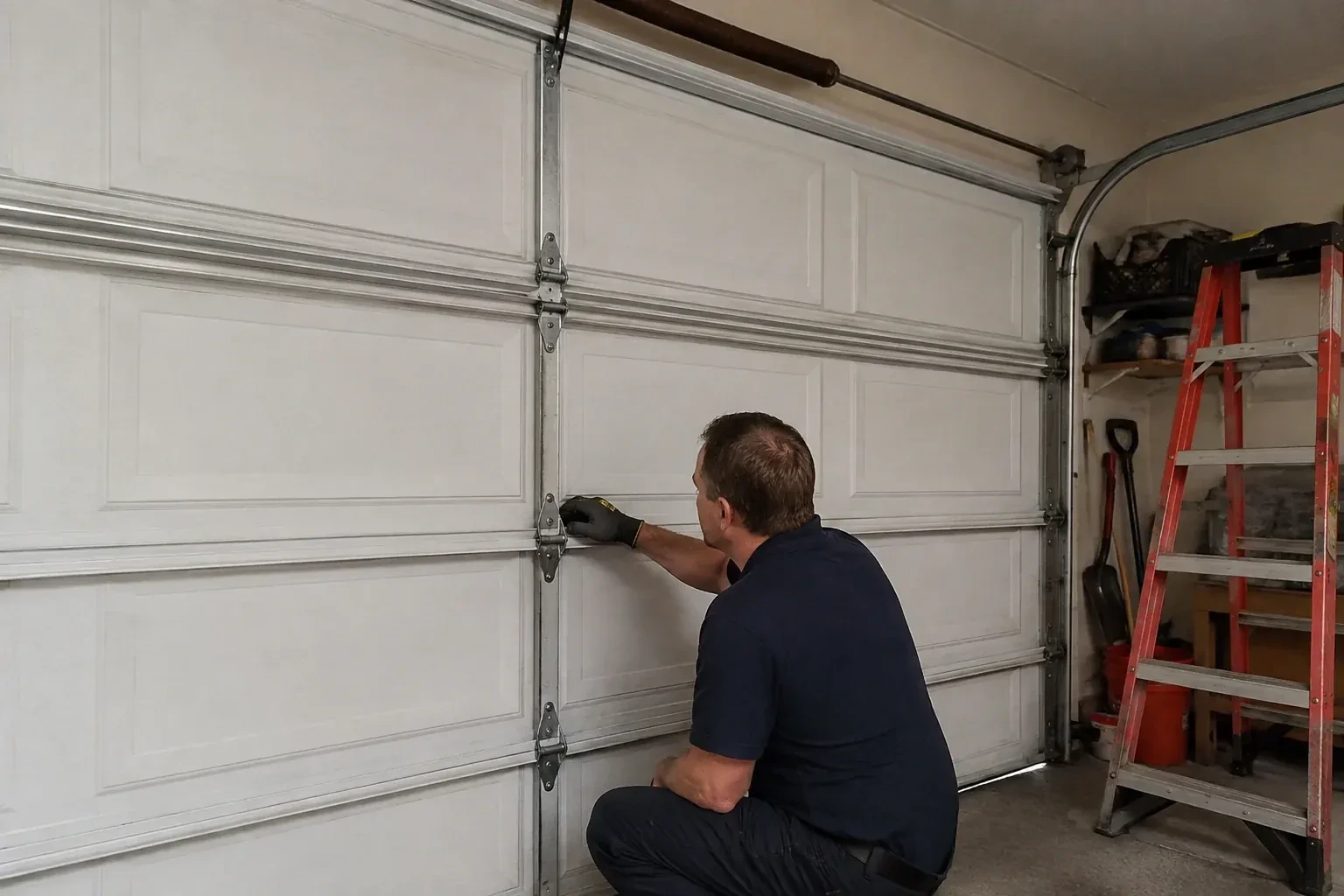
The technician needs clear access to both tracks from floor to ceiling, so moving vehicles out and shifting anything stored against the walls near the tracks helps. The visit itself runs in order: the door is watched in motion, every roller and its hardware is inspected, the door's balance is tested, the door is secured and the rollers are changed one position at a time, the track is cleaned and squared, moving parts are lubricated, and the door and opener are tested.
How many ball bearings should a roller have?
More bearings spread the door's weight over more contact points, but count alone does not decide how smoothly, quietly or long a roller runs; the complete design matters more. Budget rollers carry six or seven, better residential rollers ten to thirteen, and premium rollers use a sealed cartridge with a dust and moisture seal. For an ordinary residential door, a nylon roller with ten or more bearings is a sound choice; for a damp or salty garage, or a door used constantly, sealed bearings are worth asking about.
I lubricated everything and the grinding came back. Why?
Lubricant restores bearings and hinges that are still sound; it has nothing to offer a wheel worn oval, a nylon tire that has cracked, or bearings whose balls have pitted their race. When a spray settles the noise for a day or two and it returns, the wear is in the roller itself and replacement is the answer. Spray on the track or a plastic wheel can make matters worse by collecting grit, so the technician cleans that off as part of the job.
Related services
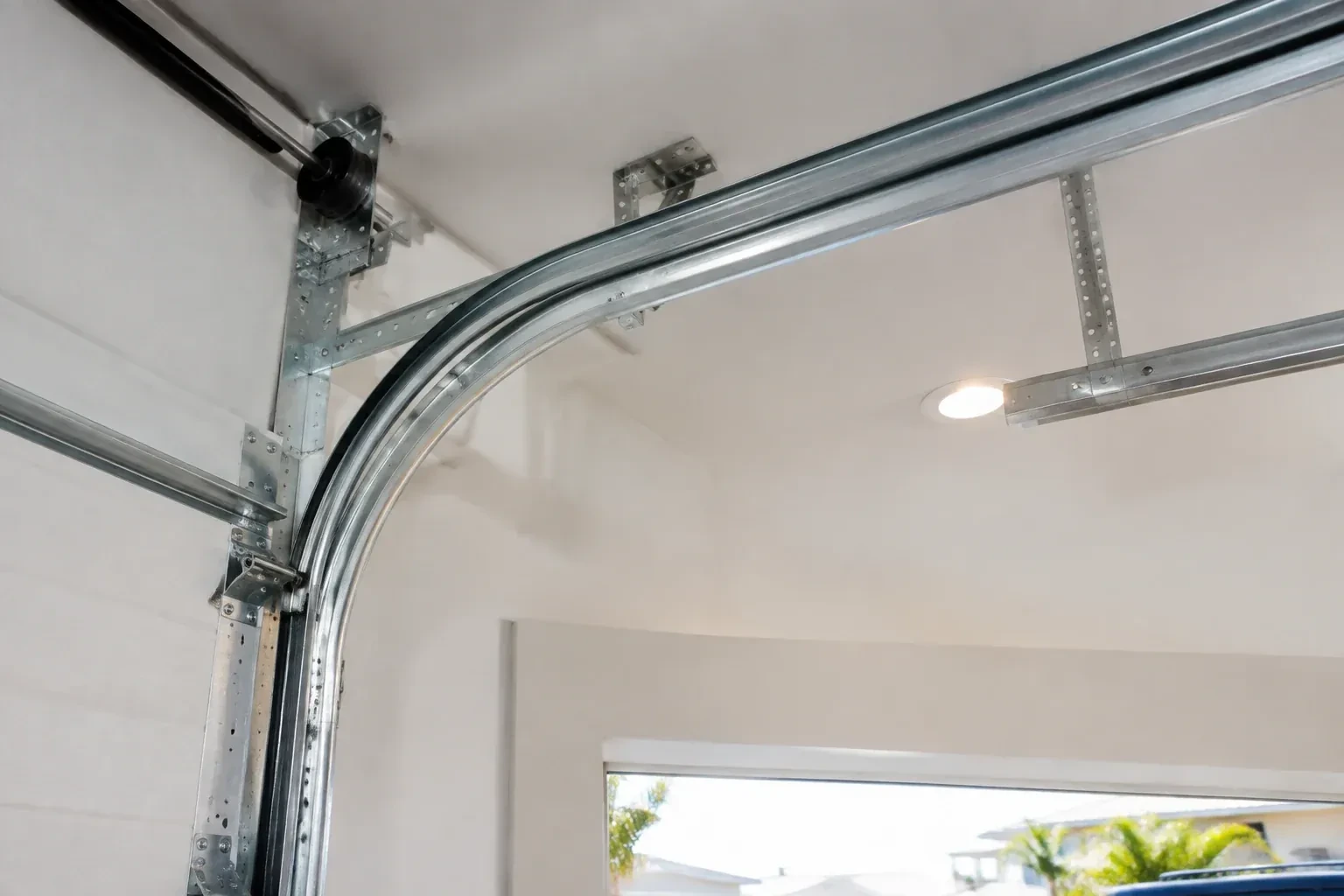
- Garage Door Track Repair or ReplacementThe door has started rubbing the frame on the left, leaving a shiny stripe down the weatherstrip.
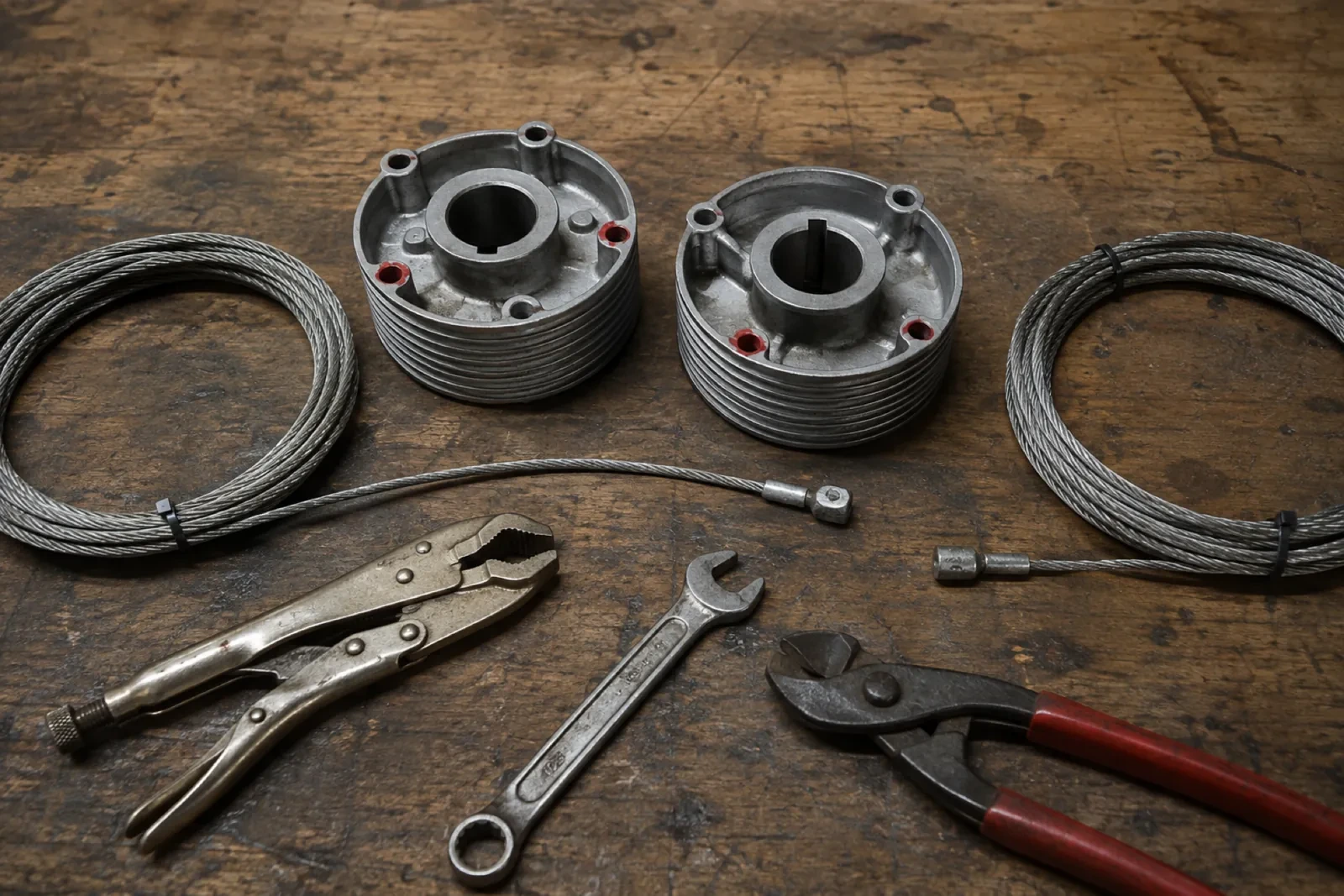
- Garage Door Cable ReplacementThere was a sharp crack from the garage, and when you went to look the door had dropped on one side and jammed.
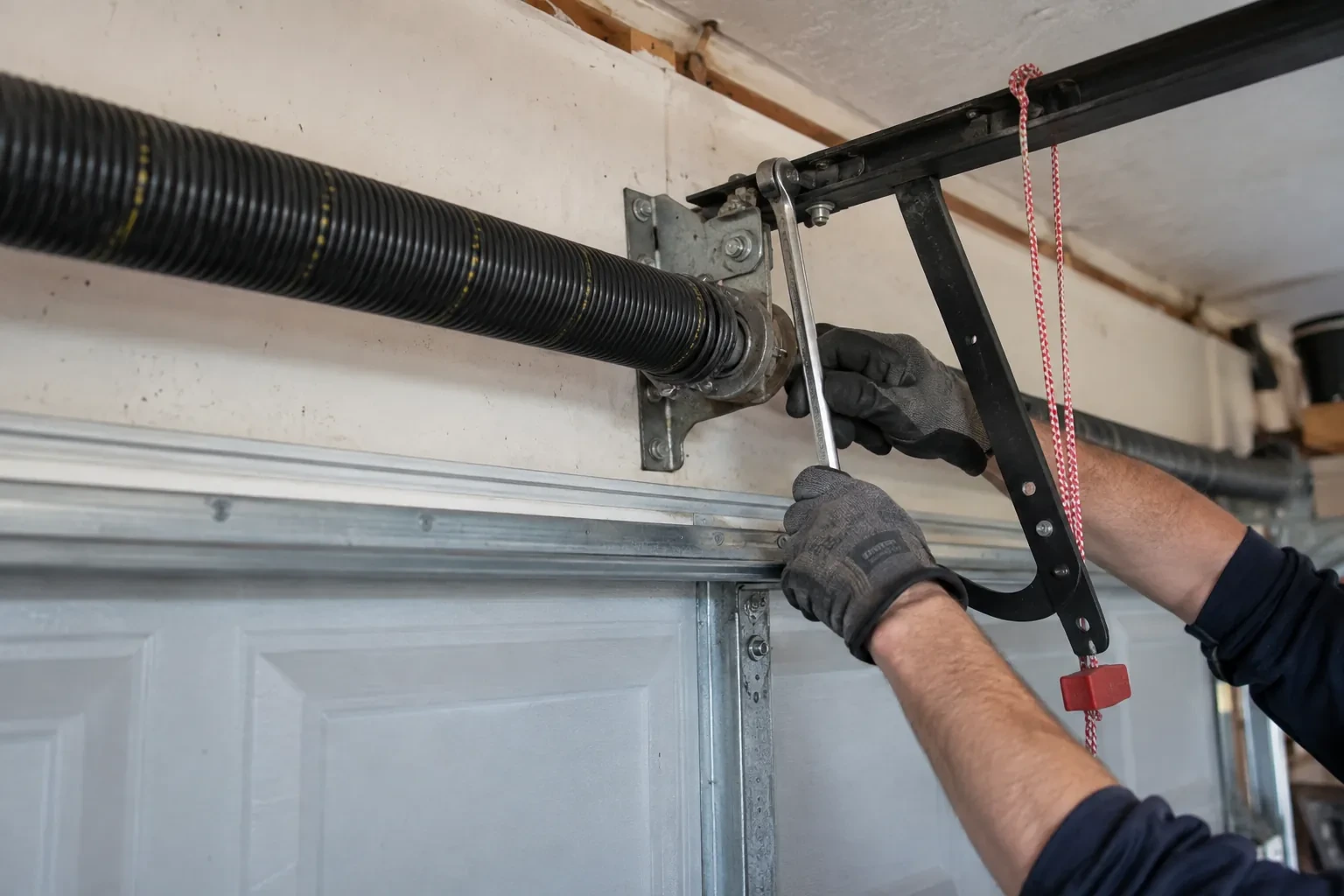
- Torsion Spring ReplacementLooking up at the coil above the door, you can see a clean split with a gap of several centimetres between the two halves.