Springs · Brampton
Extension Spring Replacement
Open the door by hand and it drifts back down on its own, a little at first and then all at once.
In plain words
Every extension spring should carry a containment cable, and replacement is the moment to make sure yours do. A containment cable runs through the centre of the spring and is anchored at both ends, to the rear hanger and to the bracket at the front of the track. It does no lifting; its purpose is to hold a spring that breaks so the pieces stay on the cable. Many older doors predate this practice, which a home inspection checklist checks for. When springs are replaced, new containment cables are fitted with them, which keeps a broken spring's pieces contained, not the door's weight, balance or safety.
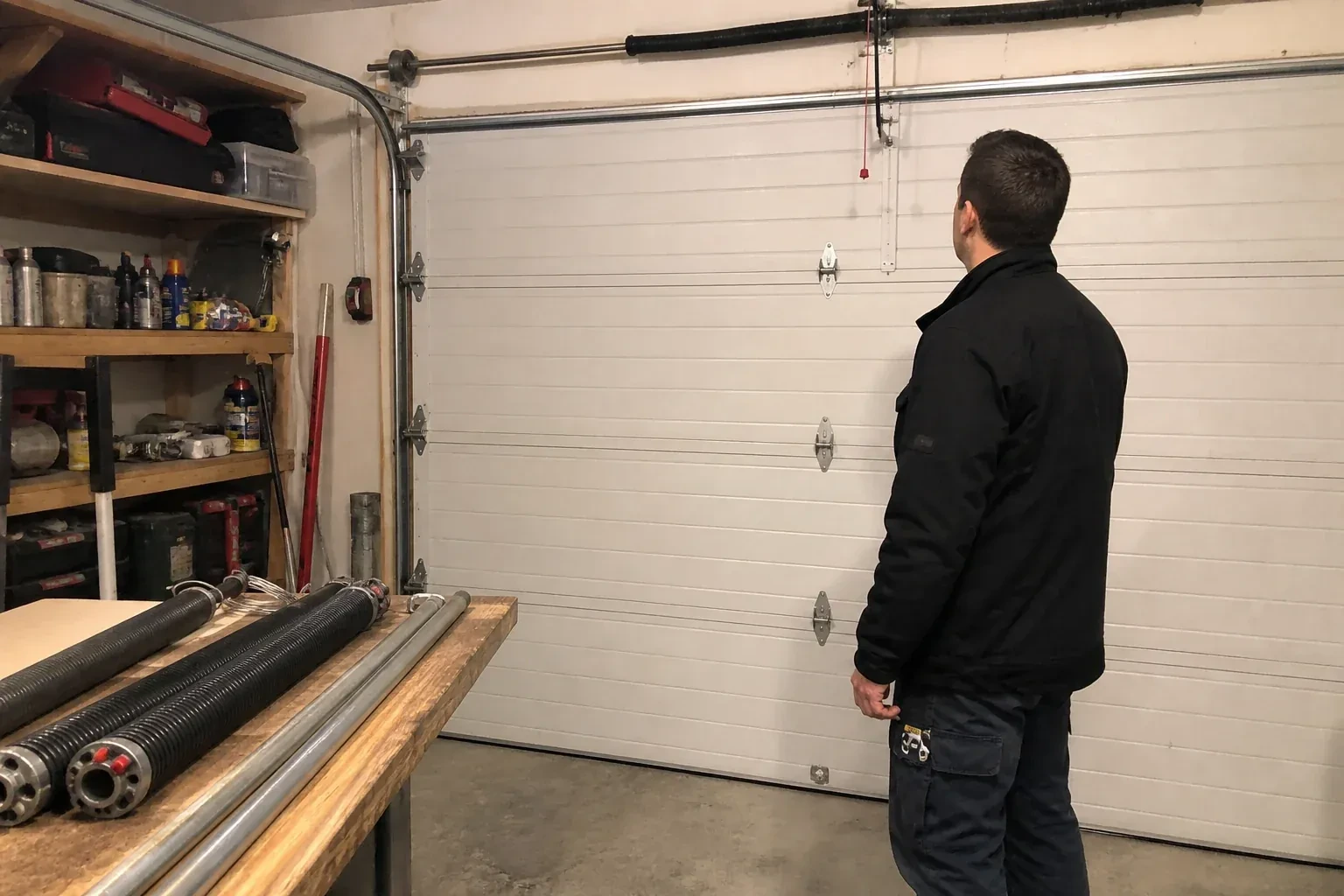
How the visit goesOne of the springs beside the track is hanging loose at the front end, its pulley dangling, and a length of cable lies slack along the top of the door. The door sits slightly crooked and the opener reverses whenever it tries to close.
Extension Spring Replacement
How the visit goes
Weighing the door
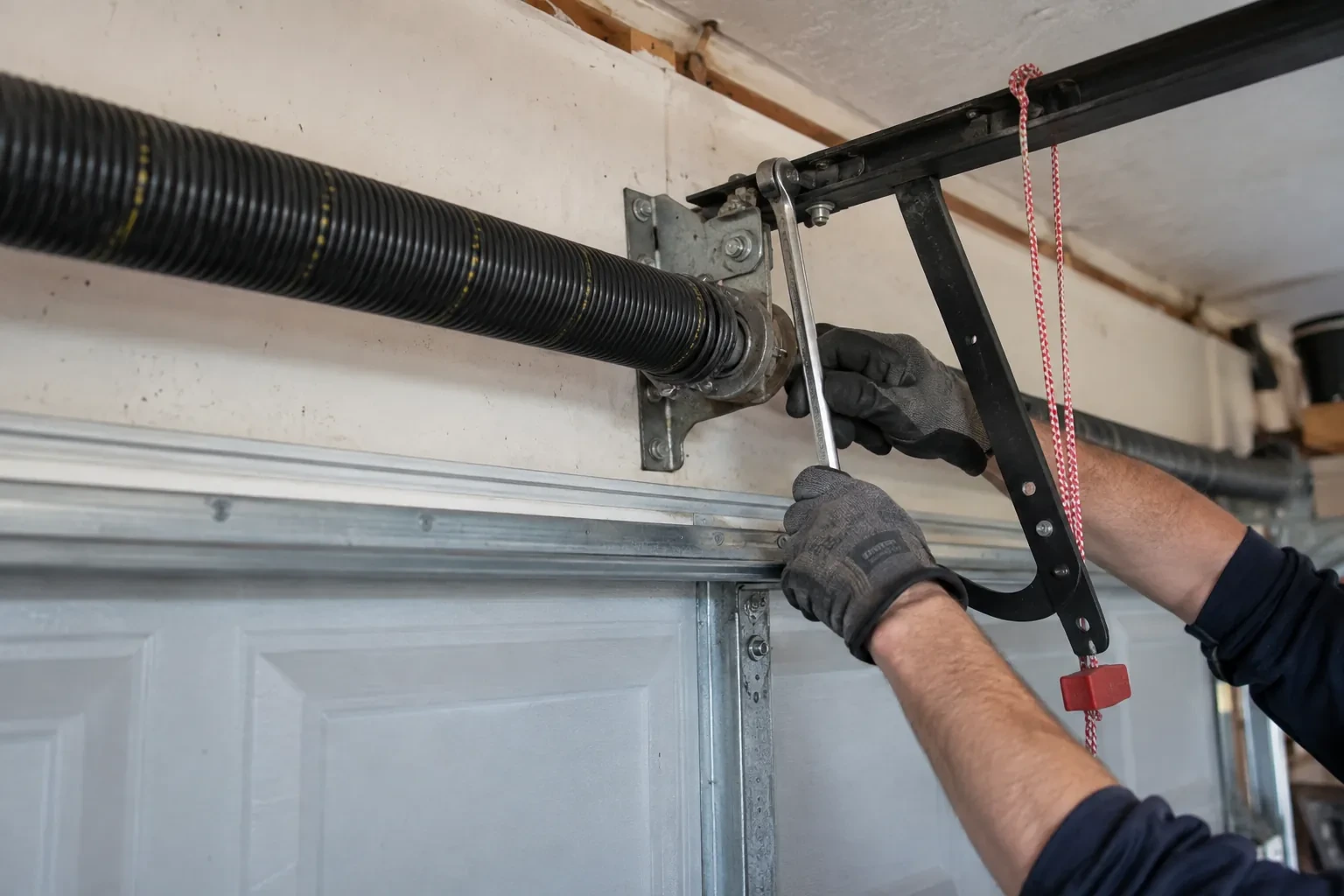
Extension springs are chosen by the weight they are built to lift, so the door is weighed rather than guessed at. With the opener released and the springs disconnected or slack, the technician lowers the door onto a scale set on the floor under the bottom section and reads the figure. That number, together with the door's height, sets the spring rating and stretch length. The old springs are measured as a cross-check, but the scale wins if the two disagree, because a door can gain weight from new panels, insulation or a cladding added since the springs went on.
Threading the containment cables
Before a spring is hung, a containment cable is fed through the centre of its coil. One end is anchored at the rear, to the hanger or the framing behind it, and the other is run forward past the pulley and fixed to the bracket at the front of the track or to the wall, with enough slack that the cable never carries load while the spring works. The cable is checked to be clear of the pulley wheel and the lift cable so nothing rubs. Both sides are done the same way, whether or not the old installation had them. A spring that breaks in future is held on the cable rather than crossing the garage.
A clear threshold and an honest opener
Two habits protect the new springs from the shocks that shorten a spring's life. The first is the floor: a door that comes down on a bin, a bike wheel or a ridge of packed snow stops short while the springs and cables are still pulling, and the jolt can throw a cable off its pulley. Keep the opening clear and scrape the ice ridge off the threshold before running the door in winter. The second is the opener's force setting. It was set for the newly balanced door; if the door ever seems to need more push, that is the springs asking for attention, not a reason to turn the force up.
Extension Spring Replacement
In the van
Lag screws and hanger bolts
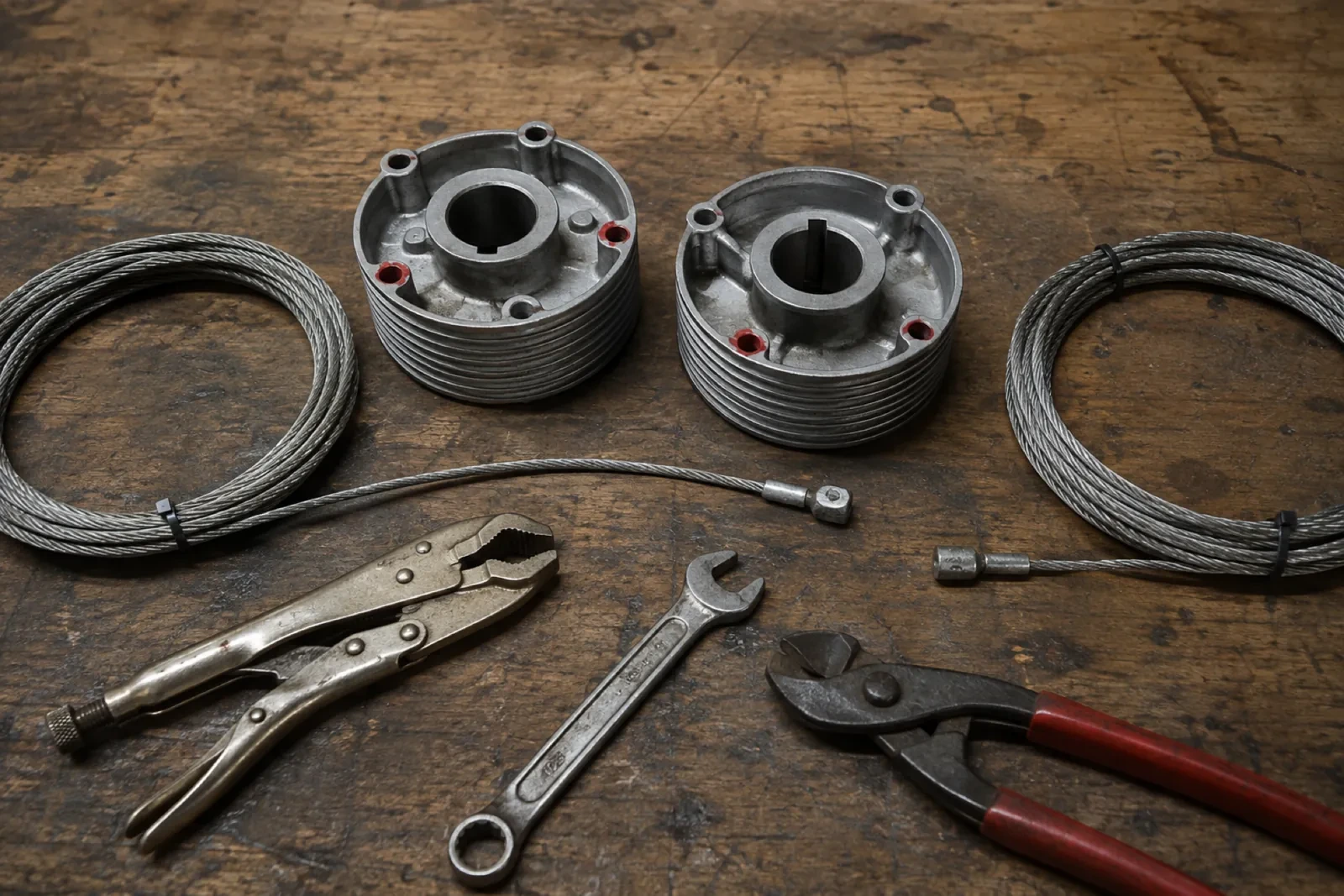
Lift cables
Pulleys (sheaves) and forks
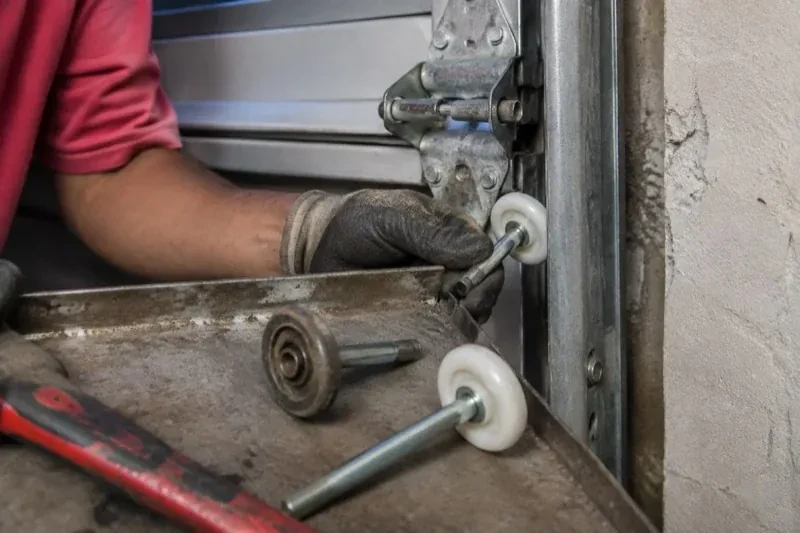
Replacement rollers and hinges
Extension springs, matched pair
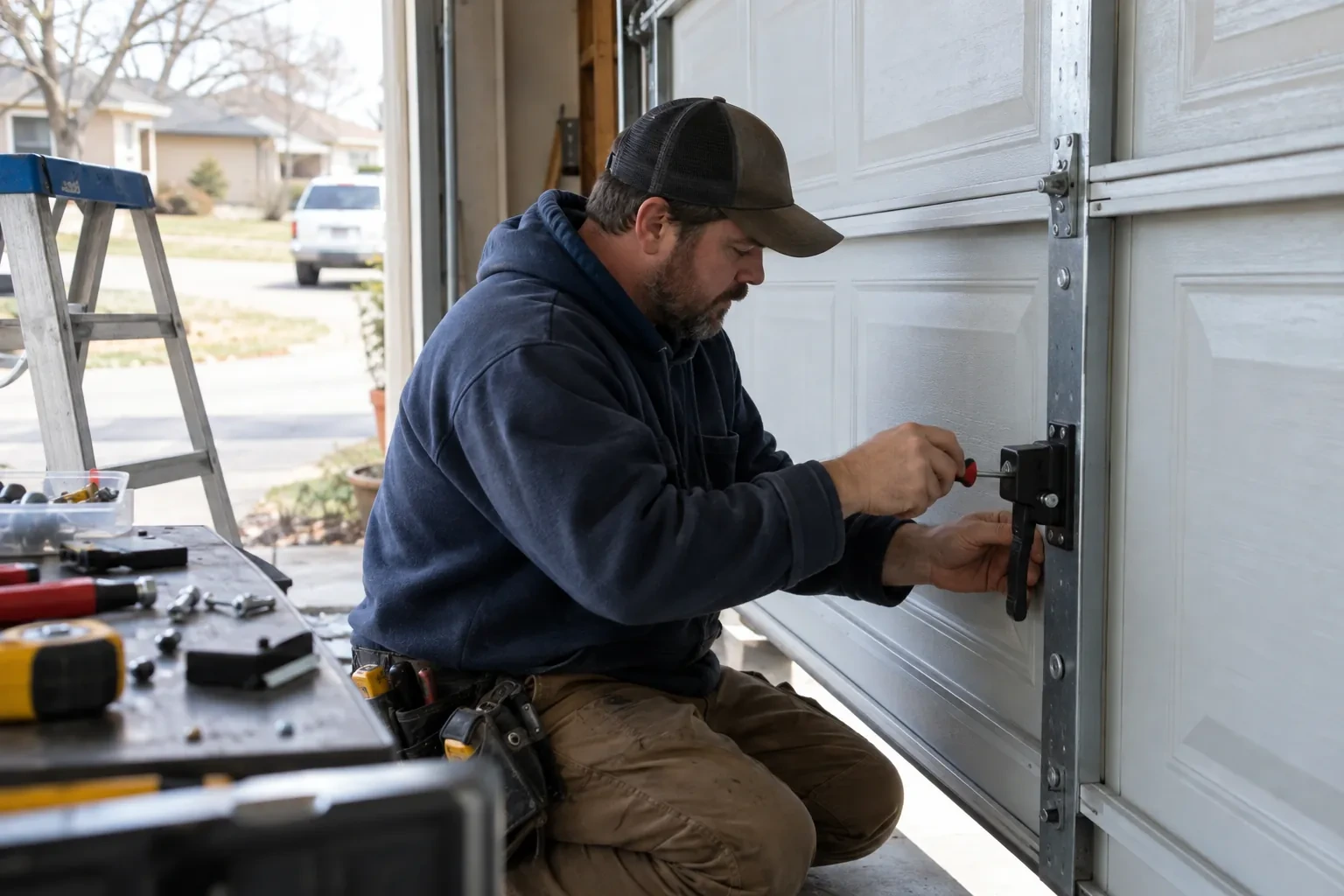
Extension Spring Replacement
What affects the quote
Weight added since the door went in
Insulation panels, windows or a wood overlay fitted after the original springs mean a heavier rating than the old pair. The door is weighed and the quote reflects the door as it is now.
Working room around the springs
Shelving, a stored canoe or a car parked under the tracks slows the work along the horizontal run. Clearing the sides of the garage beforehand keeps the time on the quote short.
Getting the van to the garage
A detached garage down a shared laneway, a rural property or a building with the bay behind a gate takes more time to reach and set up in, and the quote allows for that.
What to have ready
- Does the door drop the last bit, or drift up on its own?
- Do the springs run along the tracks beside the door, or is there one spring above the opening?
- Has insulation, glass or a wood facing been added to the door?
Extension Spring Replacement: questions
QuestionsWill the lift cables be changed as well?
They are inspected every time and changed when they show fraying, rust at the bottom loop, or a kink from having jumped a pulley. Cables and springs are generally the same age, and with the door already open and the springs off, fitting new cables adds little to the visit. Bright, tight strands with clean loops can stay and are simply re-routed over the pulleys and set to the new springs.
Could I switch to torsion springs instead of replacing the extension ones?
Sometimes, and it is worth asking. A torsion system needs room above the door opening for its shaft and a header that can carry the spring bracket, which many older garages with a low ceiling simply lack; extension springs are there for that reason. Where the headroom exists, a conversion is a separate job with its own hardware and quote. The technician can tell you on the spot which route suits your garage.
What can I do to make the new springs last?
Three things. Spray the springs, pulley axles and hinges with a garage-door lubricant twice a year, which slows rust in an unheated garage. Keep the threshold clear of bins and packed snow so the door never stops short with the springs still pulling. And leave the opener's force setting where the technician put it, since a door that starts needing more push is a balance question rather than a dial to turn.
Related services
- Garage Door Hinge ReplacementAfter a cold night the bottom seal had frozen to the slab.
- Garage Door Track Repair or ReplacementThe door has started rubbing the frame on the left, leaving a shiny stripe down the weatherstrip.
- Garage Door Cable ReplacementThere was a sharp crack from the garage, and when you went to look the door had dropped on one side and jammed.