Garage Doors in Brampton, OntarioYou will knowbefore we start.
Nobody in Brampton should nod along to an explanation they did not follow. Before a tool comes out, the technician shows you the worn spring, the frayed cable or the stripped gear, tells you why it failed, and lays out the sensible choices side by side. The decision stays with you. This page also covers Mayfield.
Nobody in Brampton should nod along to an explanation they did not follow. Before a tool comes out, the technician shows you the worn spring, the frayed cable or the stripped gear, tells you why it failed, and lays out the sensible choices side by side. The decision stays with you. This page also covers Mayfield.
Open, close, repeat, for years.
Landlords and property managers in Brampton get a written summary after every visit: the address, what was found, what was replaced, and what is likely to need attention next. Tenants get a door that works and remotes that behave. Everyone knows where things stand without a second phone call.
We have been servicing garage doors in Brampton for long enough to recognize the door styles that came with each stretch of building. That familiarity helps when a spring needs matching or an older opener needs a sensible upgrade. Homeowners and businesses in the area can expect a careful look at the door, plain talk about the options and a repair or installation done properly.
21years in business
24/7open every day
The diagnosis first. No work begins until you have heard what we found and agreed on the plan. That is how we avoid surprises on both sides.
A clean finish. Grease wiped from the tracks, hardware tightened, tools packed, the space swept. Tidy work is part of doing the job well.
Options explained side by side. A modest repair, a lasting one, a full replacement: you see how they compare so the choice is yours to make.
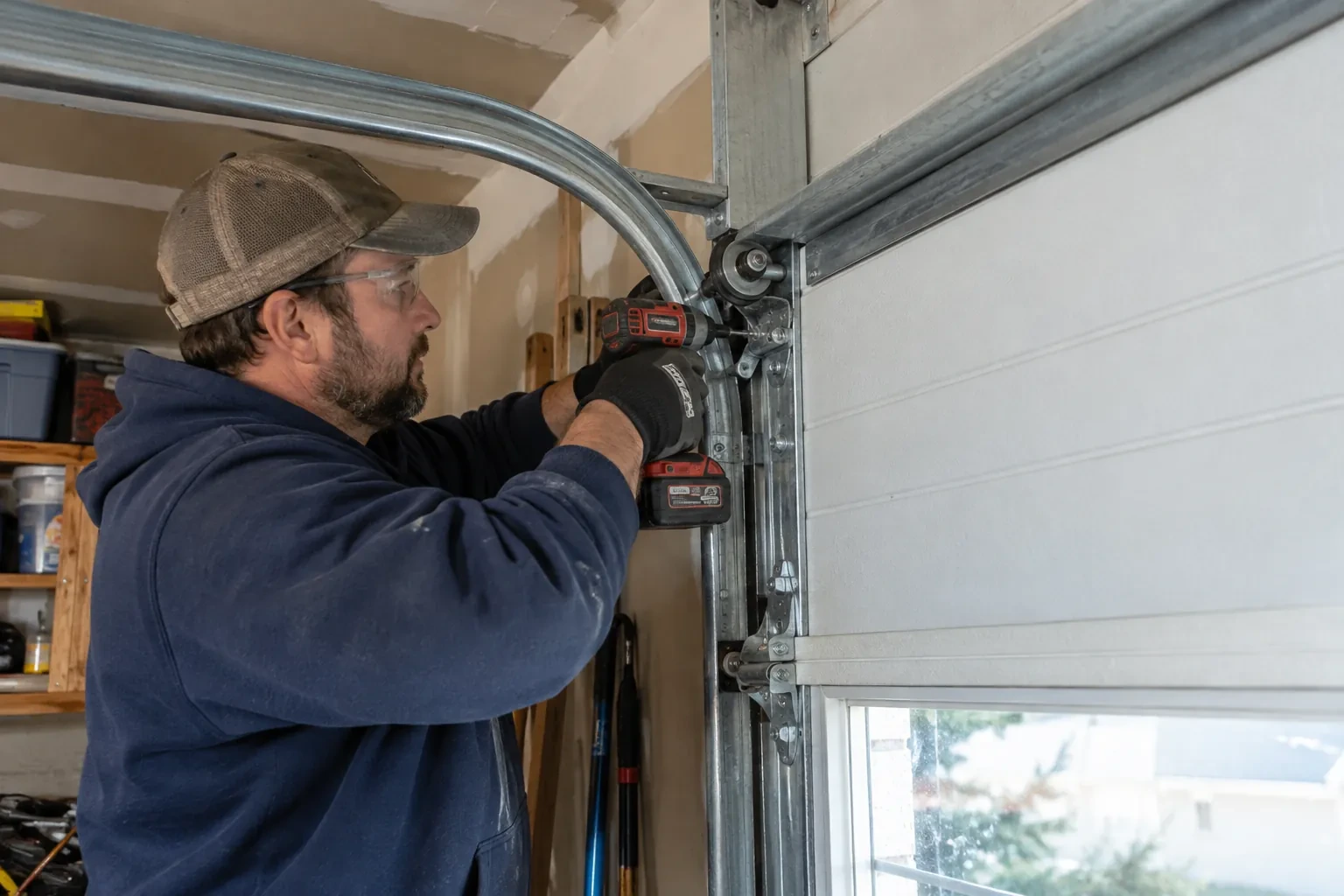
The garage door services we provide in Brampton range from a single adjustment to a complete new installation. In between sit spring and cable replacement, opener repair, roller and hinge work, weather sealing and safety checks, each one done carefully and explained before it begins.
About 23% of homes in Brampton were built in 1980 or earlier, according to the 2021 Census.
Newer homes
A newer door still under its first set of springs is a good candidate for preventive work: lubricating the torsion spring, checking the cable ends at the drums and confirming balance before the spring reaches its cycle limit, so the replacement is planned rather than forced by a broken spring.
Single-detached houses make up about 53% of homes in Brampton (2021 Census).
Where housing is varied, security needs vary too. A detached home wants its garage door closing fully and its interior door respected; a townhouse or condo wants old fobs and remotes cleared and the shared entrance working. We address whichever applies at each door.
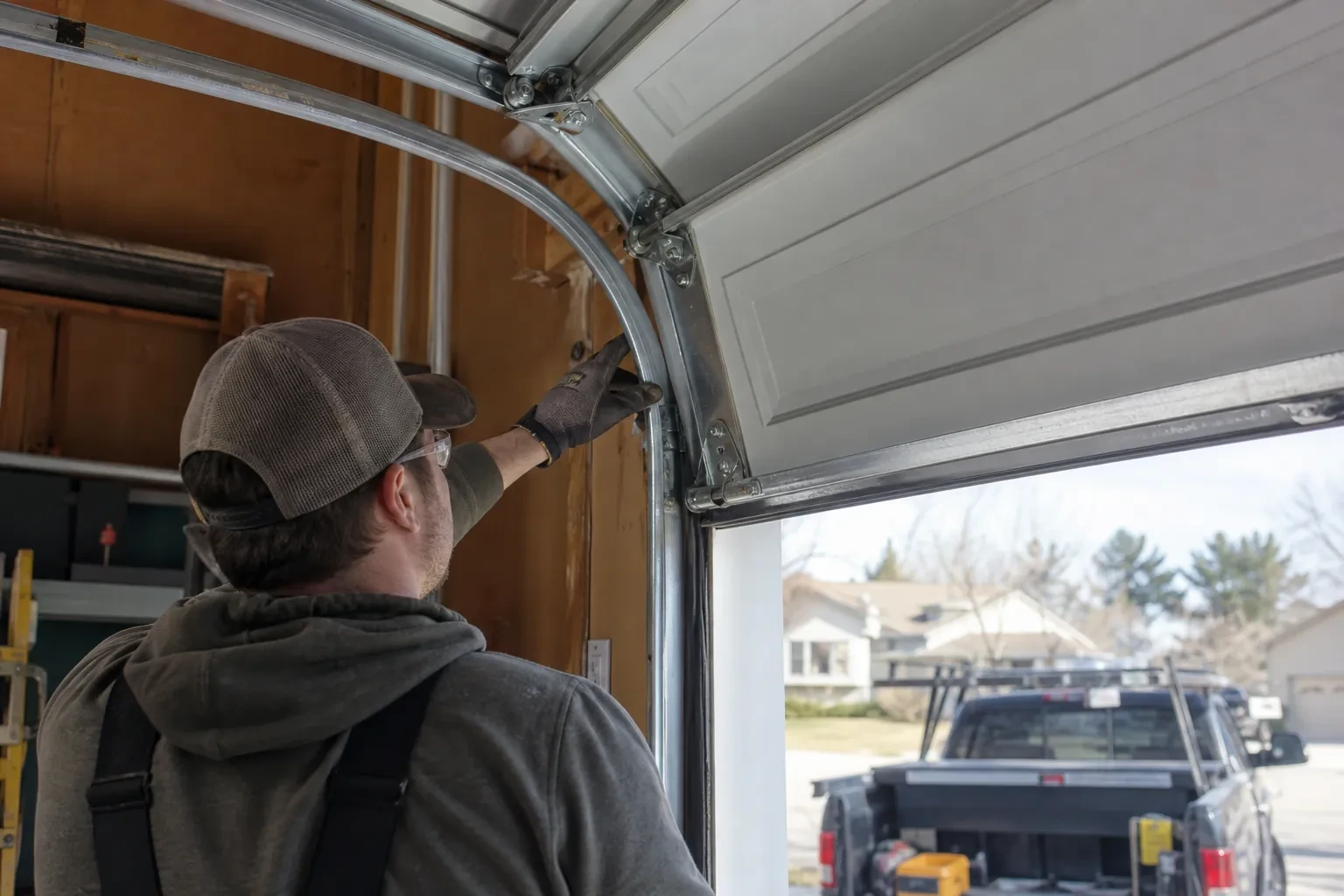
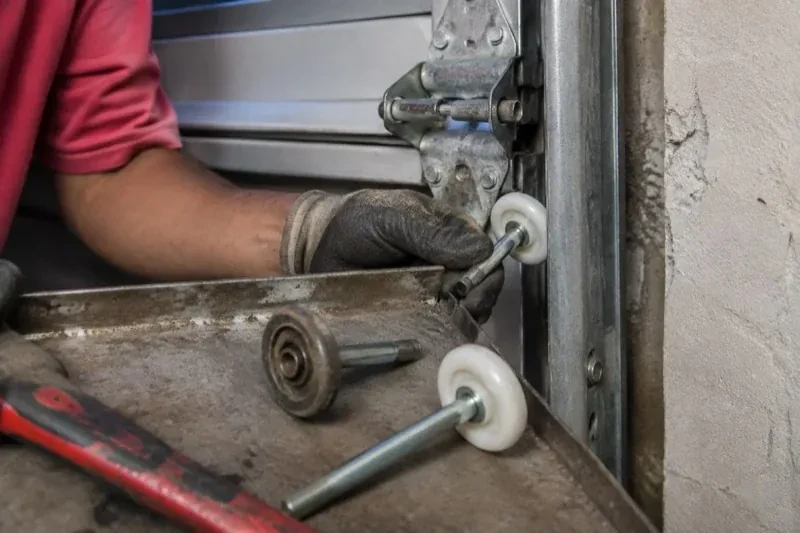
Struts, brackets, hinges and bearings do not lift the door, but they keep the lifting hardware working in a straight line. When they bend or wear, springs and cables suffer. We include them in every hardware assessment.
Matching the door to the house is not an accident. Proportion, panel layout, window placement and colour are chosen together, and we help with the choosing before we get to the installing.
The door goes up perfectly. Coming down is the trouble: partway to the floor it stops, climbs back to the top, and the light on the opener blinks at you.
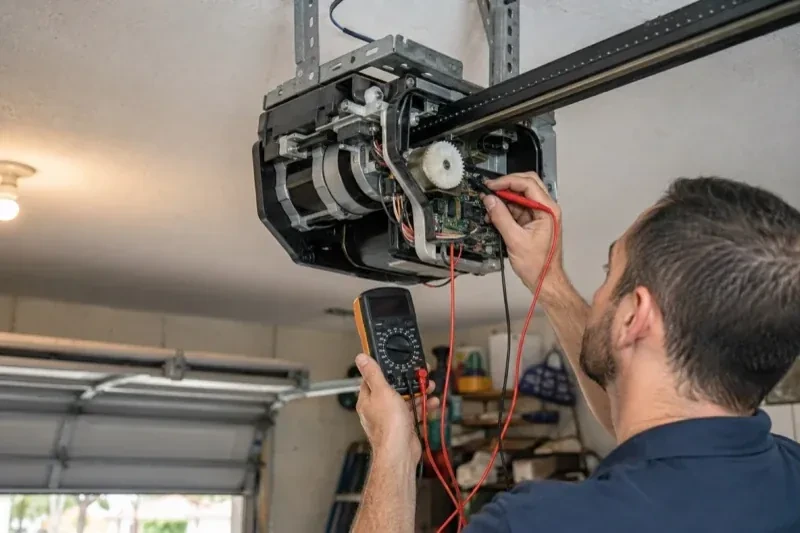
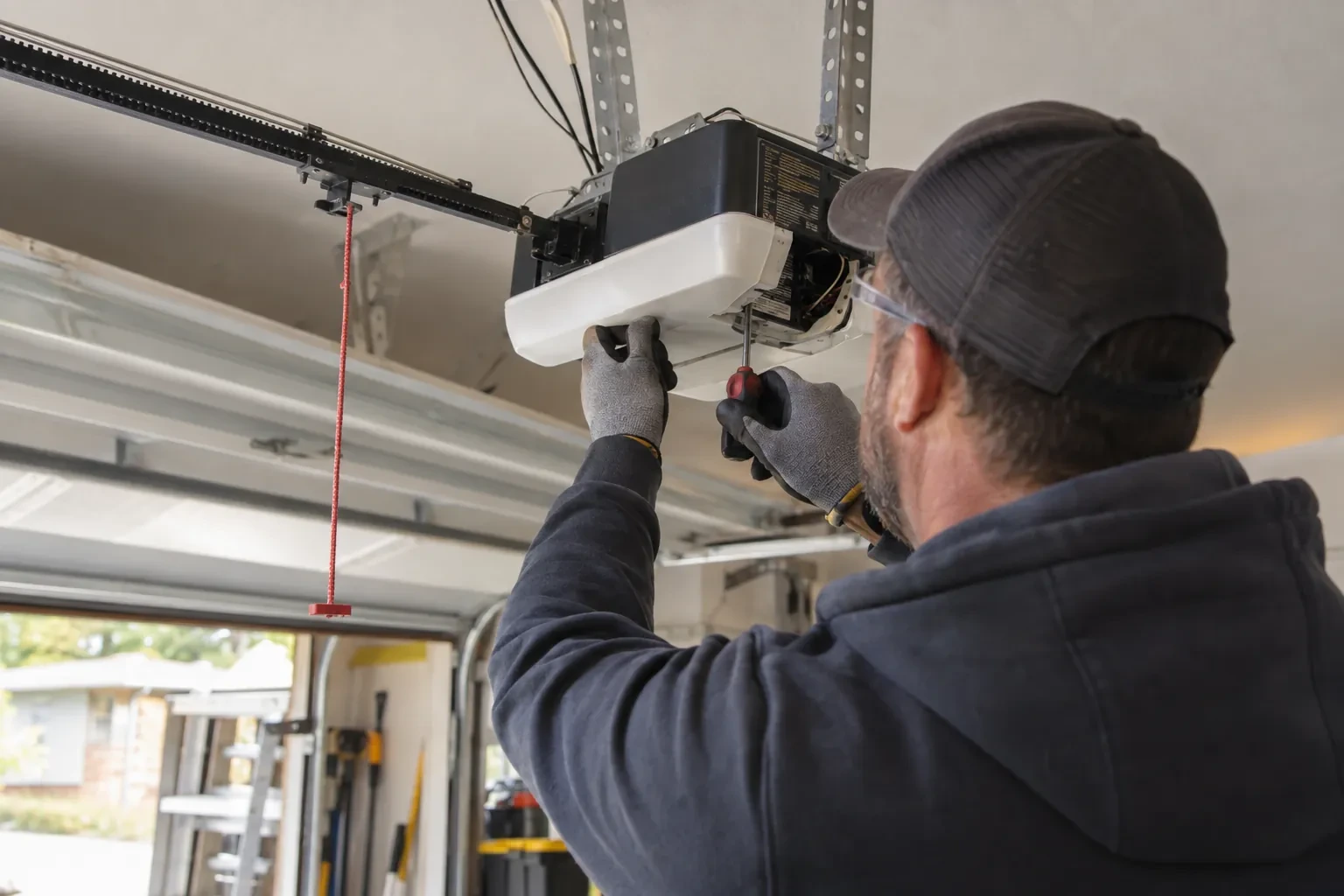
The motor runs, you can hear it working, but the door never moves. When you look up, the sprocket on top of the head is barely turning, and there is a little drift of pale plastic dust on the cover.
There is a new squeal from the front of the rail, up near the header, on every cycle. The belt has started tracking to one side and its edge is fuzzy where it has been rubbing.
You swapped the old wooden door for a heavier insulated steel one, and the twenty-year-old opener that was kept has never settled. It strains on the way up, stops partway on cold mornings, and the rail shudders with every cycle.
There is a wireless symbol printed on the opener above the car, and the manual mentions an app, but the head unit has never been connected to anything. You downloaded the app once, it asked for a serial number and a network, and the moment passed.
A previous owner knotted the release cord around the rail and stacked storage shelves right beneath it. You only discovered this in the dark, with the power off, a flashlight in your teeth and a car that needed to be somewhere.
Which fix fits?
On bright afternoons the door goes down a metre, stops, and climbs back up while the light on the opener blinks.
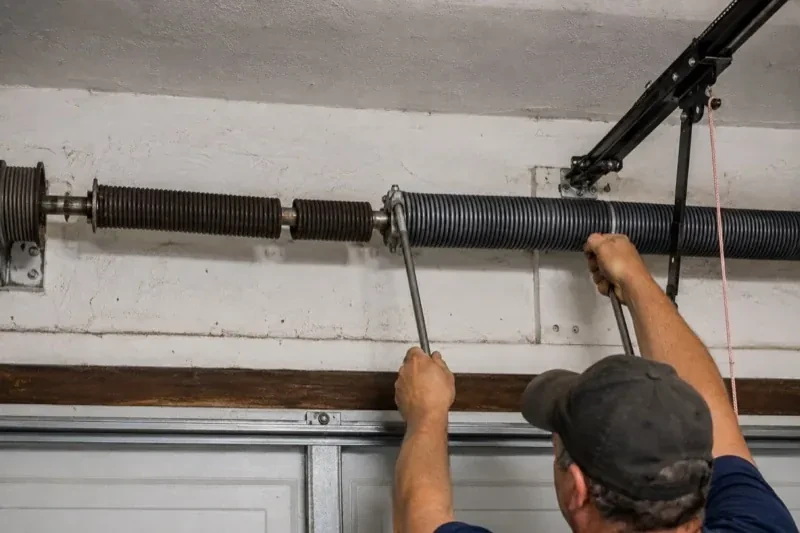
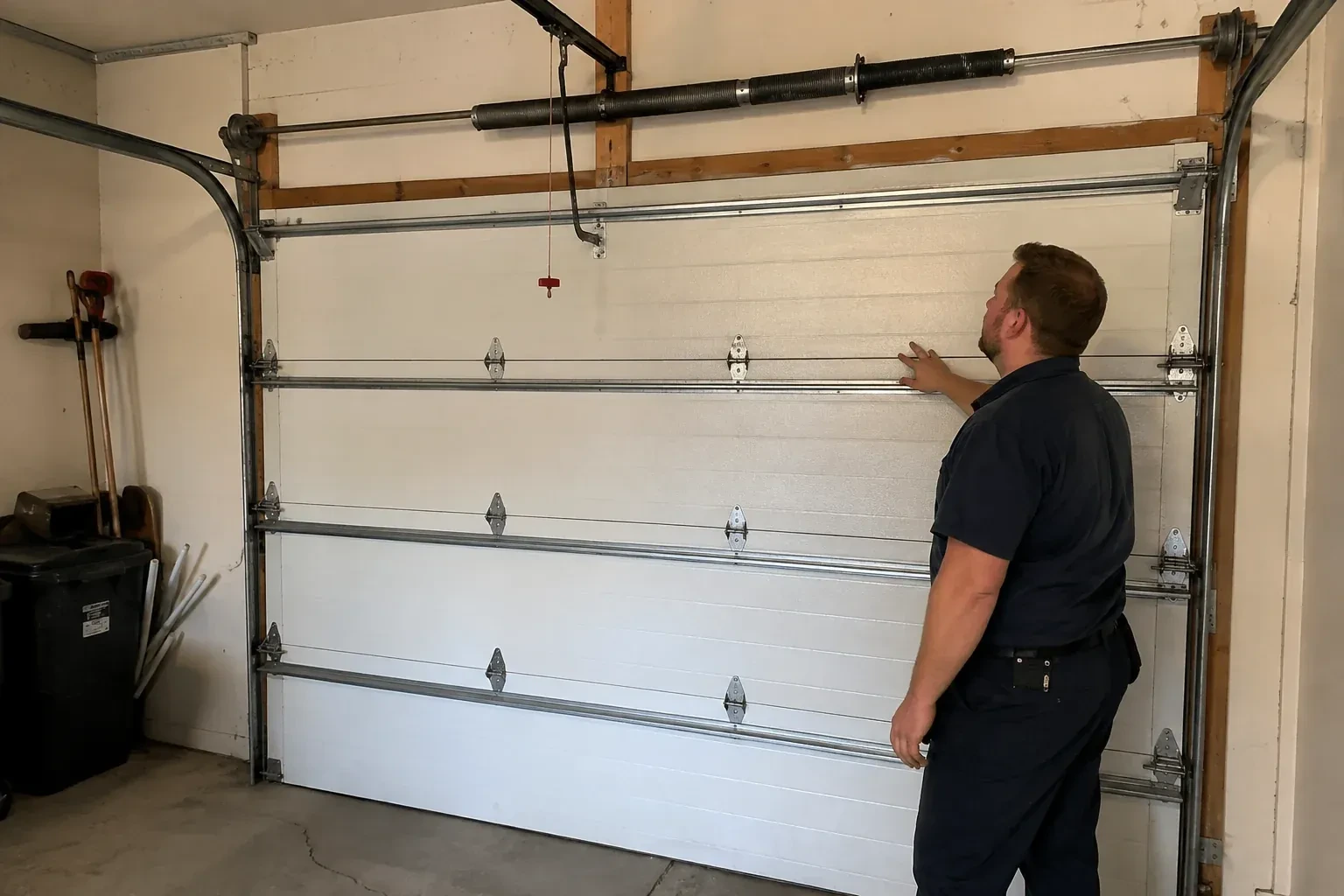
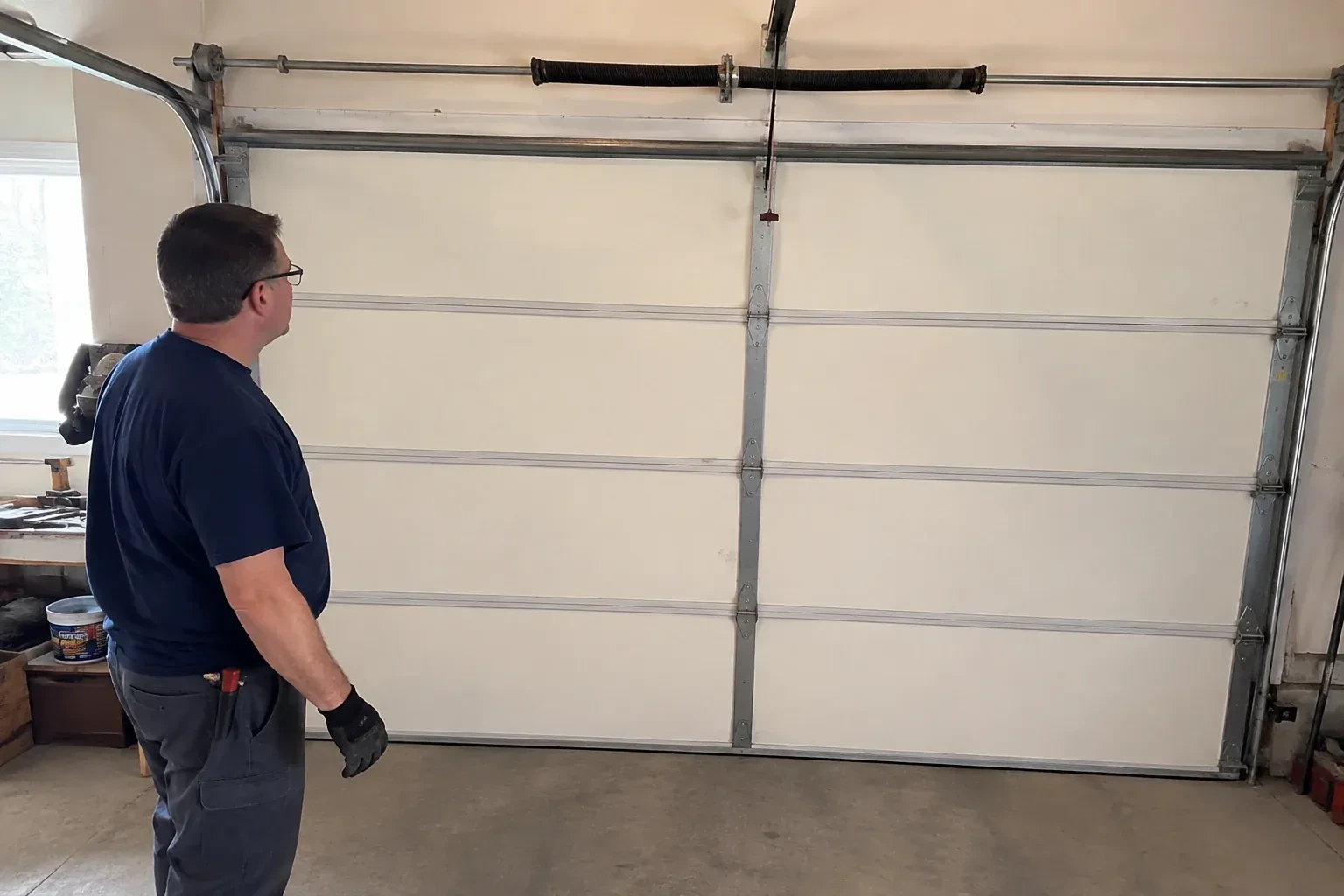
WhyA garage door is balanced when its springs carry almost the whole weight of the door, so the door itself is nearly weightless in your hands and the opener only has to guide it.
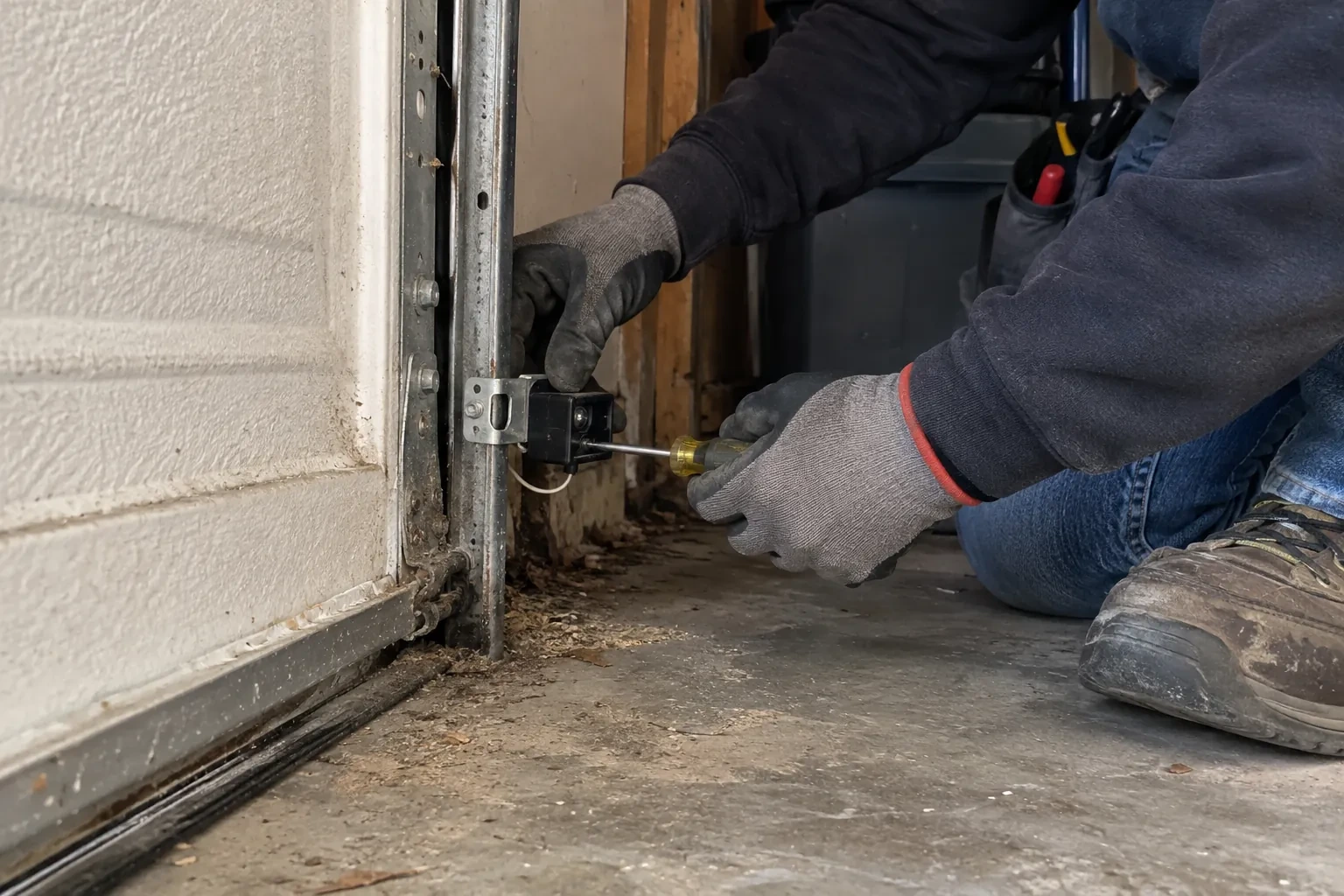
The small light on one of the sensors near the floor has gone dark, or it flickers when someone walks past the track.
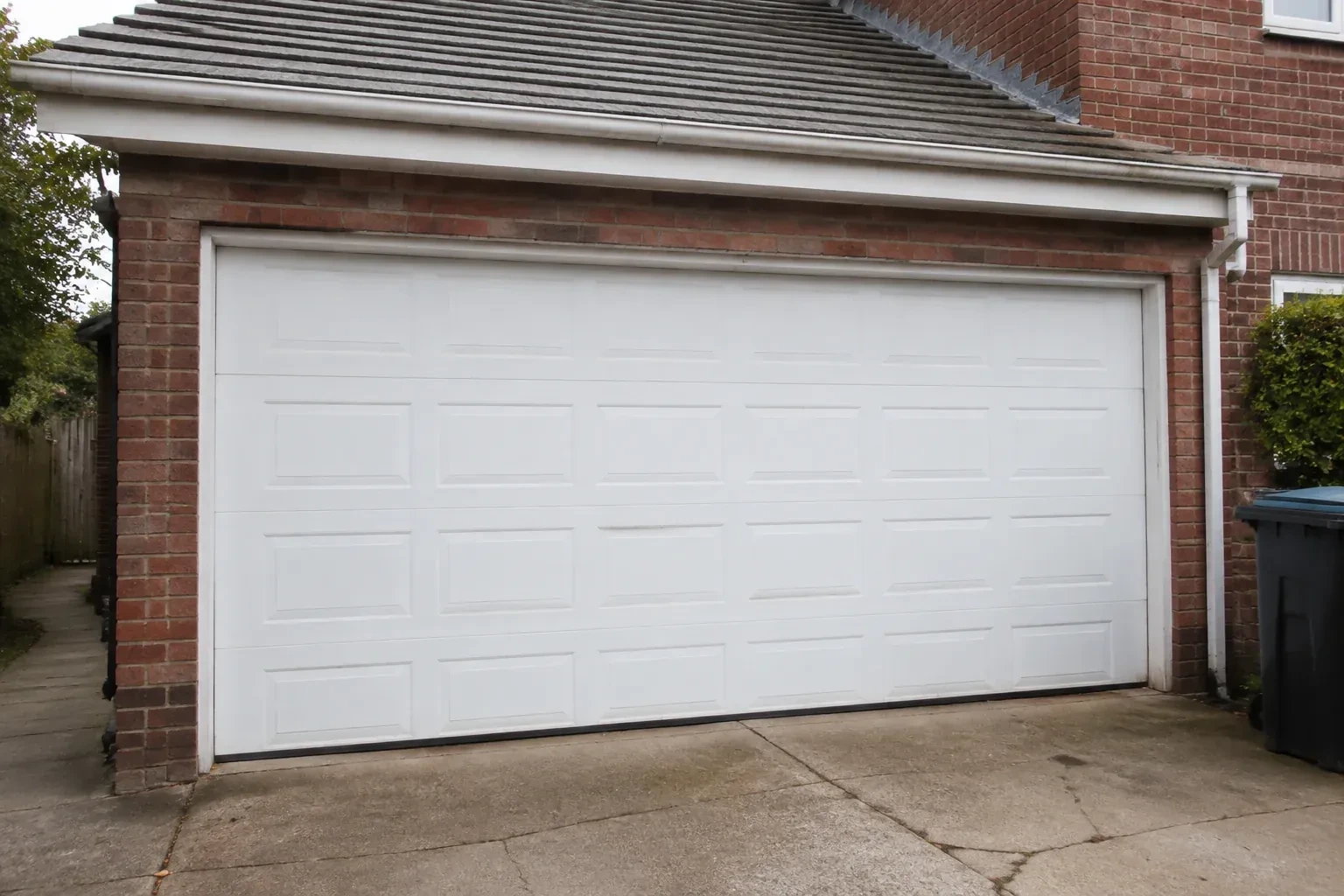
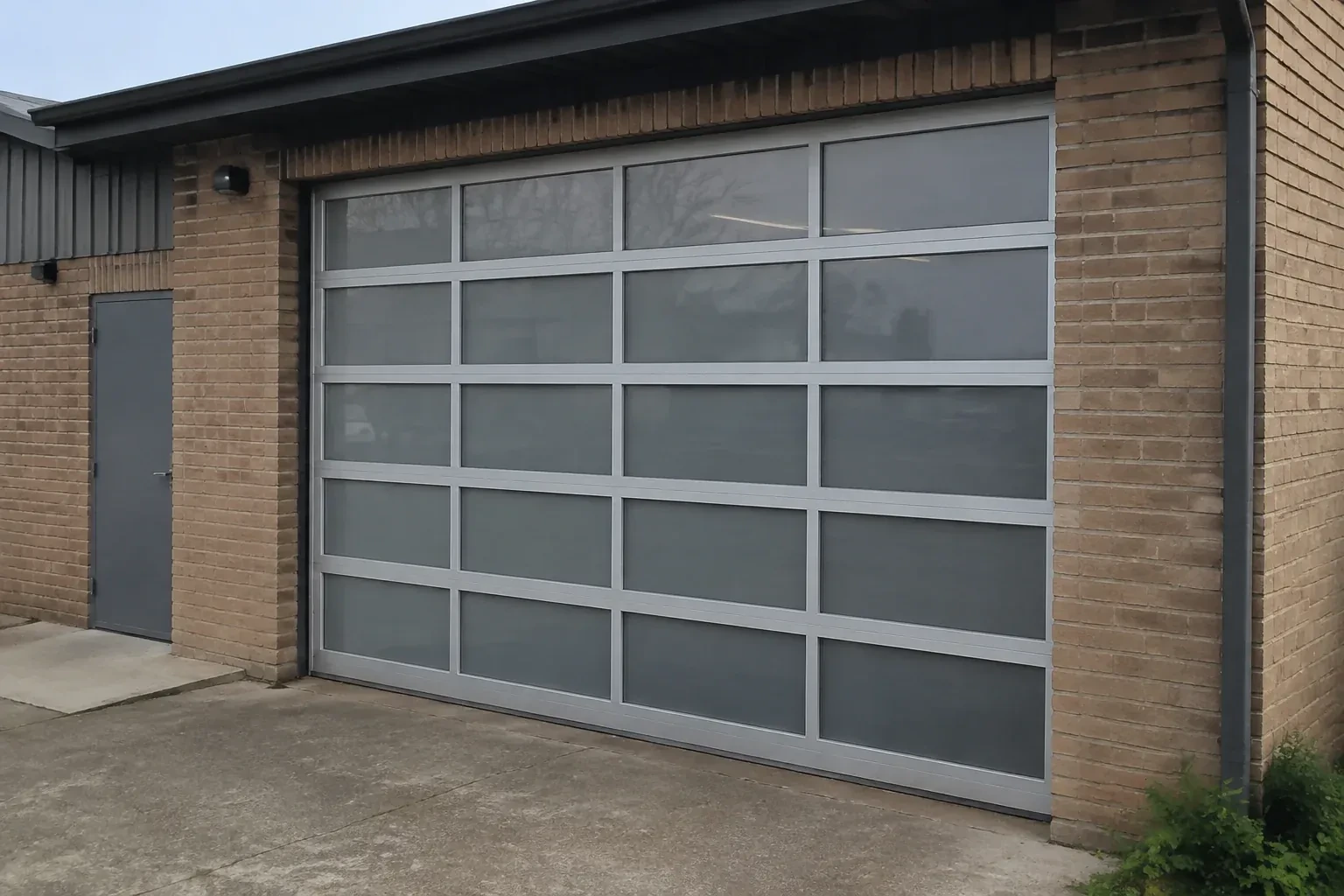
WhyA full-view door can be planned for a garage that stays active through winter.
An entrance. Not an afterthought.
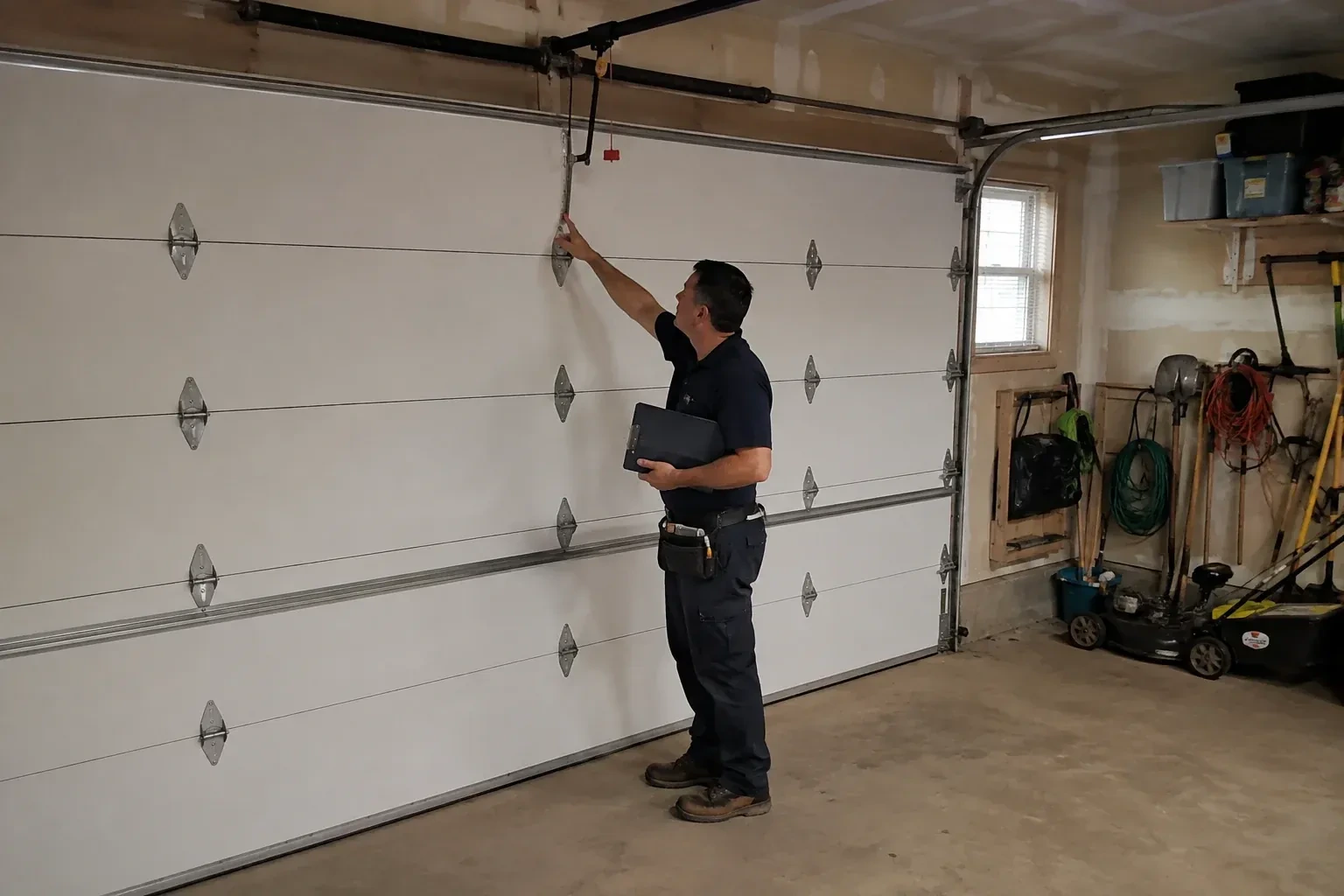
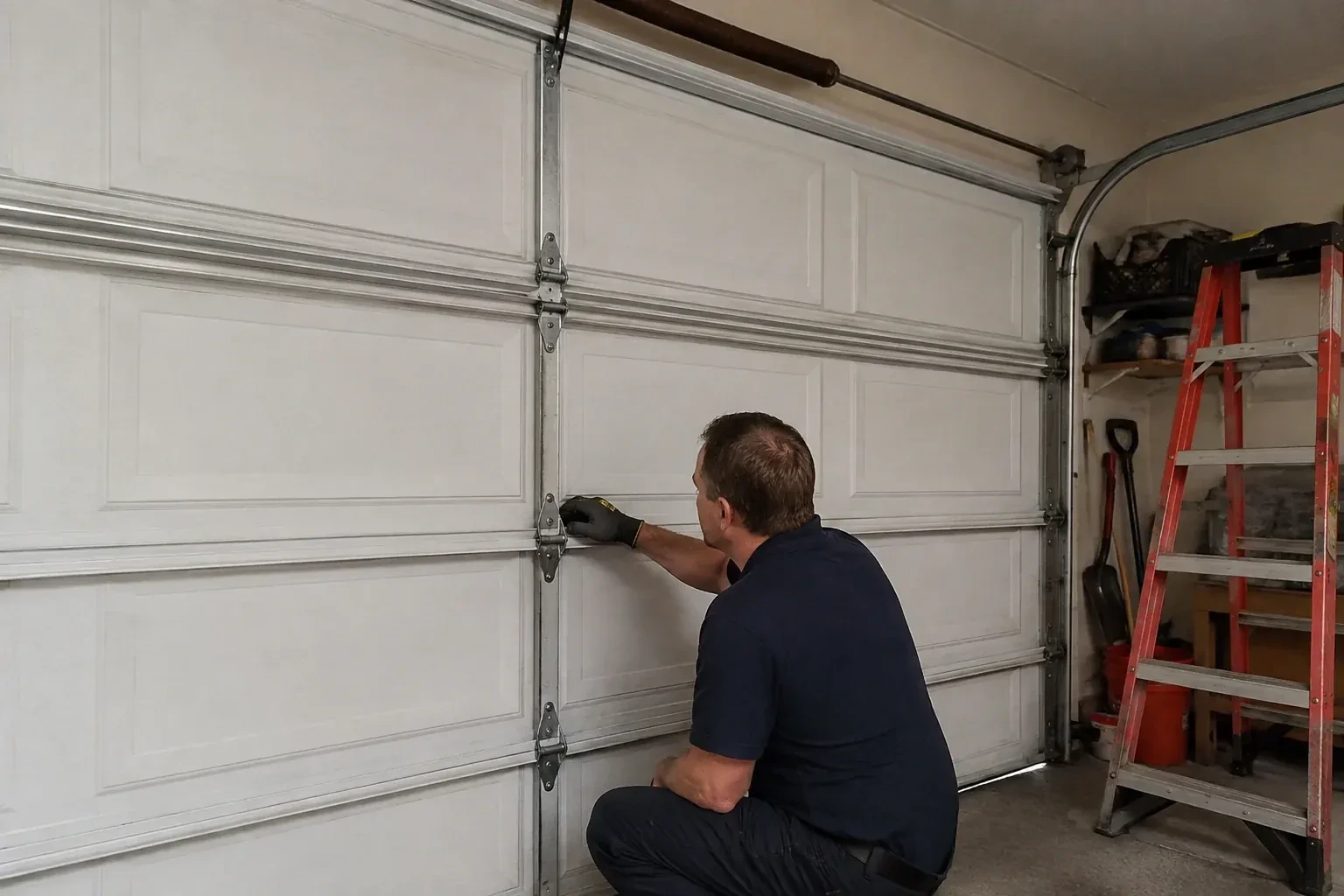
1/10Garage Door Safety Inspection
On bright afternoons the door goes down a metre, stops, and climbs back up while the light on the opener blinks. After dark it closes perfectly. Nothing has changed except the weather.
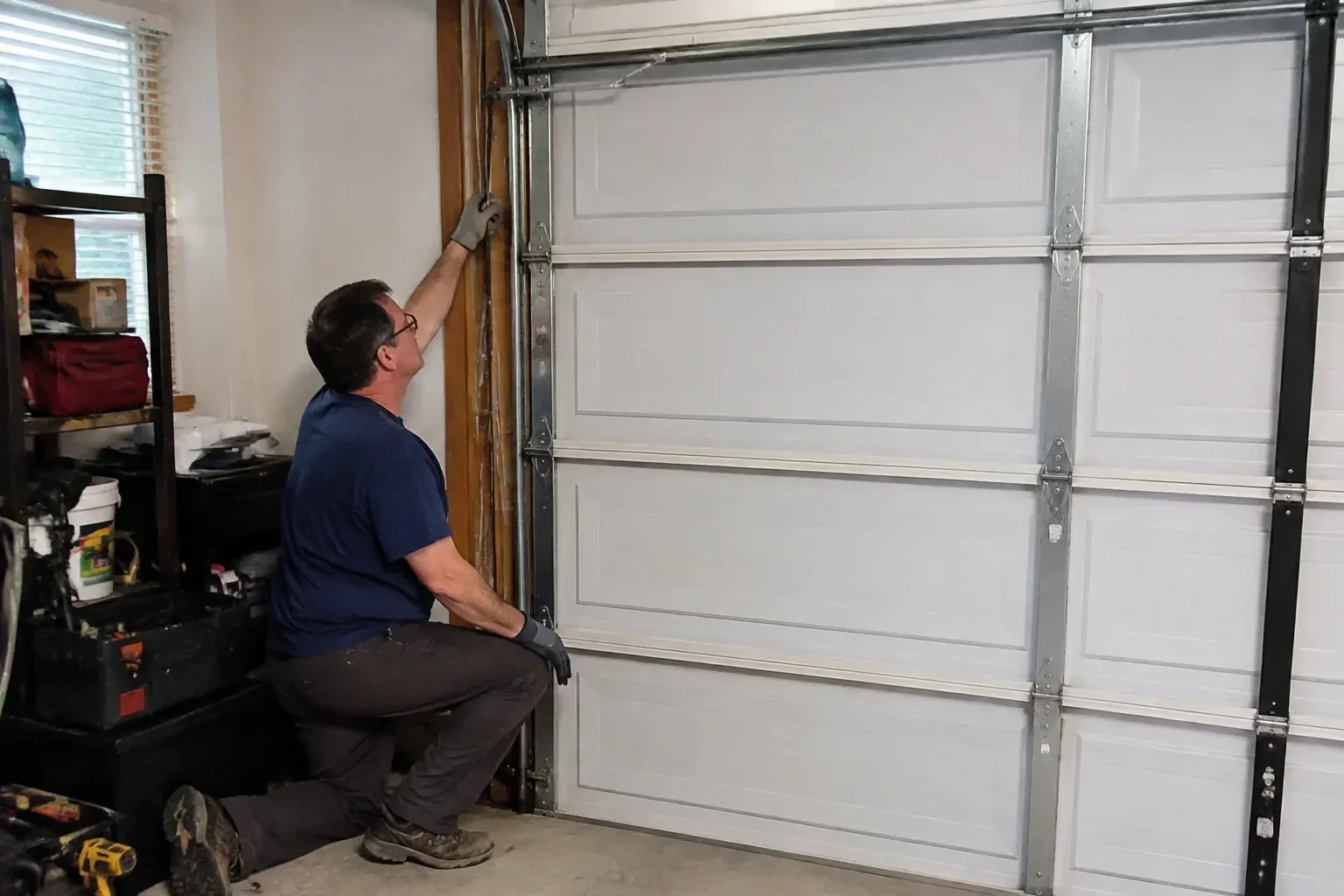
Halfway up, the door shudders. The sections seem to catch for a moment, the whole assembly shakes, then it carries on as if nothing happened. You have started holding your breath at that spot each time.
Every time the door goes up there is a sharp pop from the same spot, about a metre off the floor, and the whole door gives a little shudder. Come back down and it happens again at exactly the same place.
Backing out this morning, the mirror caught the track beside the door. Now there is a crease in the steel at about knee height, and the door stops with a bang every time a roller reaches it.
You heard a sharp bang from the garage, and now the opener hums for a second and gives up. The door lifts a few centimetres at most, then settles back down as if something very heavy is holding it in place.
Someone replaced the springs a while back and the door has bounced at the top ever since. It slams open against the stops, then creeps down a few inches, and the opener trolley rattles because the door is pushing where it should be resting.
The small light on one of the sensors near the floor has gone dark, or it flickers when someone walks past the track. The other one glows steadily. The door refuses to close from the car.
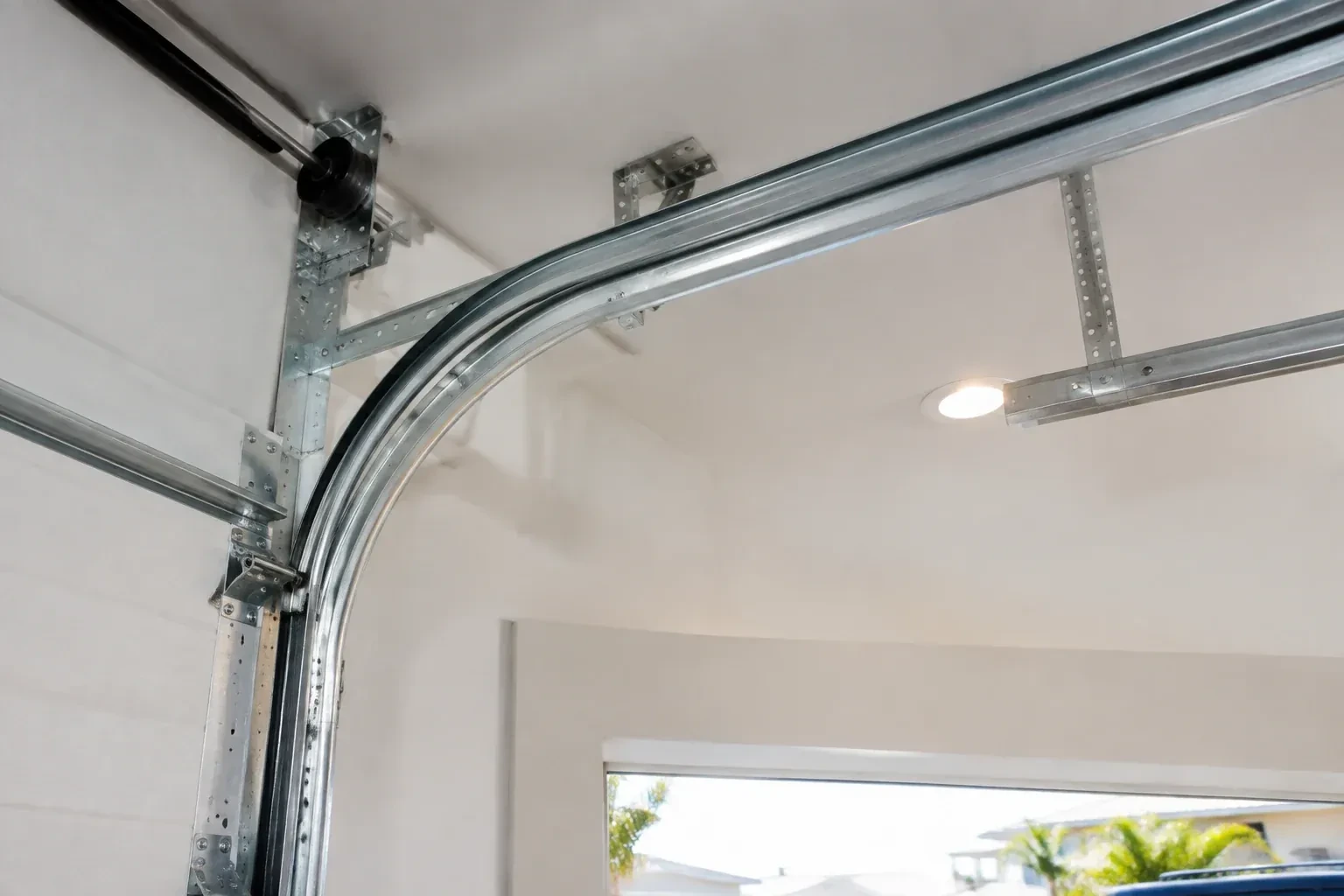
Your renovation changes how the ceiling space will be used. The existing track conflicts with new storage and lighting, so the replacement needs a measured track arrangement that follows the available headroom and backroom.
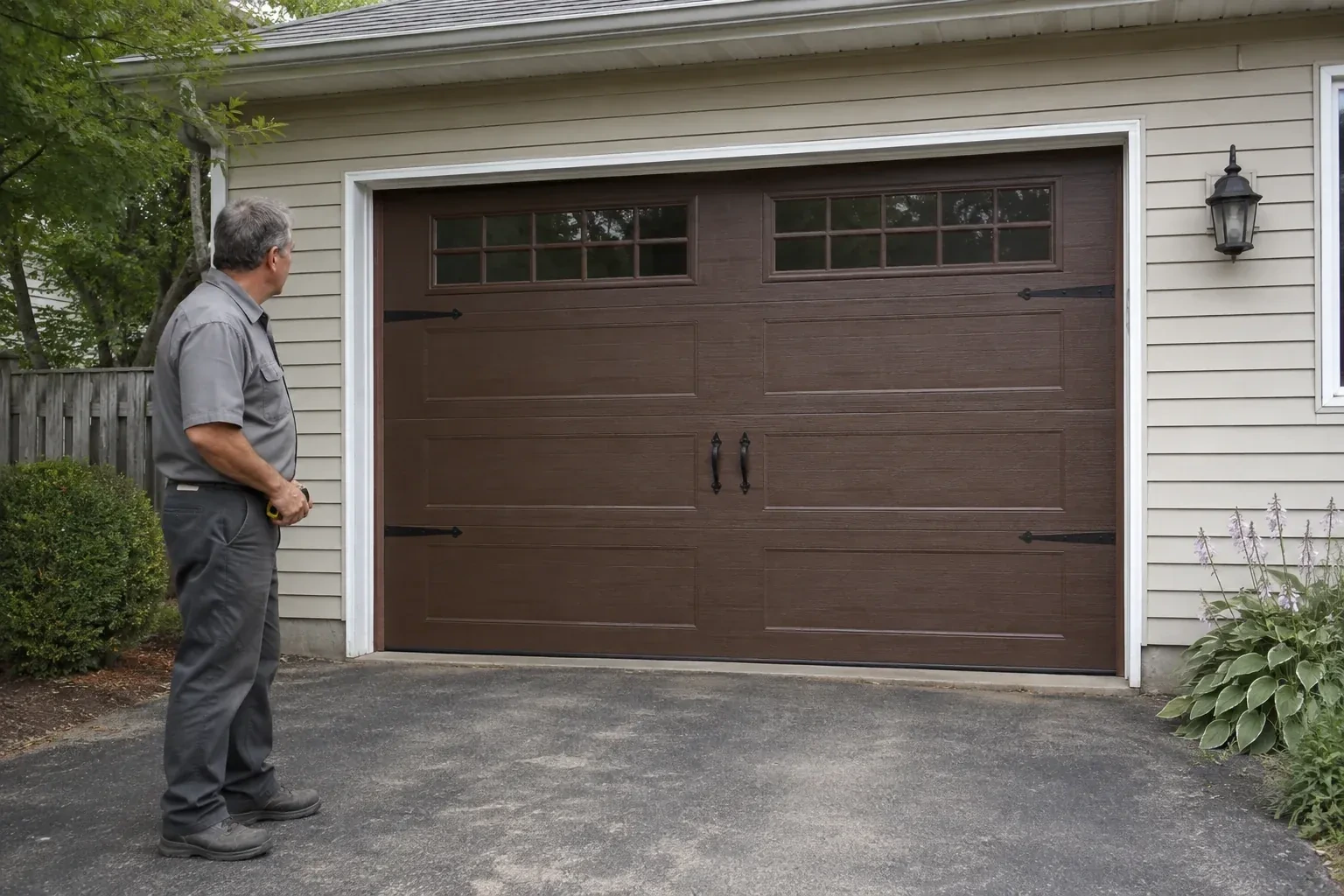
Traditional swing-out coach doors have the look you like, but the driveway needs to remain clear as the door opens. A sectional carriage-house design would provide that appearance while travelling overhead.
The current door is due for replacement, and this is the opportunity to change the whole character of the opening. Glass, frame finish and hardware need to be planned as one working system.
The moving metal-on-metal points get a light coat: the spring coils, the hinge knuckles, the roller bearings and the pins at the bottom brackets. A silicone or lithium product made for doors is used, then the door cycles a few times to carry it in. The tracks are the exception; they are cleaned and left bare, since a slick track lets the wheels skid and holds grit against them.
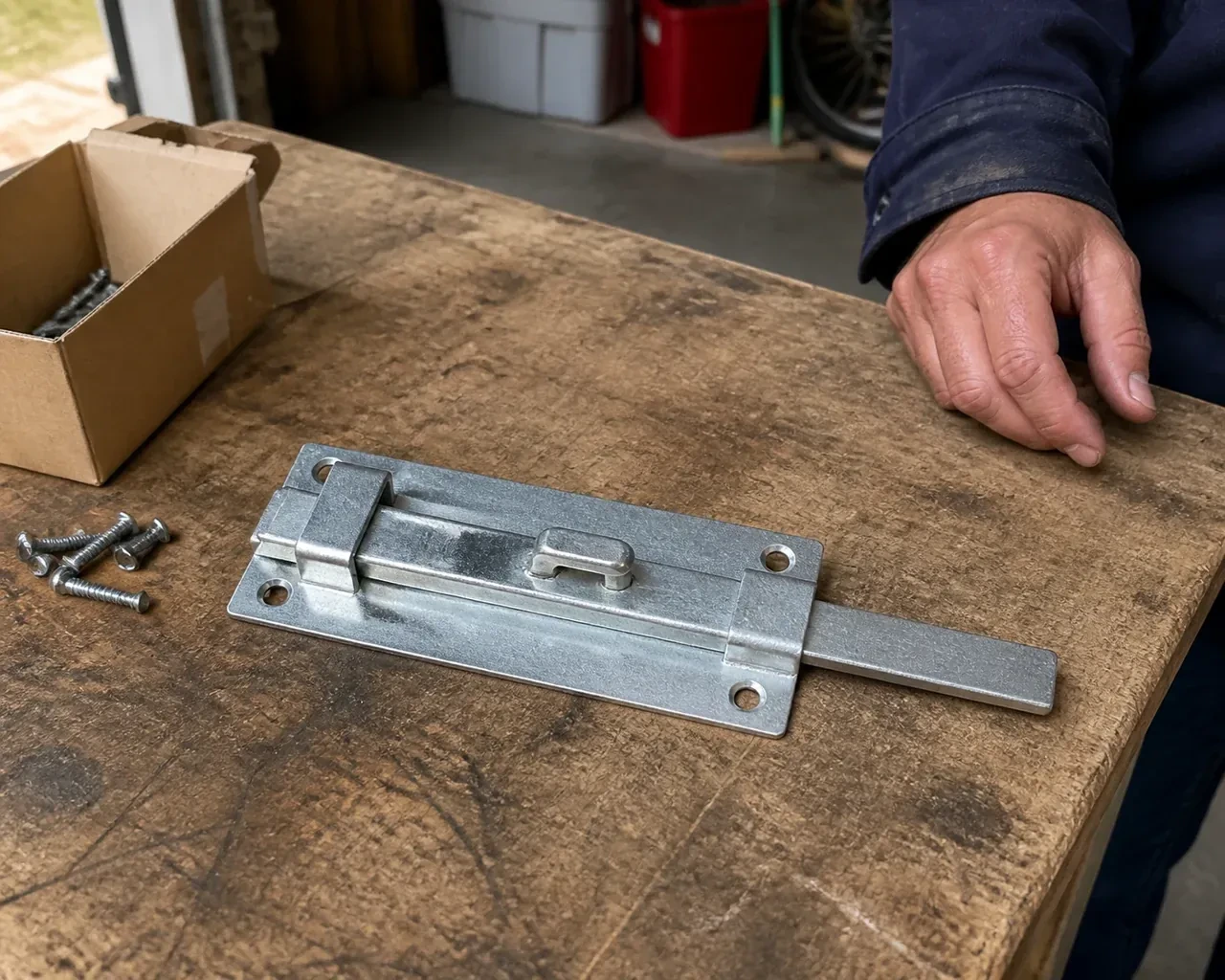
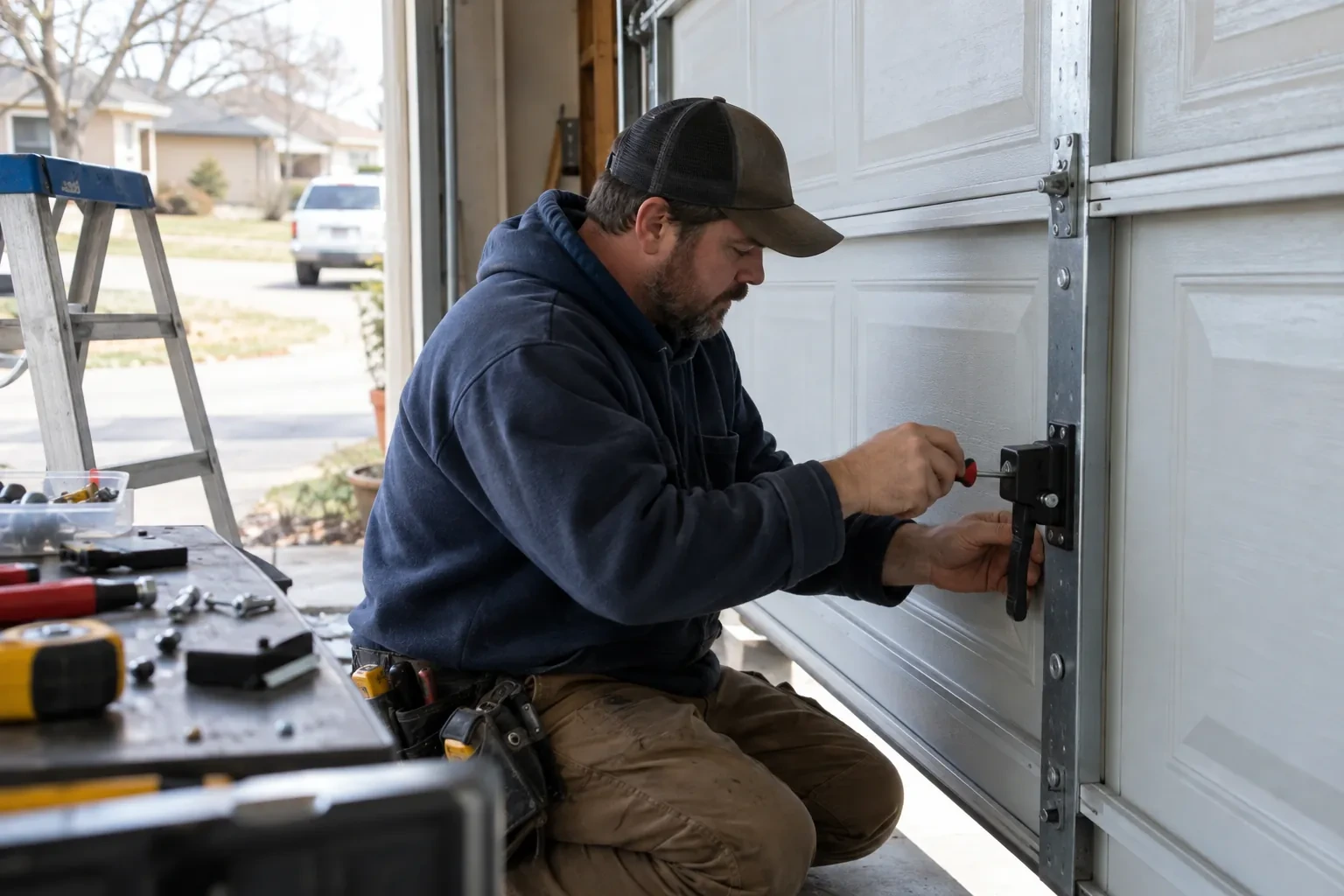
My door has a lock bar. Should it be used with an opener?
Not while the opener is connected. If the slide lock is engaged and someone presses the remote, the opener pulls against a locked door and can bend the top section or strip its gear. On a door driven by an opener the lock is usually disabled or removed during a tune-up, and the opener's own hold on the door provides the security. If you want a manual lock for holidays, the technician can show you how to use it safely with the opener unplugged.
Why did the hinge crack in the first place?
Steel flexed often enough eventually cracks, and several things speed that up. A door out of balance is dragged by the opener, and every hinge takes the strain. A seized roller twists its hinge on each trip. A track out of line pinches the panels at the curve. A wide panel without a strut flexes at the joint. Corrosion at the low hinges thins the steel. The technician looks for which of these was at work so the new hinge is spared the same stress.
How do I keep road salt from rusting the track?
Salt does its work in the bottom foot of each vertical track, where slush drips off the car and sits. Push slush clear of the door's inside edge rather than letting it pool, and on a mild day wipe or rinse the brackets and the lower channel. A little silicone spray on the bracket fasteners in autumn helps them shed water. Keeping the threshold free of ice also stops the door being pulled against a stuck bottom section.
What happens if the header wood or centre bracket is damaged?
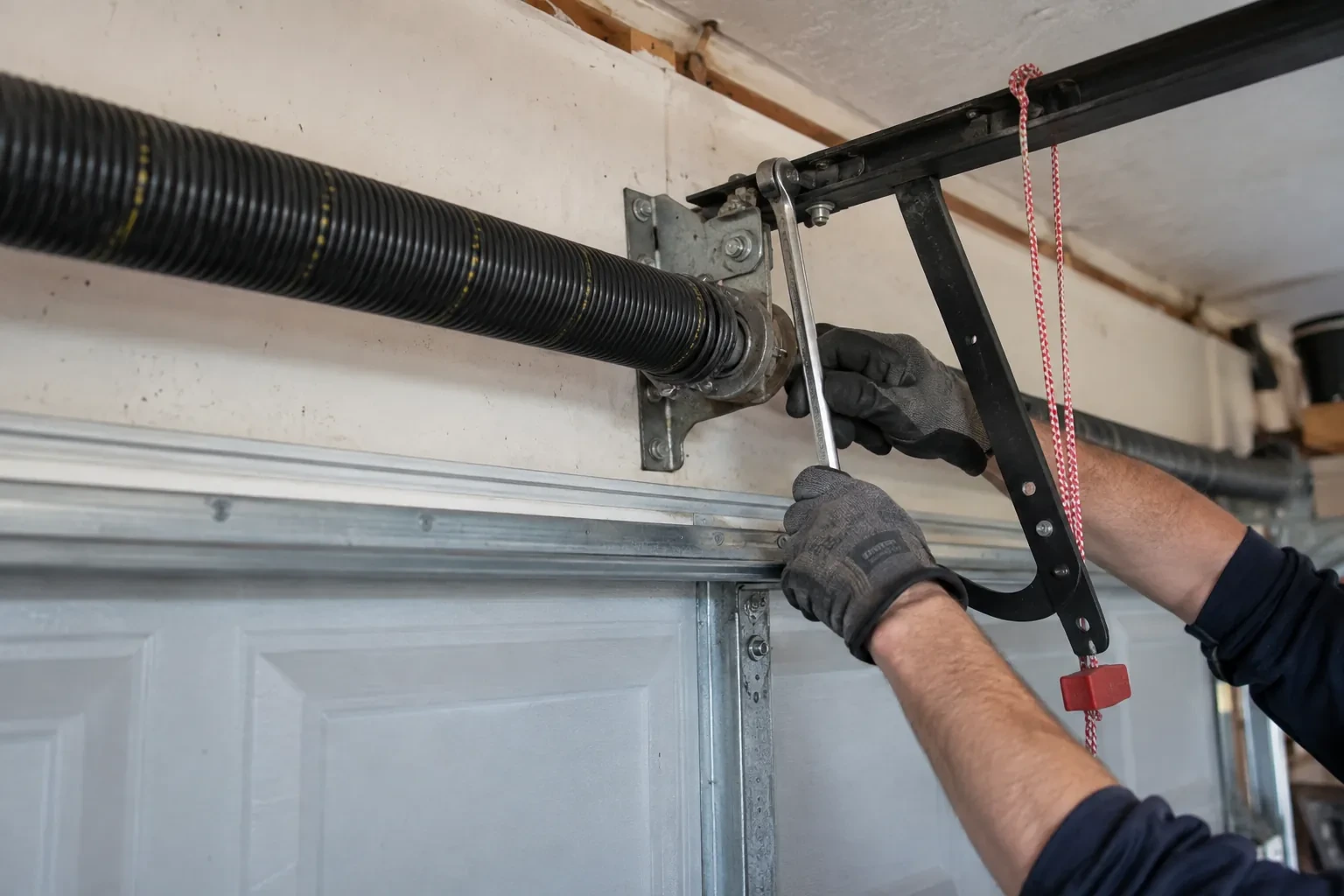
The centre bracket anchors the spring's reaction force to the framing above the door, so it has to be solid. If the header has split or softened, or the lag bolts have pulled, the technician can refasten into sound wood, add a reinforcing plate or replace the bracket before the new spring is wound. Dealing with this first keeps the shaft level and the spring pulling straight, which protects the bearings and the door.
What safety tests are done after the adjustment?
Two are standard. A piece of two-by-four is laid flat on the floor in the door's path and the door closed onto it; it must reverse and return to open. Then, as the door closes, an object is passed through the photo-eye beam near the floor, and again the door must reverse. Both depend on a balanced door, which is why they come after the adjustment rather than before.
How should I clean the lenses?
Gently, with a soft dry or lightly damp cloth, the way you would clean eyeglasses. Never scrape a lens or use a solvent, since a scratched or clouded lens scatters the beam. Wipe both sensors, then check that the receiving light comes on steadily. If a lens frosts on cold mornings, give it a few minutes to clear or dry it with a cloth. A quarterly wipe keeps dust, cobwebs and salt film from building up.
Do I need a new opener at the same time?
Not automatically. The decision depends on the existing operator's condition, compatibility, attachment and the customer's access goals. Door replacement and opener replacement are separate scopes that can be coordinated. Evaluating the mechanical door first keeps the operator decision grounded in how the new assembly moves and what equipment information supports.
Can the opening be widened for a larger door?
A wider opening can be a separate renovation project, but it requires more than changing the door order. The header, side framing, exterior finish, electrical items and supporting loads need appropriate review, along with any permit or design requirements. Once that work has defined and prepared the final opening, the carriage-house door can be measured and specified against stable dimensions.
Can a full-view door fit a low ceiling?
A low ceiling may suit a low-headroom track arrangement, but the decision depends on measured space above and behind the opening. Beams, bulkheads, lights, ducts, storage and opener hardware are mapped together. The selected sections also need the correct top-fixture geometry and travel path, so feasibility is established from the complete room rather than ceiling height alone.
Request a visit
Landlords and property managers in Brampton get a written summary after every visit: the address, what was found, what was replaced, and what is likely to need attention next. Tenants get a door that works and remotes that behave. Everyone knows where things stand without a second phone call.