Springs · Brampton
Garage Door Hinge Replacement in Brampton
After a cold night the bottom seal had frozen to the slab.
In plain words
What comes back is a door that moves as a single piece. The panels fold around the curve without a gap opening on one side, the rollers ride flat in the track instead of leaning, and the pop a metre off the floor is gone. With the opener released, the door lifts by hand with light effort and holds at waist height, which shows the hinge work has left the balance undisturbed. You also get a note of the hinge numbers, gauge and any backer plates fitted, plus a look at the small routine of tightening and lubricating that keeps hinges working for many years.
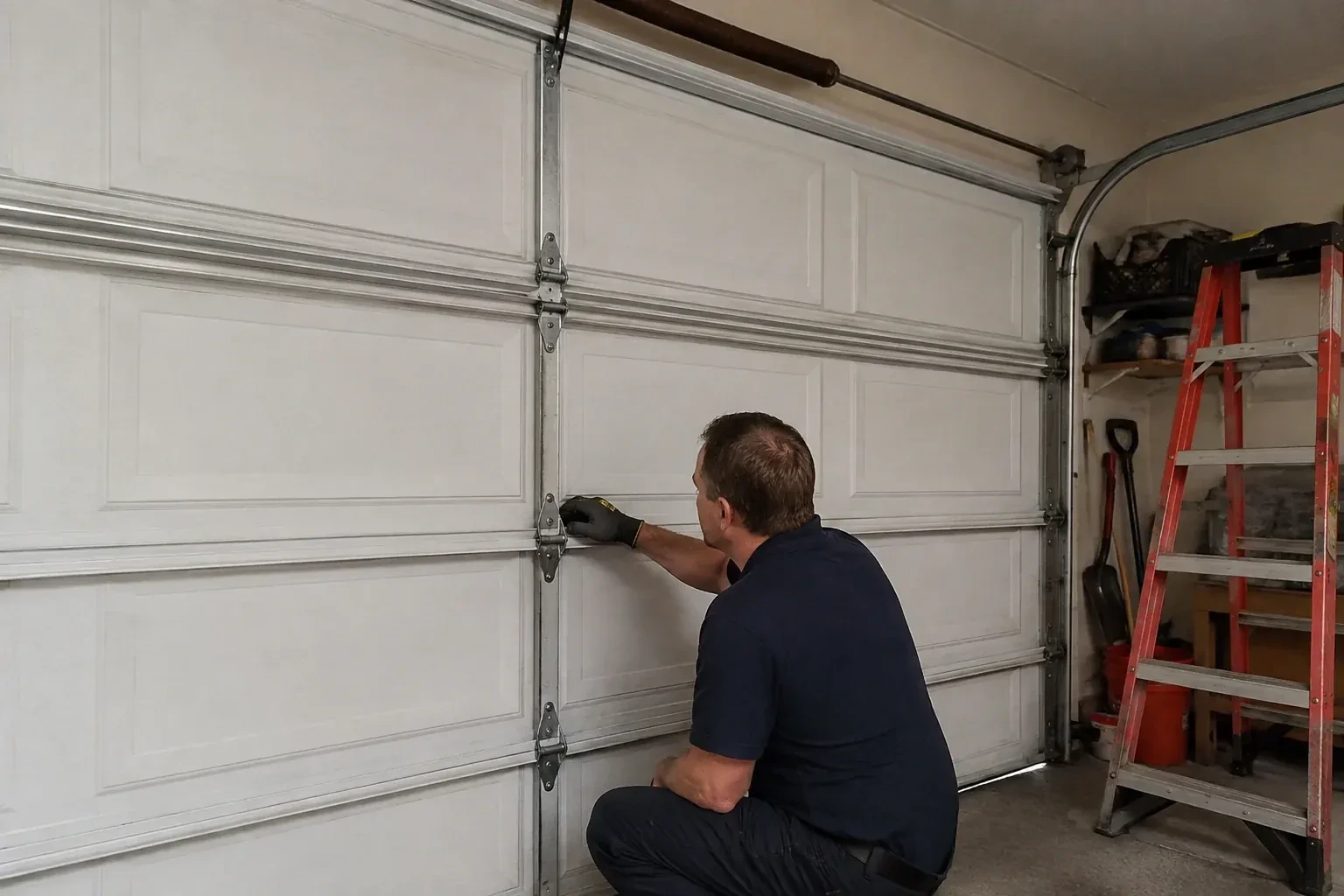
How the visit goesEvery time the door goes up there is a sharp pop from the same spot, about a metre off the floor, and the whole door gives a little shudder. Come back down and it happens again at exactly the same place.
Garage Door Hinge Replacement
How the visit goes
Panel stiffness, struts and the hinge count
Wide doors depend on their centre hinges and struts to keep each panel flat. The technician counts the hinges on each joint against the door's width, since a double door with only one centre hinge, or a wide panel with no strut, flexes on every cycle and pulls at its hinge screws. The steel around each hinge is checked for hairline cracks or oil-canning, and a wood door for splits along the grain near the fasteners. Where a strut is missing or a joint is short a hinge, adding one is discussed as part of the plan, because stiffening the panel is what keeps the new hinges tight.
One hinge at a time, door closed
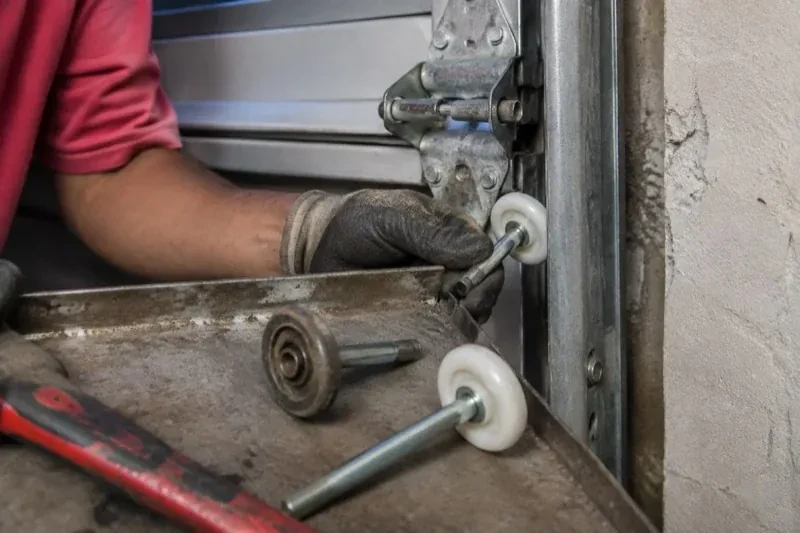
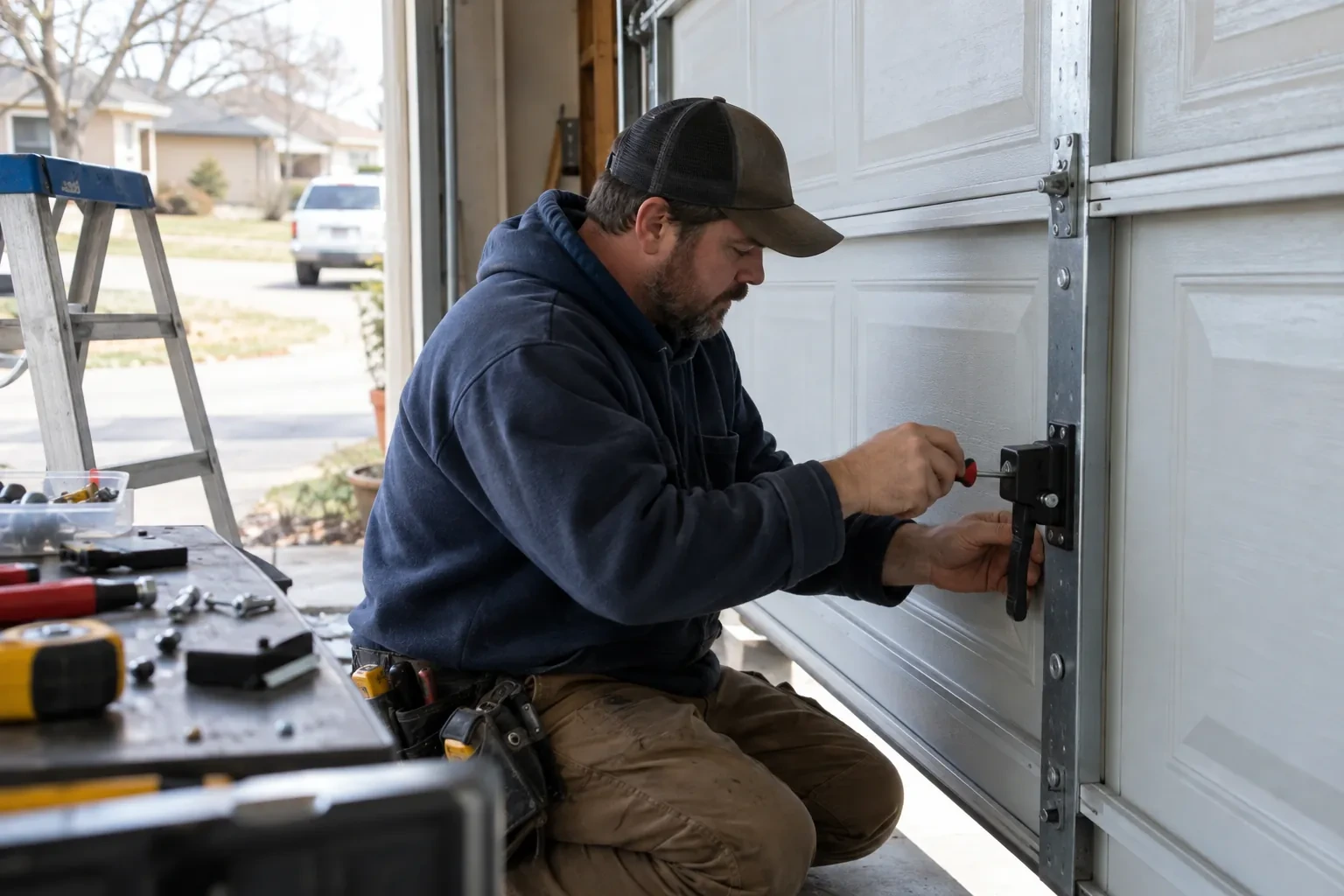
Hinges are changed singly, never a whole joint at once. With the door closed and the opener disconnected, the technician removes one worn hinge, fits its replacement and tightens it before moving to the next, so at every moment the joint is held by its other hinges and the panels stay aligned. Centre hinges go first when several are due, then the edge hinges. Each new hinge is set square to the joint line and snug to both panels before the screws are driven home, and the panels are checked for a flush face afterwards. This steady rhythm is what makes hinge work routine rather than eventful.
A monthly look from the inside
The maintenance checklist the door industry publishes asks homeowners to check hinges, brackets and fasteners visually from inside with the door closed, once a month. Stand where you can see both ends of the door and follow each joint with a flashlight: a screw head that stands proud, a hinge leaf lifted off the panel, a fresh crack spreading from a hole, or a rust stain running down from a knuckle. Then watch the door open and confirm the rollers stay in the track. Anything you spot is a small job at that stage. The whole check takes about a minute.
Garage Door Hinge Replacement
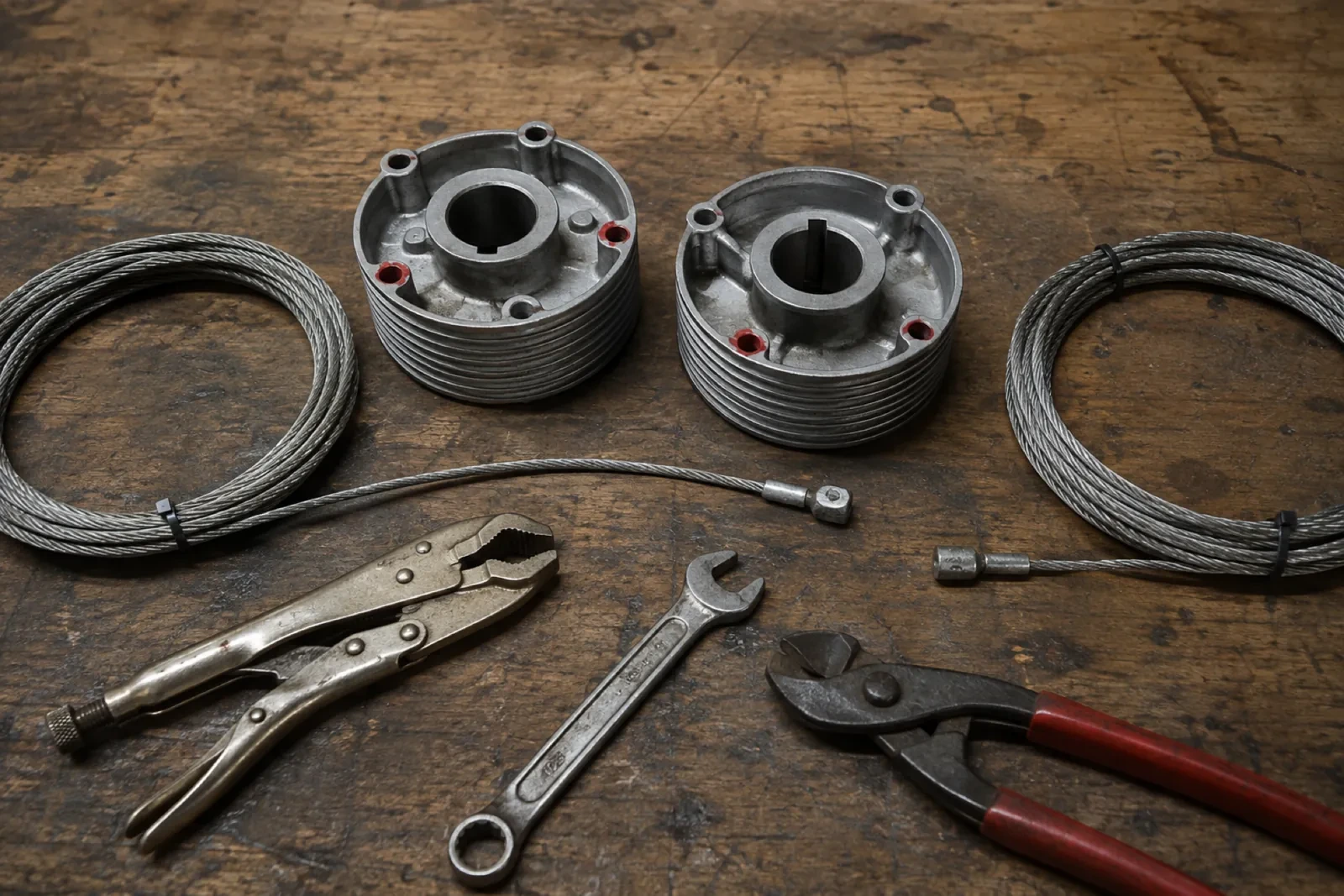
In the van
Flashlight and level
Hex-head self-drilling screws
Socket set and impact driver
Hinge support plates
Silicone or lithium hinge lubricant
Garage Door Hinge Replacement
What affects the quote
Track or balance problems found
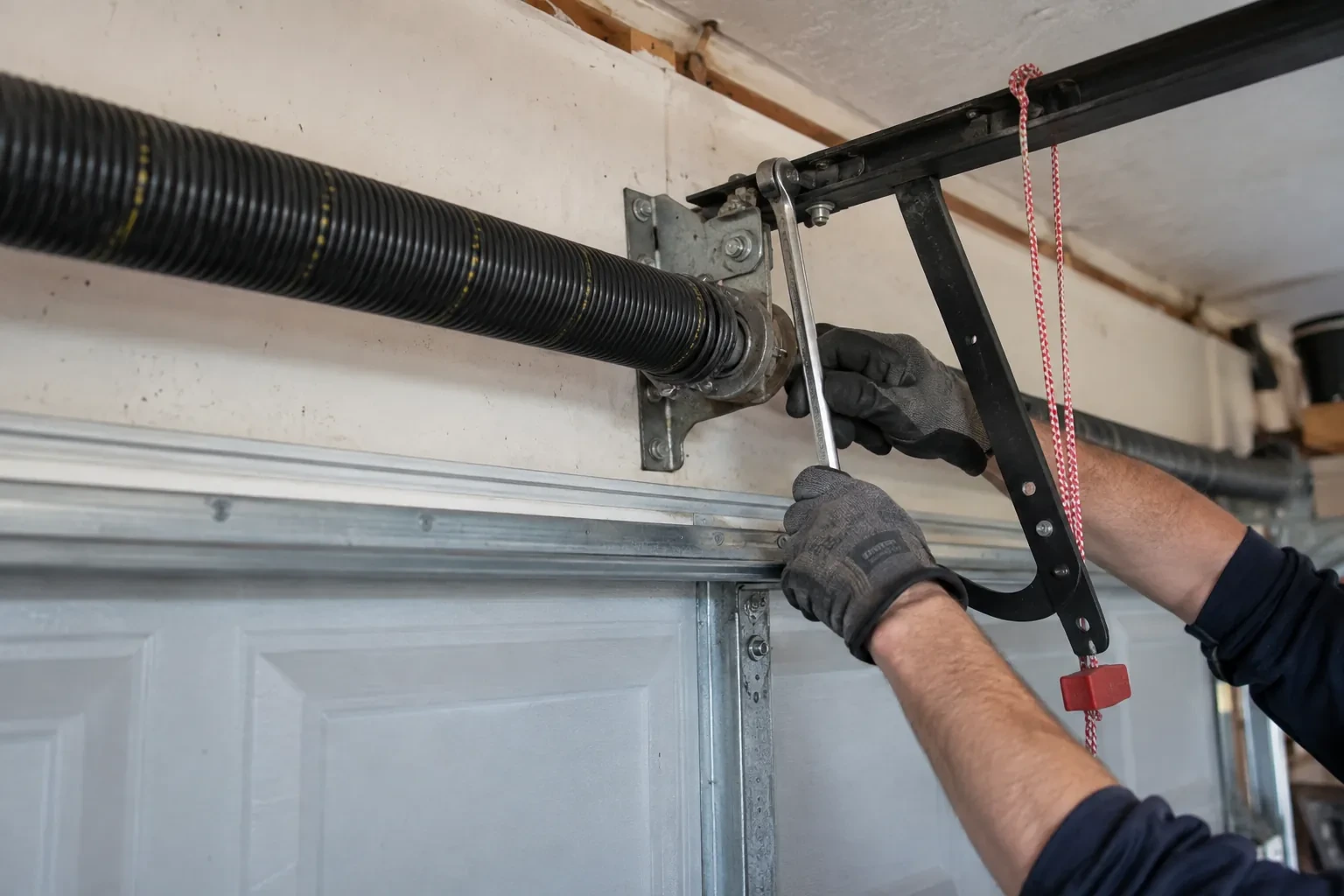
If the inspection shows a track out of line or a door out of balance behind the hinge failure, correcting it is explained and priced on its own alongside the hinge work.
Corrosion and seized fasteners
Screws rusted solid take time to drill out, and heavily corroded hinges on the lower joints are replaced rather than reused, which shows in the parts list.
Steel, wood or insulated door
A wood door takes different fasteners and often needs timber repaired around the holes; a heavy insulated door may need a heavier hinge. Construction shapes both the parts and the time.
What to have ready
- Is a roller leaning or partly out of the track anywhere?
- Did the door feel heavy, jerky or noisy before the hinge failed?
- Is the door closed, open or stuck partway right now?
Garage Door Hinge Replacement: questions
QuestionsAre hinges on a wood door different?
The hinges themselves are the same numbered galvanized parts, but the fastening changes. Wood stiles take lag screws or carriage bolts with nuts and washers rather than self-drilling metal screws, and the timber's condition matters as much as the hinge. Softened or split wood around the holes is filled, reinforced or bridged with a backer plate before the hinge goes back on, so the new hardware bites into something solid.
Why did the hinge crack in the first place?
Steel flexed often enough eventually cracks, and several things speed that up. A door out of balance is dragged by the opener, and every hinge takes the strain. A seized roller twists its hinge on each trip. A track out of line pinches the panels at the curve. A wide panel without a strut flexes at the joint. Corrosion at the low hinges thins the steel. The technician looks for which of these was at work so the new hinge is spared the same stress.
How many hinges does a typical door have?
Count the joints between panels and multiply. A single door usually carries two edge hinges and one centre hinge per joint, so a four-panel door has three joints and nine hinges. A double door adds one or two more centre hinges per joint to keep the wider panels flat. The top panel uses adjustable top fixtures rather than hinges, and the bottom corners use bottom brackets, which are different parts.
Related services
- Garage Door Track Repair or ReplacementThe door has started rubbing the frame on the left, leaving a shiny stripe down the weatherstrip.
- Garage Door Cable ReplacementThere was a sharp crack from the garage, and when you went to look the door had dropped on one side and jammed.
- Torsion Spring ReplacementLooking up at the coil above the door, you can see a clean split with a gap of several centimetres between the two halves.