Openers · Brampton
Emergency Release Repair
A previous owner knotted the release cord around the rail and stacked storage shelves right beneath it.
In plain words
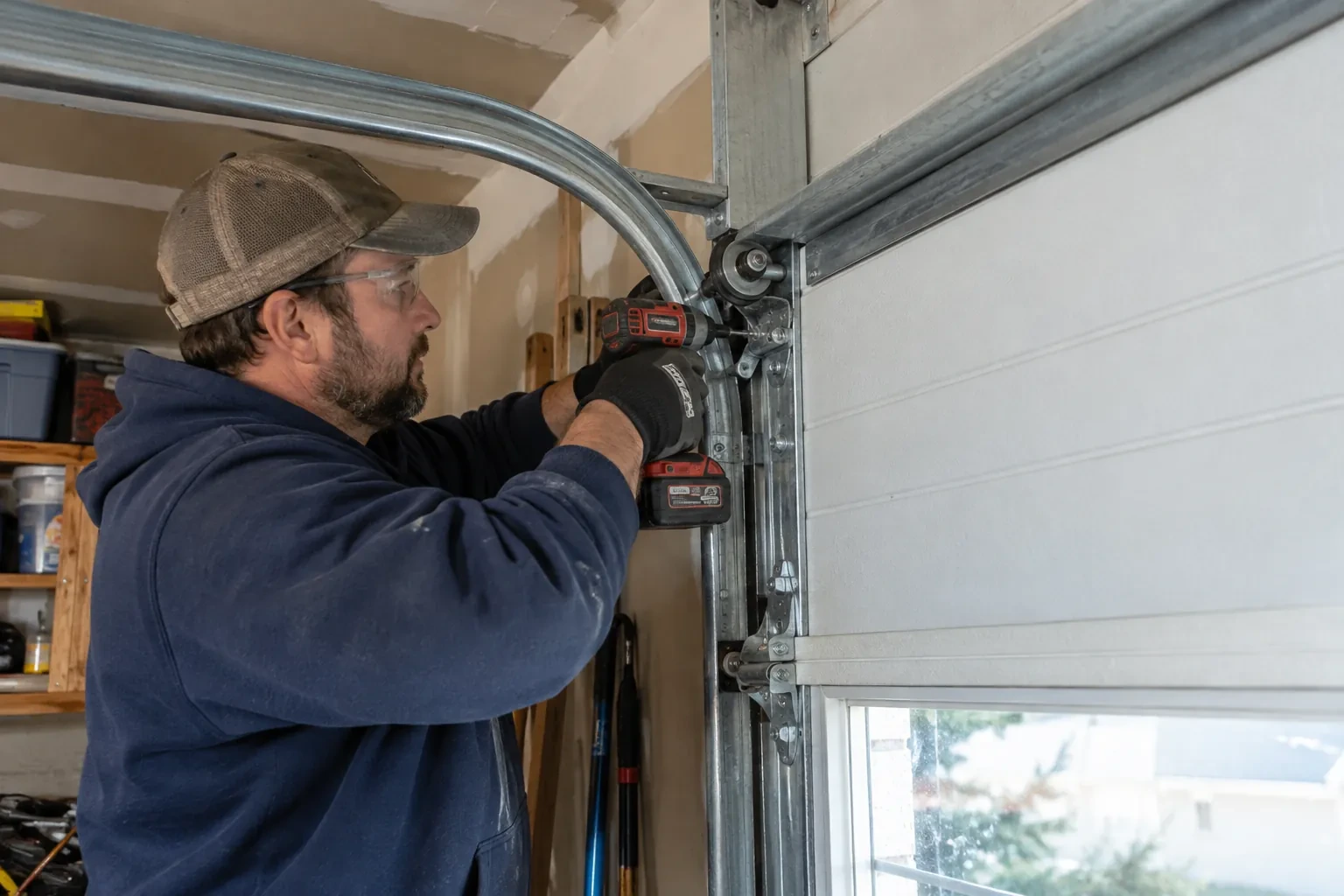
The release only earns its keep on a door that behaves once it is free of the opener, so the visit starts with the door closed and a balance test rather than with the handle. Disconnected, a healthy door lifts with modest effort, holds around a metre off the floor and stays put at the top. That is the door the release is designed for. If the door is heavy, drifts down or shoots up, the springs need attention first, work done with winding bars by a technician trained for tensioned hardware. Once the door passes, the release work goes ahead and the system is proven together.
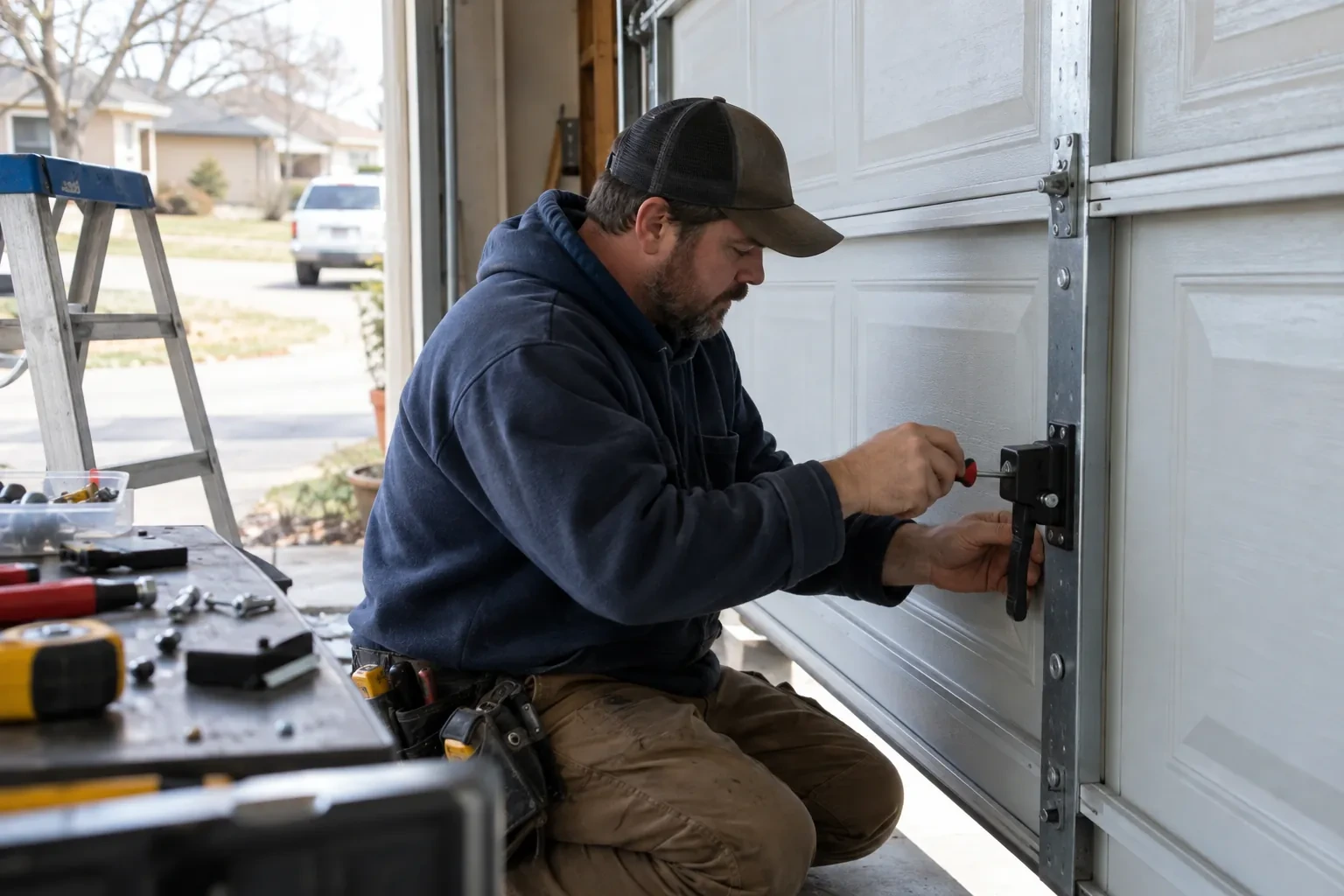
How the visit goesA previous owner knotted the release cord around the rail and stacked storage shelves right beneath it. You only discovered this in the dark, with the power off, a flashlight in your teeth and a car that needed to be somewhere.
Emergency Release Repair
How the visit goes
The outside key release, if there is one
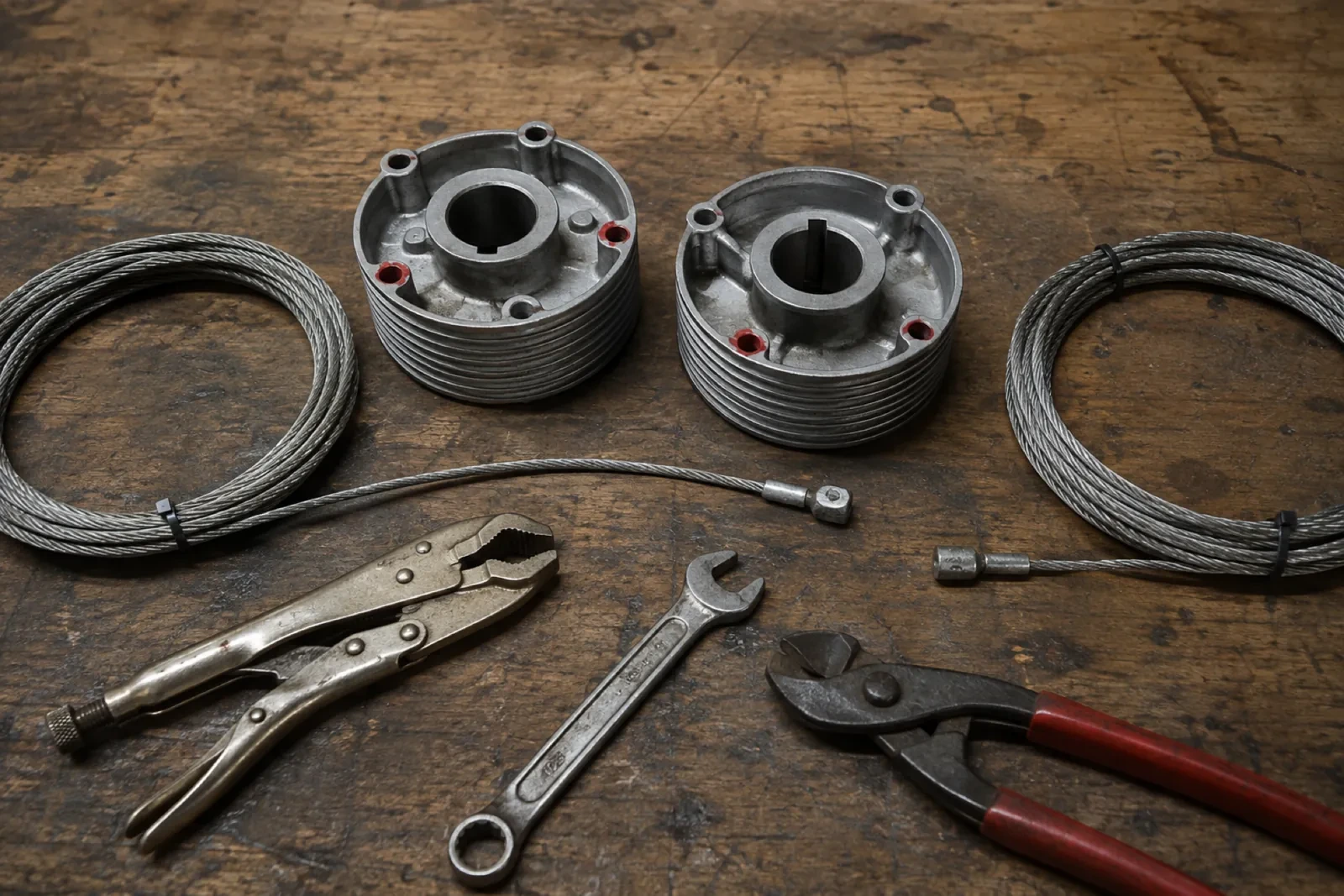
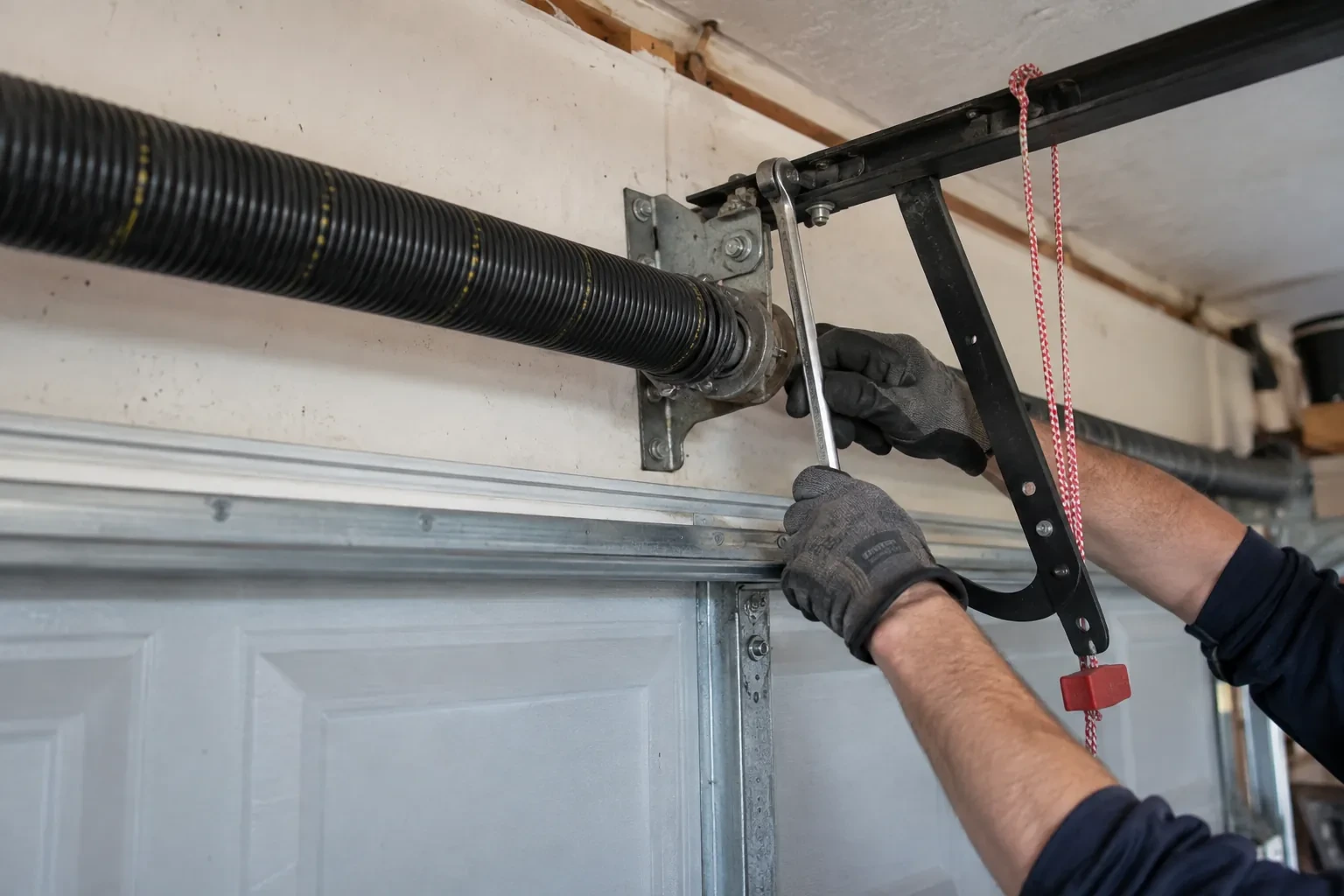
Many detached garages and some attached ones have a small keyed cylinder, set in the top section on a sectional door or at mid-height on others. The technician checks whether one is fitted, whether the key is available, and whether the cylinder turns and pulls out as designed. Behind it, a cable runs to the trolley lever; it is traced for kinks, stretch, a detached end or a route that snags on a section joint as the door bends. In winter the cylinder is checked for salt crust and ice. Where the garage has no other door, this release is the way in when the opener is silent, so its condition is treated as part of the same job.
Reconnecting and proving the latch
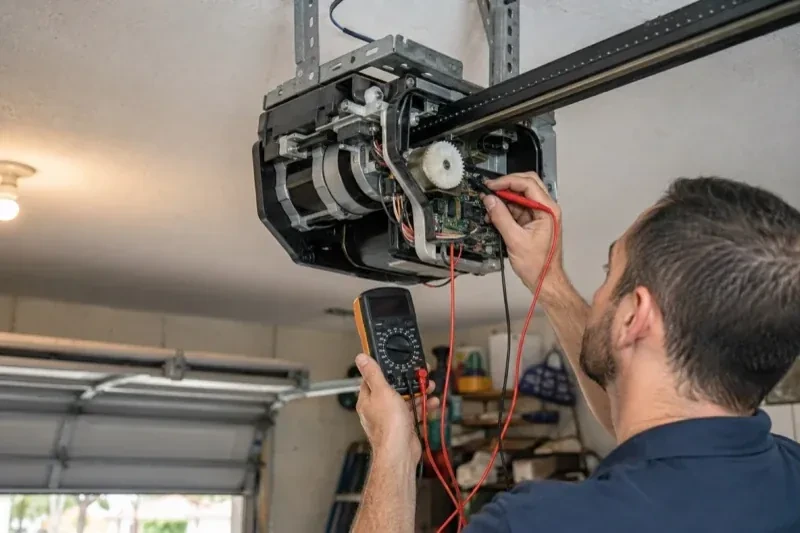
Reconnection is done the way the maker describes for that unit. On most rails the cord is pulled toward the opener so the lever drops back to horizontal, then the opener is run and the trolley picks up the carriage with an audible click on the next cycle; on others the trolley re-latches when the door is lifted until it meets the carriage. The technician watches the join through a full open and close, then pulls the release and reconnects again to be sure the sequence repeats. You are shown what the click sounds like and what a trolley that has only half-latched looks like, so you can tell the two apart.
The sequence, demonstrated on your own door
Before leaving, the technician walks through the release with you rather than describing it. Door closed. Pull the handle straight down until the lever clicks over. Lift the door by its handle or a gripping point on the panel face, never at the joint between sections. Lower it the same way. To reconnect, pull the cord toward the opener, or simply run the opener, and listen for the trolley to click onto the carriage. Anyone in the house who might face a blackout with the car inside is welcome to try it while the technician is there.
Emergency Release Repair
In the van
Trolley and carriage assembly
Garage door lubricant
Rope and red handle kit
Dry lock lubricant and de-icer
Door arm, clevis pins and clips
Emergency Release Repair
What affects the quote
Door work found by the balance test
If the disconnected door proves heavy or drifting, spring, cable or roller work comes before the release is put back into use, and that door-side work is quoted as its own item.
Opener type and rail
A chain or belt unit on a one-piece rail, a sectional square rail, a screw drive and a wall-mounted opener each use a different release part, and the part sets the shape of the job.
Cord, lever or trolley
A rope and handle is the smallest item; a lever and spring sits in the middle; a complete trolley or carriage assembly is the larger part, and the diagnosis says which one you need.
What to have ready
- Is the red handle still there, or is only the cord left?
- Do you lose power often, and would battery backup interest you?
- Does the garage have a side door or a door into the house?
Emergency Release Repair: questions
QuestionsHow do I keep the door in manual mode during a long outage?
On many rails, pull the cord straight down and then back toward the opener; the lever stays in the released position until you return it, so the trolley will not catch the door on its own. On others the trolley simply stays free until the opener is run. Lift and lower the door by its handle and use the slide bolt or manual lock to hold it shut. When power returns, reconnect first, then use the wall control.
Where should I grip the door when lifting it by hand?
Use the door's own handles or the gripping points built into the panel face, on the inside and outside of the door. Sectional doors are meant to have them near the bottom section and again on the second or third section. Never take hold at the joint between two sections, which closes as the door bends around the track. If your door has no handles or they have been removed, the technician can fit a pair during the visit.
Would battery backup mean I never need the release?
It covers most outages: the battery opens and closes the door on stored power, so the release stays on its hook. It is a wearing part that needs replacing every few years, and a status light or beep tells you when. The release is still the fallback for a flat battery or an opener that has itself failed, which is why the two are checked together. Many households on outage-prone streets keep both in working order.
Related services
- Chain-Drive Opener RepairThe motor runs, you can hear it working, but the door never moves.
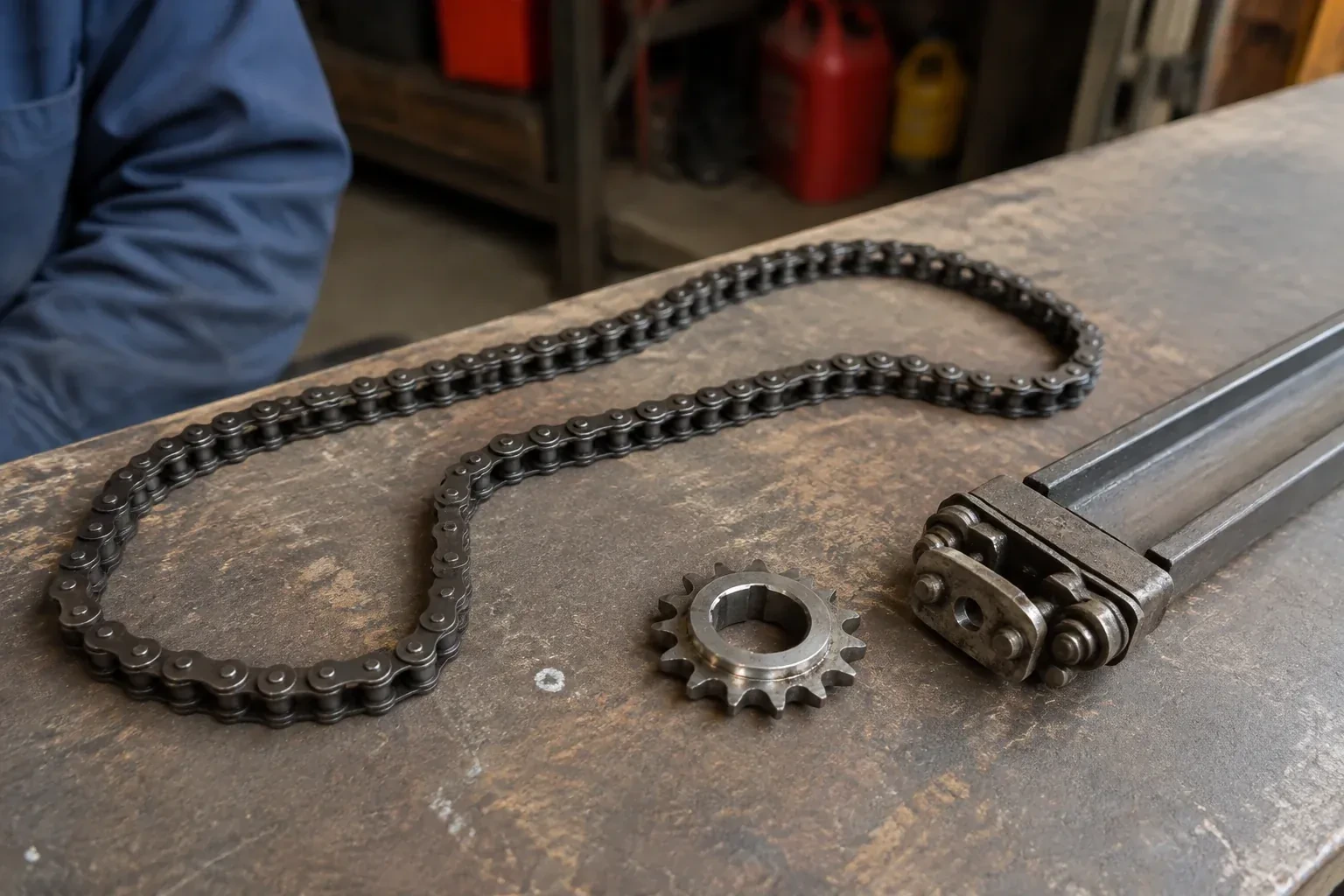
- Belt-Drive Opener RepairThere is a new squeal from the front of the rail, up near the header, on every cycle.
- Garage Door Opener ReplacementYou swapped the old wooden door for a heavier insulated steel one, and the twenty-year-old opener that was kept has never settled.