Springs · Brampton
Garage Door Hinge Replacement
After a cold night the bottom seal had frozen to the slab.
In plain words
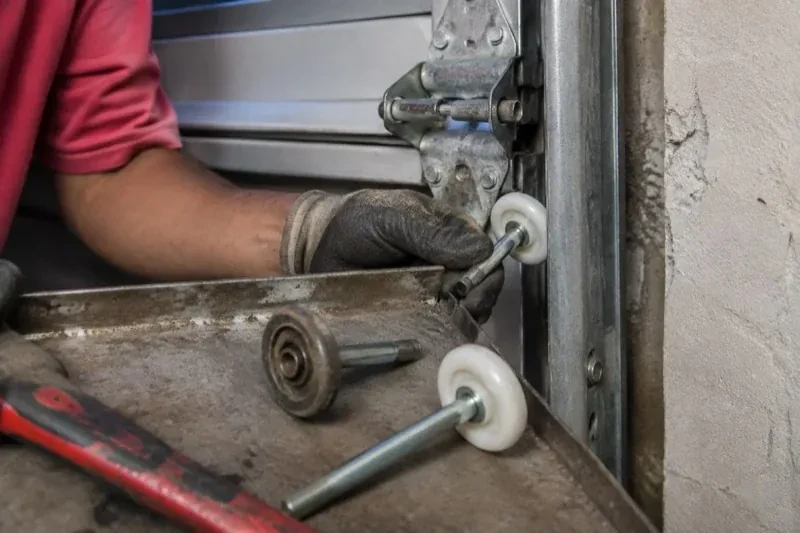
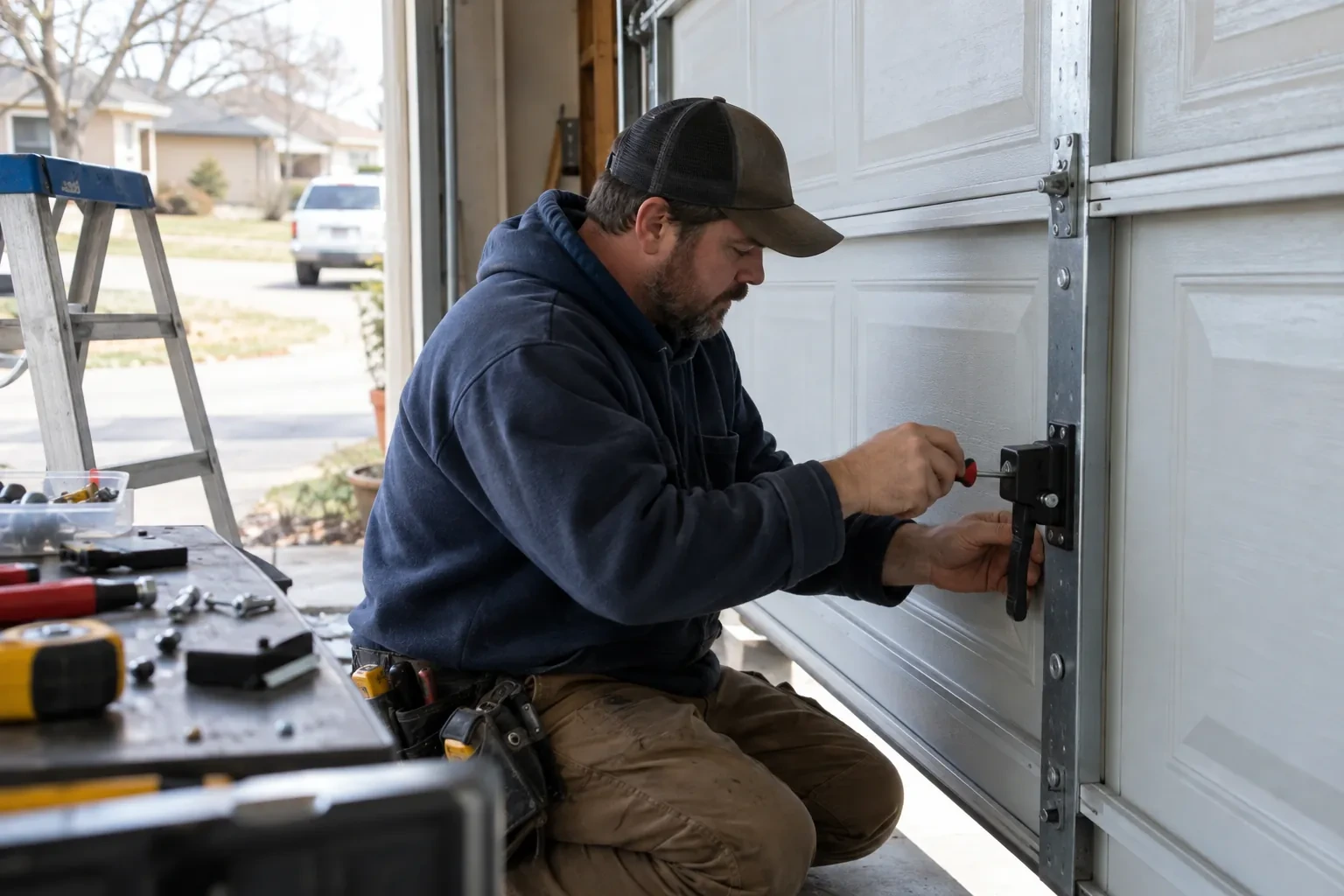
The hinge is only as good as what it is screwed to. On a steel door the screws bite into the stile, a folded steel channel at the panel edge, sometimes with a support plate behind it; on a wood door they thread into timber. Years of vibration back screws out, and once a hole is stripped the hinge rocks and the joint loosens. Hinge replacement includes fresh fasteners, and where holes have opened up the technician shifts to sound metal, steps up to a larger self-drilling screw, or bolts through the panel with a nut and washer or a backer plate. The new hinge then stays put.
How the visit goesAfter a cold night the bottom seal had frozen to the slab. The opener strained, something gave, and now one of the upper hinges sits with its leaf bent outward and the panel below it flexes when the door moves.
Garage Door Hinge Replacement
How the visit goes
Stopping the door before anything else
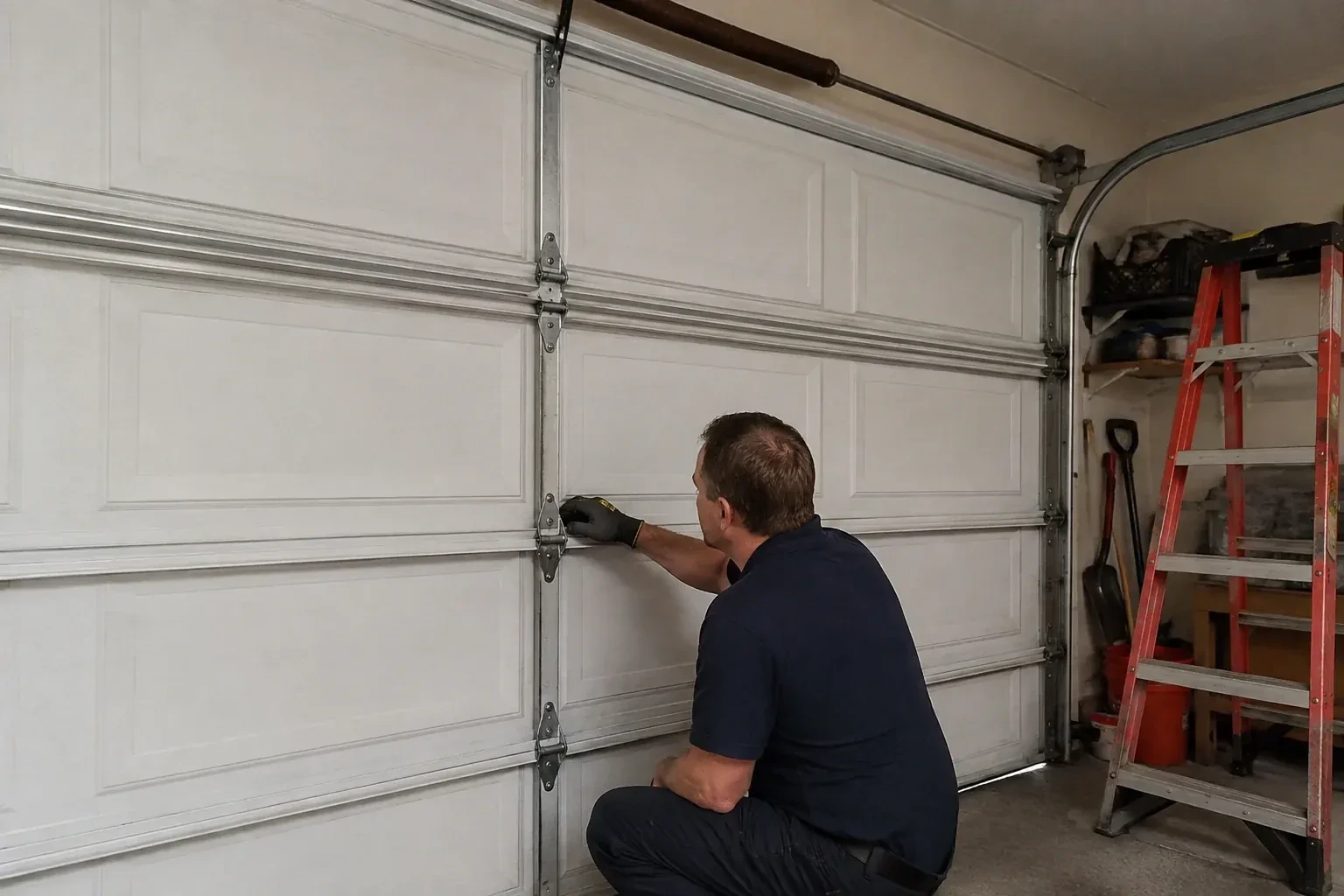
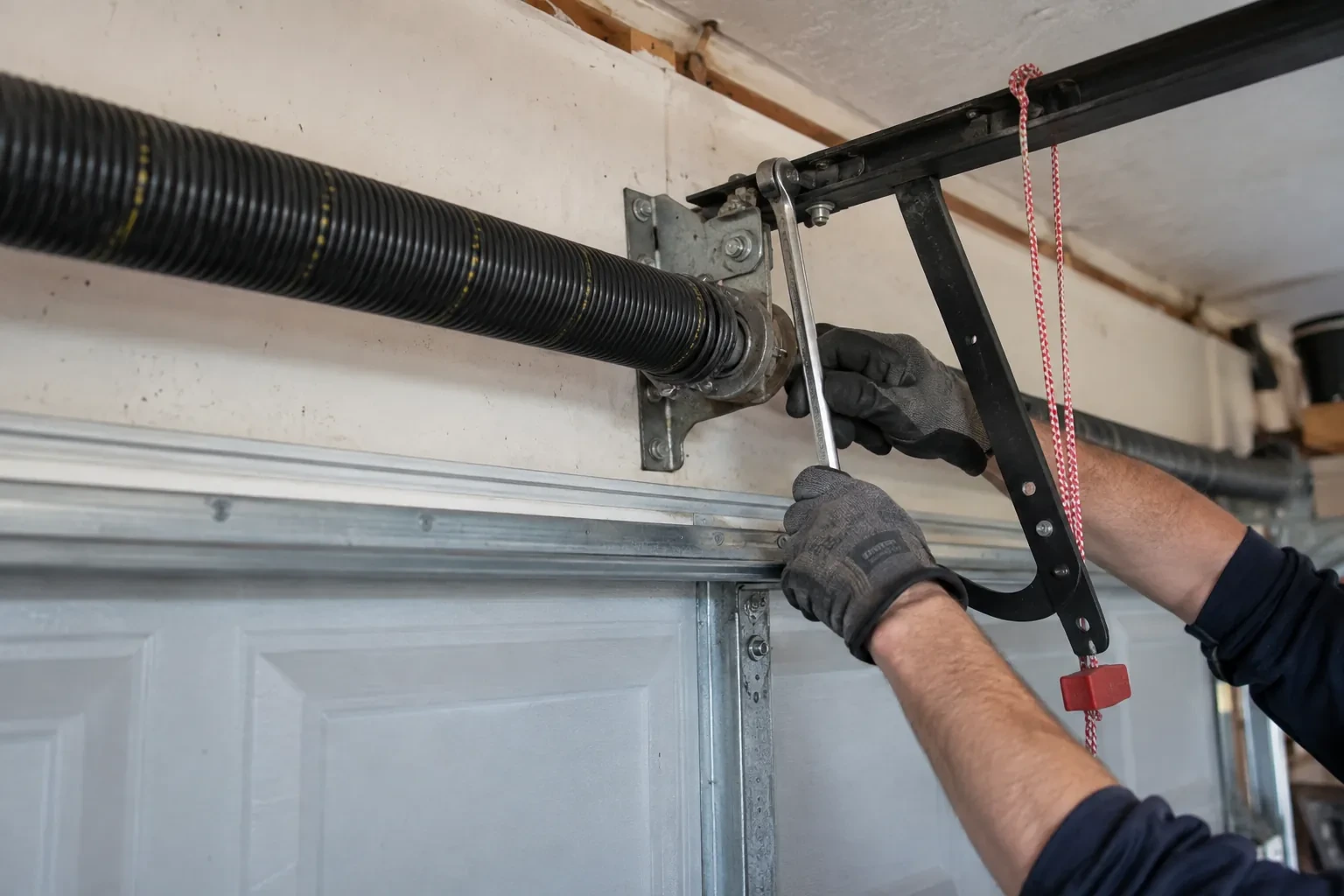
The first job is to take the door out of play. The technician pulls the opener's release cord so the motor is disconnected from the door, and leaves the door fully closed. Closed is the right position for hinge work, because each panel is resting on the one below and the bottom panel is sitting on the floor, so the hinges are holding the panels together rather than holding them up. If a hinge has already let go and a panel is hanging awkwardly, a clamp on the track or a prop under the section takes that weight before anyone touches it. Only then does the inspection begin.
Travel, fit, balance and the opener
Once every hinge is on, the door is run by hand. The technician watches each joint turn the curve, listening for the pop that started the call and looking for a gap opening between panels. The door is closed and checked for an even fit against both jambs, then raised to waist height and let go: a balanced door stays put, which confirms the hinge work has not disturbed the springs' job. Rollers are watched for staying flat in the track. Then the opener is reconnected, its travel limits confirmed, and the reversing test and photo-eye check carried out while you watch.
Screws you can tighten and hardware you leave alone
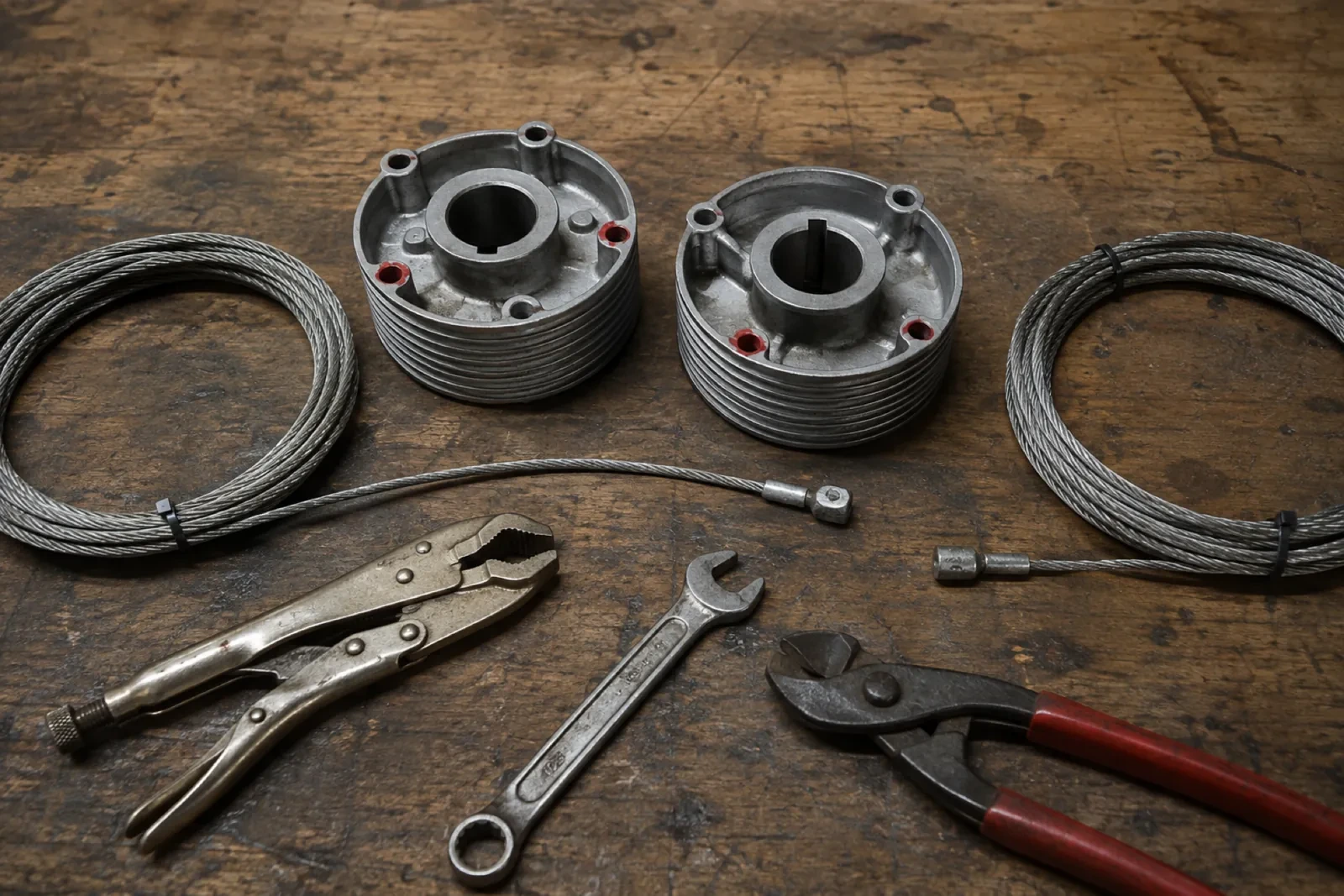
Hinge screws loosen with vibration and temperature swings, and snugging them with a socket wrench once a year is a homeowner task; do it with the door closed and the opener disconnected. The hardware to leave alone is the bottom bracket in each lower corner, which anchors the lift cable and is under spring tension whenever the springs are wound; many doors fit tamper-resistant fasteners there for that reason. The springs, cables and their brackets are the technician's job. Knowing which screws are yours and which are not is what makes the annual tighten-up both useful and uneventful.
Garage Door Hinge Replacement
In the van
Flashlight and level
Hex-head self-drilling screws
Socket set and impact driver
Hinge support plates
Silicone or lithium hinge lubricant
Garage Door Hinge Replacement
What affects the quote
A full hardware tune-up while the technician is there
Some people use the visit to have every hinge screw snugged, all rollers checked and the whole door lubricated. That service is optional and quoted as one line.
Door width and panel count
A tall or double door has more joints and more hinges per joint, so a full-door hinge refresh on a double is a bigger job than the same work on a single.
Edge hinge or centre hinge
A centre hinge unscrews and refits in a few minutes. An edge hinge carries the roller and has to be worked out of the track, so it takes longer and is often paired with a roller.
What to have ready
- Is the door closed, open or stuck partway right now?
- Did the door feel heavy, jerky or noisy before the hinge failed?
- Can you read a number stamped on the hinges near the edge?
Garage Door Hinge Replacement: questions
QuestionsAre hinges on a wood door different?
The hinges themselves are the same numbered galvanized parts, but the fastening changes. Wood stiles take lag screws or carriage bolts with nuts and washers rather than self-drilling metal screws, and the timber's condition matters as much as the hinge. Softened or split wood around the holes is filled, reinforced or bridged with a backer plate before the hinge goes back on, so the new hardware bites into something solid.
Why did the hinge crack in the first place?
Steel flexed often enough eventually cracks, and several things speed that up. A door out of balance is dragged by the opener, and every hinge takes the strain. A seized roller twists its hinge on each trip. A track out of line pinches the panels at the curve. A wide panel without a strut flexes at the joint. Corrosion at the low hinges thins the steel. The technician looks for which of these was at work so the new hinge is spared the same stress.
How many hinges does a typical door have?
Count the joints between panels and multiply. A single door usually carries two edge hinges and one centre hinge per joint, so a four-panel door has three joints and nine hinges. A double door adds one or two more centre hinges per joint to keep the wider panels flat. The top panel uses adjustable top fixtures rather than hinges, and the bottom corners use bottom brackets, which are different parts.
Related services
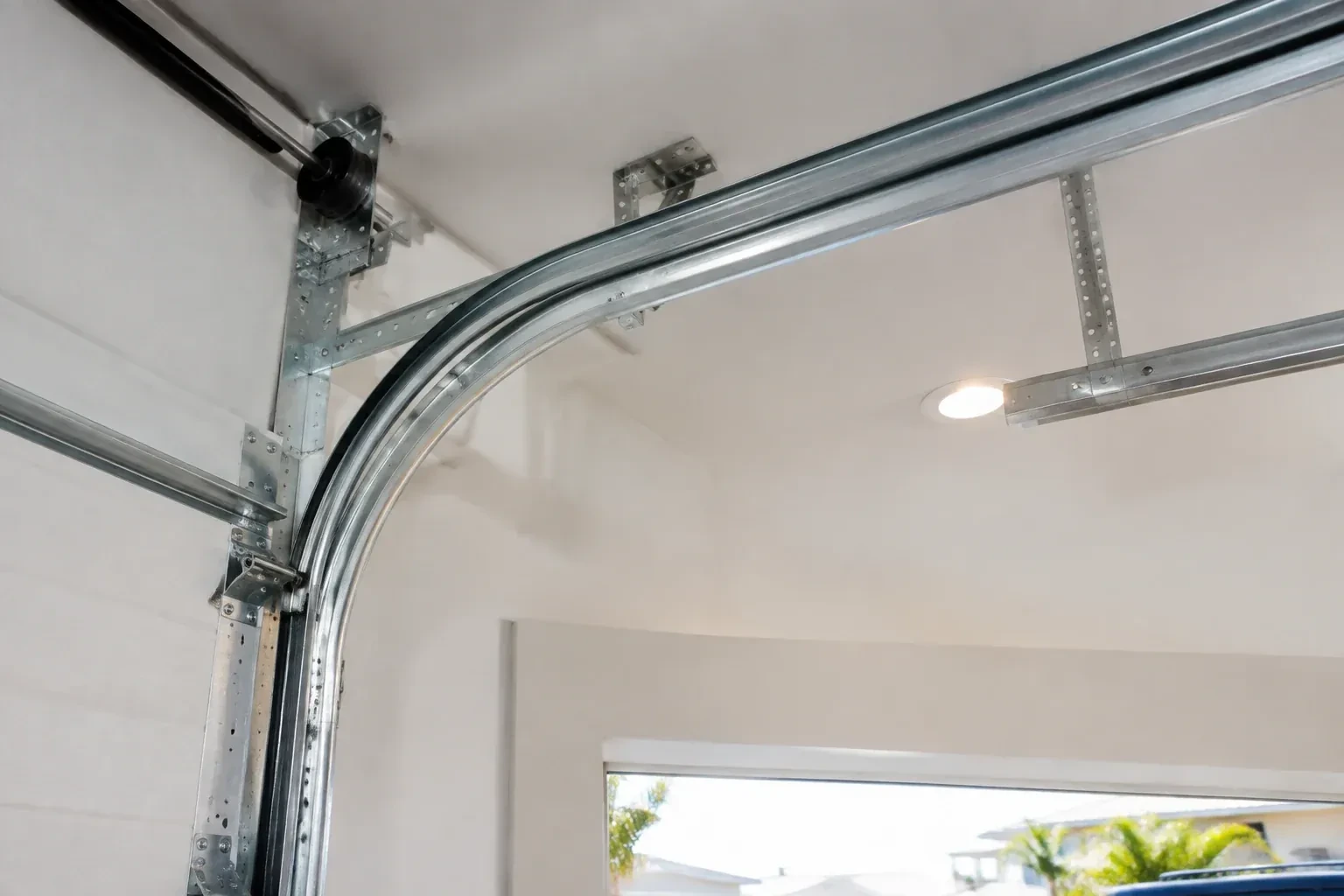
- Garage Door Track Repair or ReplacementThe door has started rubbing the frame on the left, leaving a shiny stripe down the weatherstrip.
- Garage Door Cable ReplacementThere was a sharp crack from the garage, and when you went to look the door had dropped on one side and jammed.
- Torsion Spring ReplacementLooking up at the coil above the door, you can see a clean split with a gap of several centimetres between the two halves.