Springs · Brampton
Garage Door Cable Replacement
There was a sharp crack from the garage, and when you went to look the door had dropped on one side and jammed.
In plain words
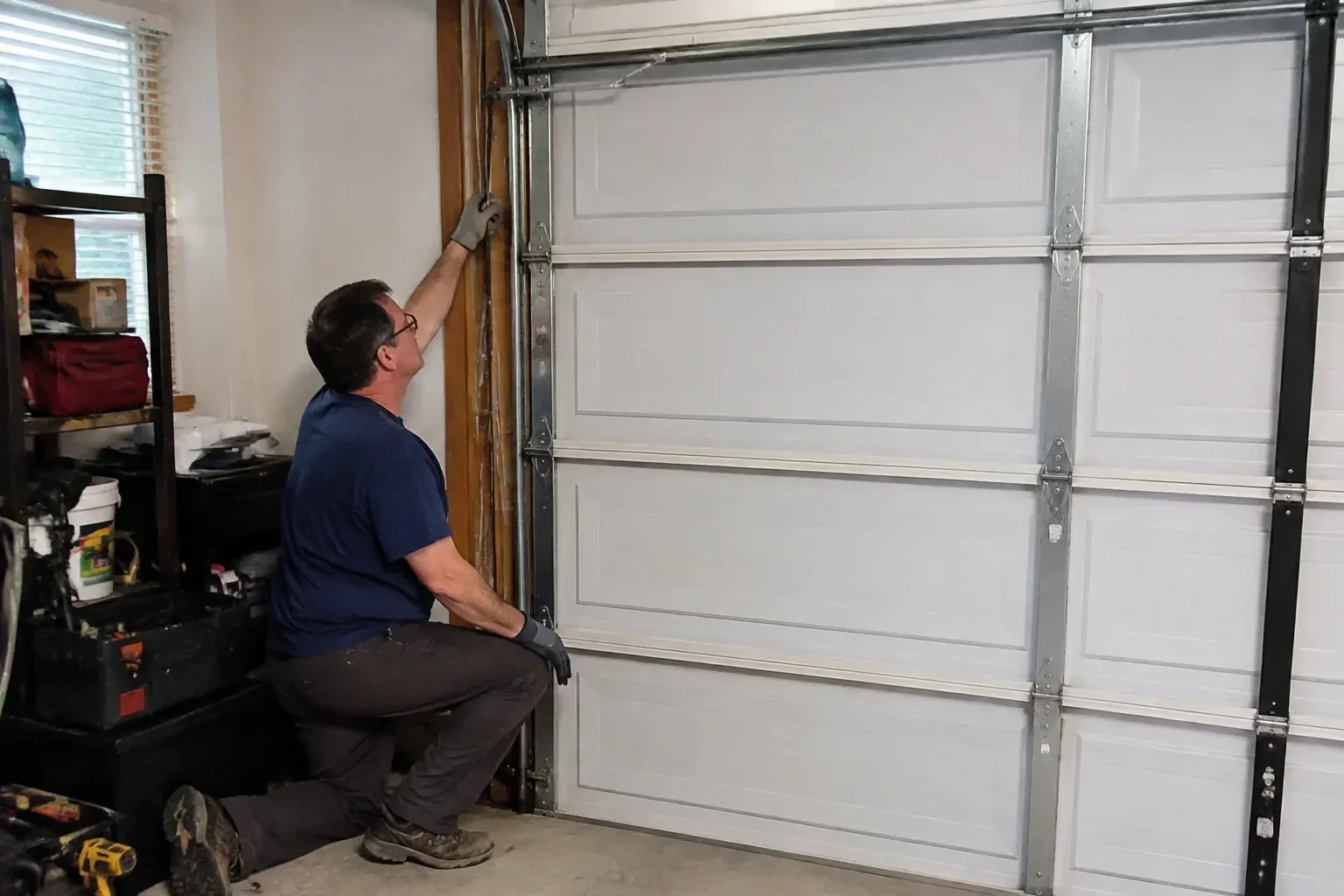
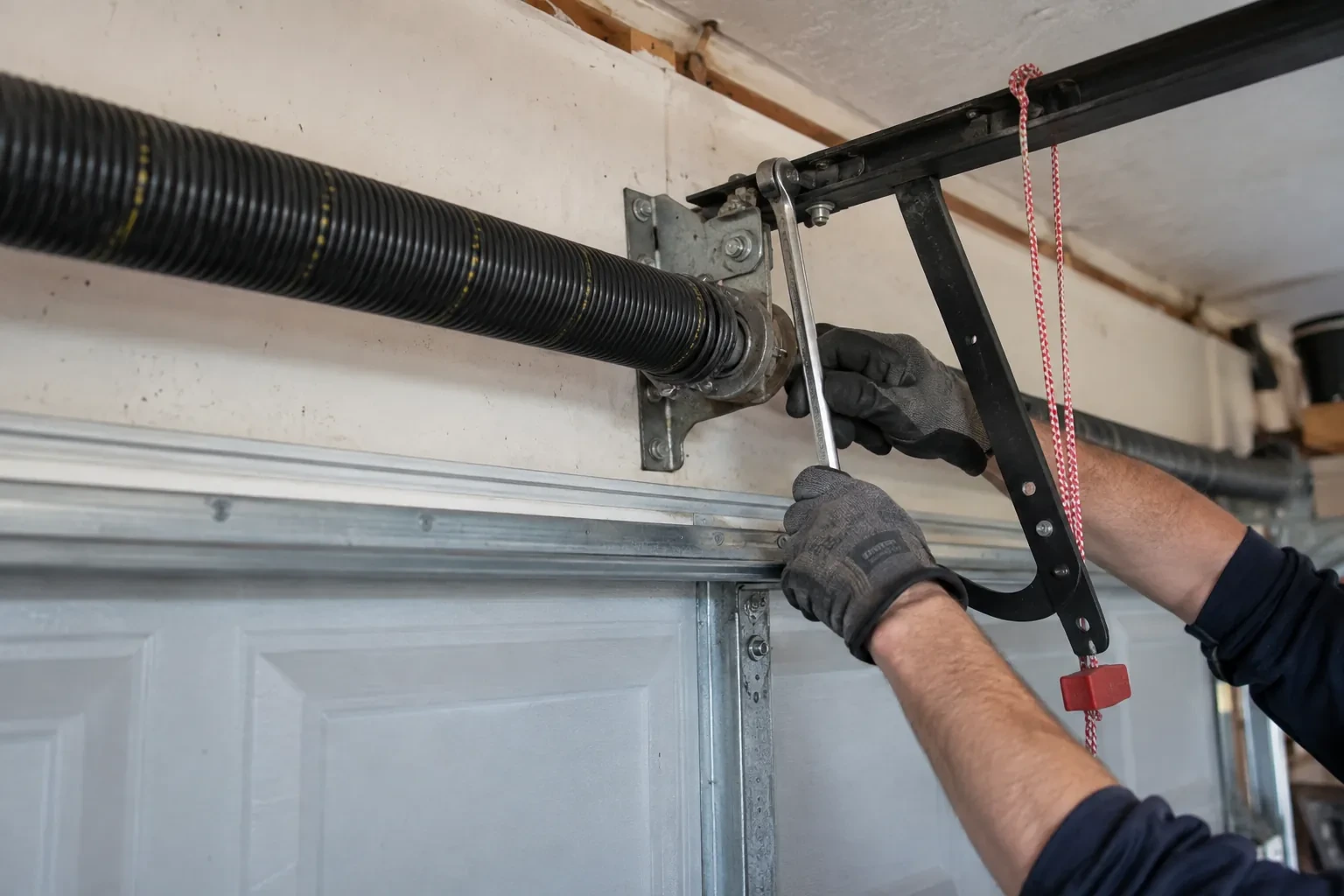
Garage door cables carry the weight of the door as tension held by the springs, which is why the work follows a careful, well-rehearsed sequence rather than simply hooking a cable back on. On a torsion system the technician clamps the door, disconnects the opener and unloads the springs with winding bars before any cable, drum or bracket is touched; on an extension system the door is instead raised fully and clamped so its pulley-mounted springs relax. Once the system is unloaded, replacing the cables is straightforward: the correct length is set, and the counterbalance is tensioned and locked off by the method that system calls for.
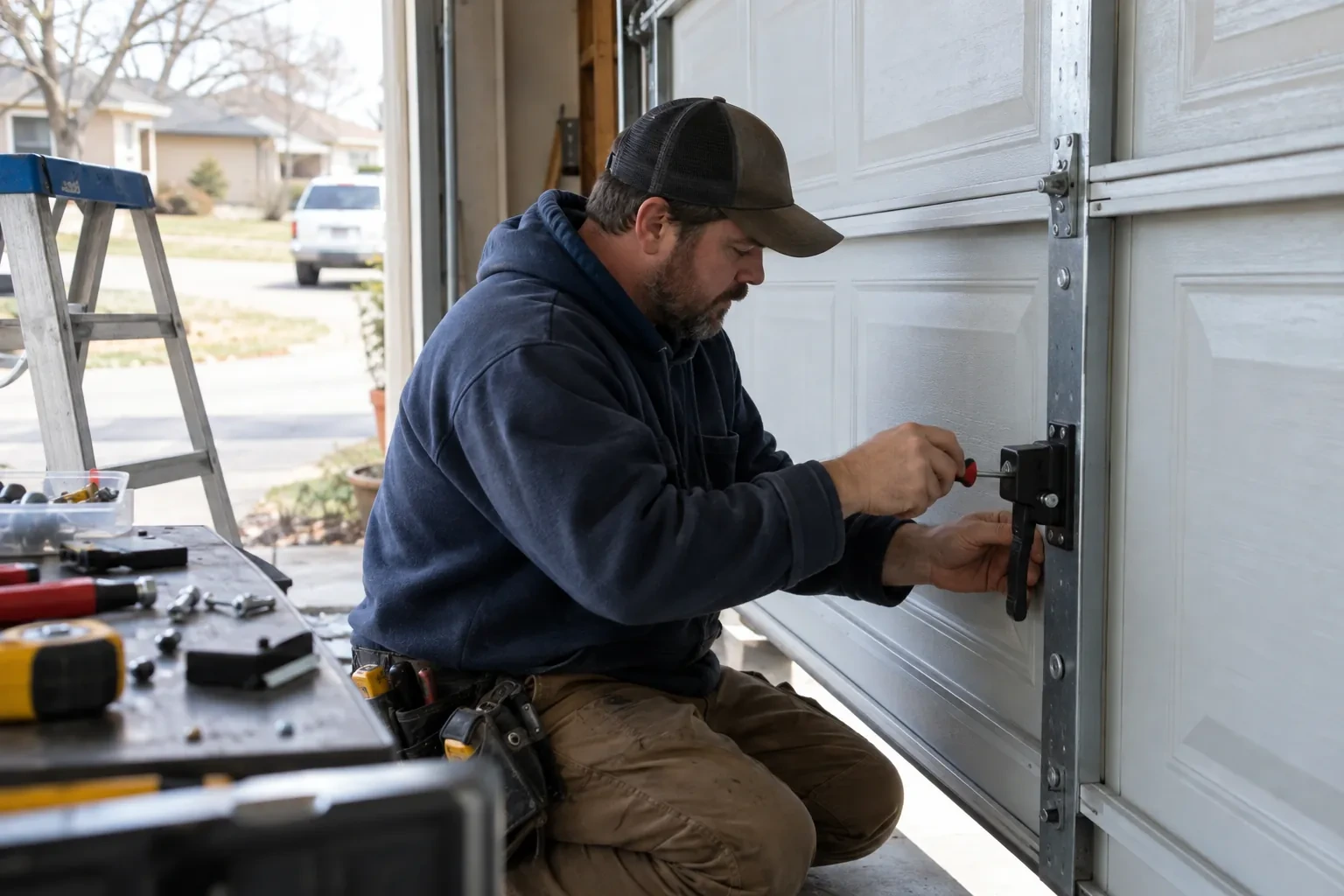
How the visit goesThe car bumper kissed the door on the way in. The bottom panel has a dent, the bracket in that corner sits crooked, and the cable on that side has jumped and gone slack, so the door reverses every time it tries to close.
Garage Door Cable Replacement
How the visit goes
Bottom brackets and the pin the cable rides on
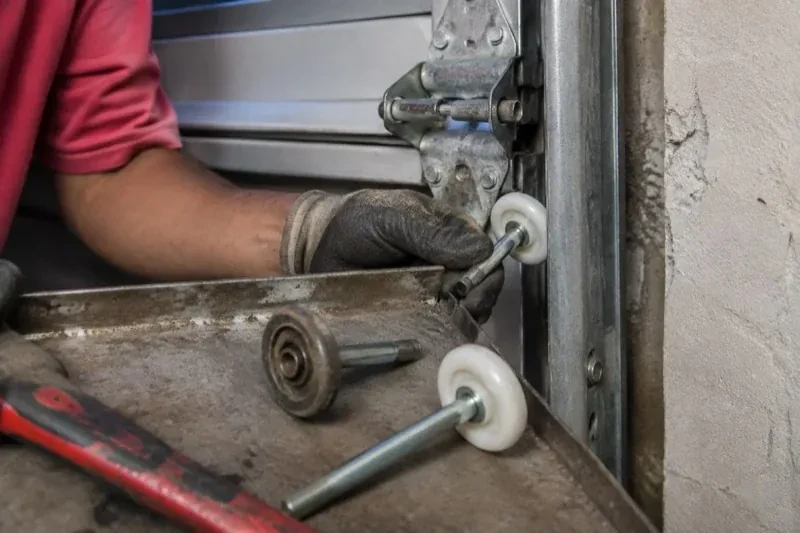
The bottom bracket in each corner anchors the cable and carries the bottom roller, and it lives in the wettest, saltiest spot on the door. The technician looks for bending from an impact, corrosion around the cable pin and the fasteners into the section, and a roller that has seized or lost its stem bearing. On many doors these brackets have tamper-resistant fasteners because they are under load whenever the springs are tensioned, so they are inspected as found and only removed once the counterbalance is unloaded. A bracket that is bent or rusted through is scheduled for replacement in the same visit so the new cable has a sound anchor.
Fitting cables that match the door
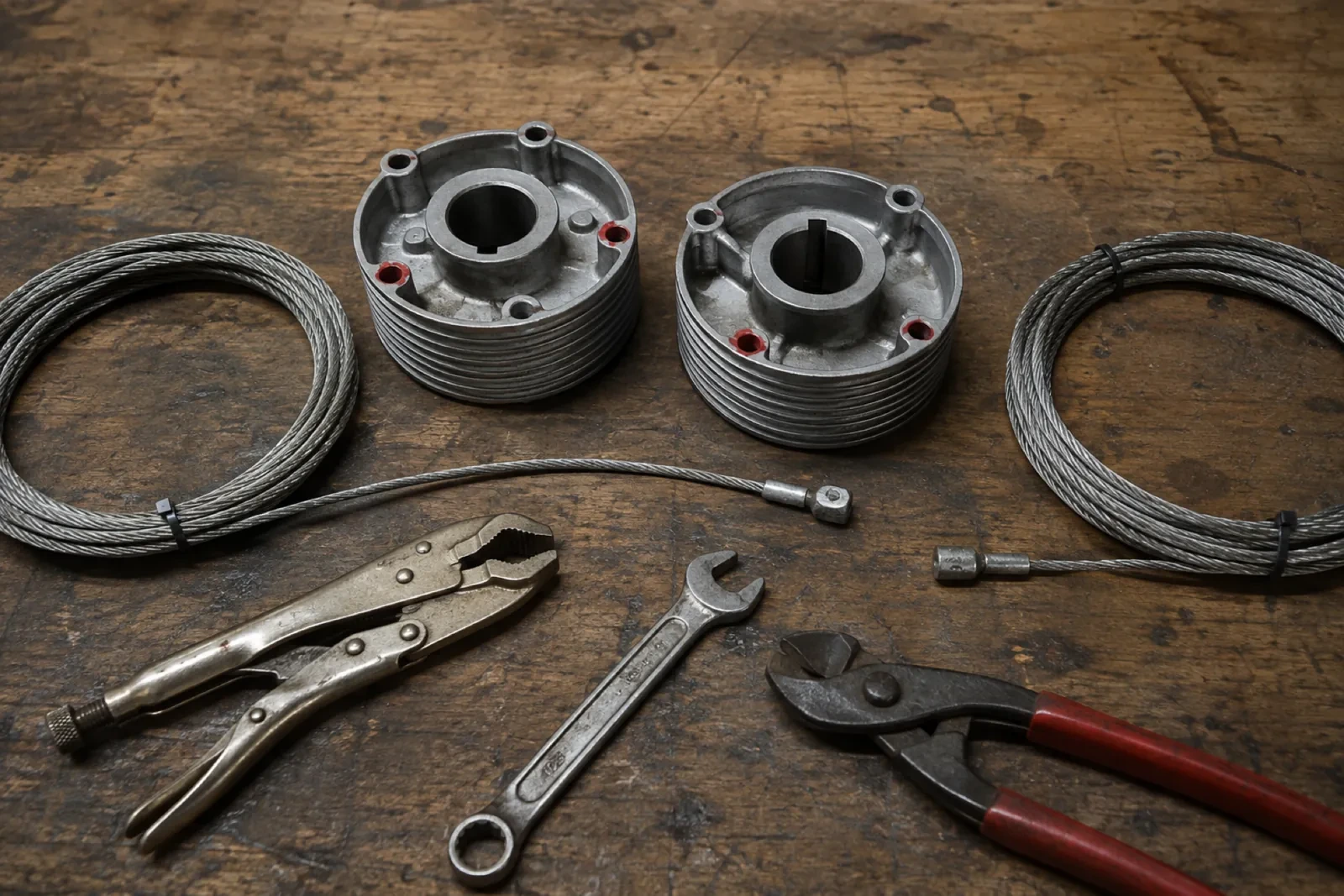
The replacement cables are chosen for construction, diameter and length rather than taken from a general bin. Residential doors use galvanized aircraft-type wire rope, and the length depends on the door height, the drum profile and the lift type; a high-lift door or a double door has its own requirements. The swaged stop on the new cable is seated in the drum slot and the cable is wrapped in the groove in the correct direction, leaving the drum on the side that leads straight down to the bracket. At the bottom, the loop goes over the bracket pin and is secured. The other side is fitted the same way.
A door that runs level and quiet
The first thing you notice is a door that rises squarely, with both bottom corners leaving the floor together and the top section staying flat as it turns into the horizontal track. The bottom seal meets the slab along its whole length, so the draft and the strip of daylight at one corner are gone. The opener sounds calmer, because it is moving a balanced door rather than dragging a crooked one, and it stops reversing for no apparent reason. If you lift the door by hand with the opener released, it moves with light effort and holds where you leave it. That is what a correctly cabled door feels like.
Garage Door Cable Replacement
In the van
Silicone garage-door lubricant
Clevis pins and cotter pins
Drum set screws
Bottom rollers and hinges
Cable drums, matched pair
Garage Door Cable Replacement
What affects the quote
Opener adjustment afterwards
A newly balanced door often needs the opener's travel limits and force settings reset and its reversing tested. That short adjustment is named in the quote when it is needed.
Access to the spring shaft
Shelving, storage or a low ceiling around the torsion shaft and drums slows the work. Clearing the area beforehand or a tighter working space both affect the time quoted.
Impact damage to track or sections
A bumper strike often bends the track, a hinge or the bottom section as well as displacing the cable. Straightening or replacing those parts is quoted as separate work.
What to have ready
- Is the door closed, fully open, or stuck partway?
- Is the door sitting level, or is one corner higher than the other?
- Did the door come down on something, or did a vehicle touch it?
Garage Door Cable Replacement: questions
QuestionsShould I keep using the opener until the technician arrives?
It is better to leave the door where it is and use another way in and out. Running the opener against a crooked or cable-slack door tends to tangle the cable further, twist the top section and knock the door out of its track, which adds to the repair. Pull nothing and adjust nothing; simply keep the opening clear and let the technician take it from there.
Can a cable be too long or too short for the door?
Yes, and both cause trouble. A cable that is too long runs out of drum groove and starts a second layer over the first, which wears it and throws the balance off near the top of travel. A cable that is too short leaves the door hanging out of level or the drum without a secure wrap. The correct length comes from the door height, the drum and the lift type, so the technician measures rather than guesses.
Can I use the door as soon as the work is finished?
Yes. The visit ends with the door balanced by hand, run through full cycles and the opener reconnected and tested, so it is ready for normal use the moment the technician packs up. There is no settling period for cables. It is a good idea to watch the first few openings yourself to get a sense of how a level, balanced door sounds, so you notice any change later.
Related services
- Garage Door Hinge ReplacementAfter a cold night the bottom seal had frozen to the slab.
- Garage Door Track Repair or ReplacementThe door has started rubbing the frame on the left, leaving a shiny stripe down the weatherstrip.
- Torsion Spring ReplacementLooking up at the coil above the door, you can see a clean split with a gap of several centimetres between the two halves.