New Doors · Bramalea Woods
Commercial Sectional Door Repair in Bramalea Woods
Each opening cycle brings a metallic knock followed by a shudder through the horizontal track.
In plain words
A powered door works properly only when its mechanical assembly and operator agree. Repair may involve restoring smooth manual movement first, then checking the drive connection, limits, brake or clutch, control station and entrapment-protection devices. This order keeps an operator adjustment from masking a heavy, binding or unbalanced door. After the underlying hardware moves freely, travel settings are brought back to the actual open and closed positions, sensors are aligned, and the system is tested from each normal control point.
How the visit goesThe door reaches the floor, then reverses before staying closed. The threshold is clear, but a sensing edge is distorted and one photoelectric sensor has moved out of line with its partner.
Commercial Sectional Door Repair
How the visit goes
Inspecting the closed opening
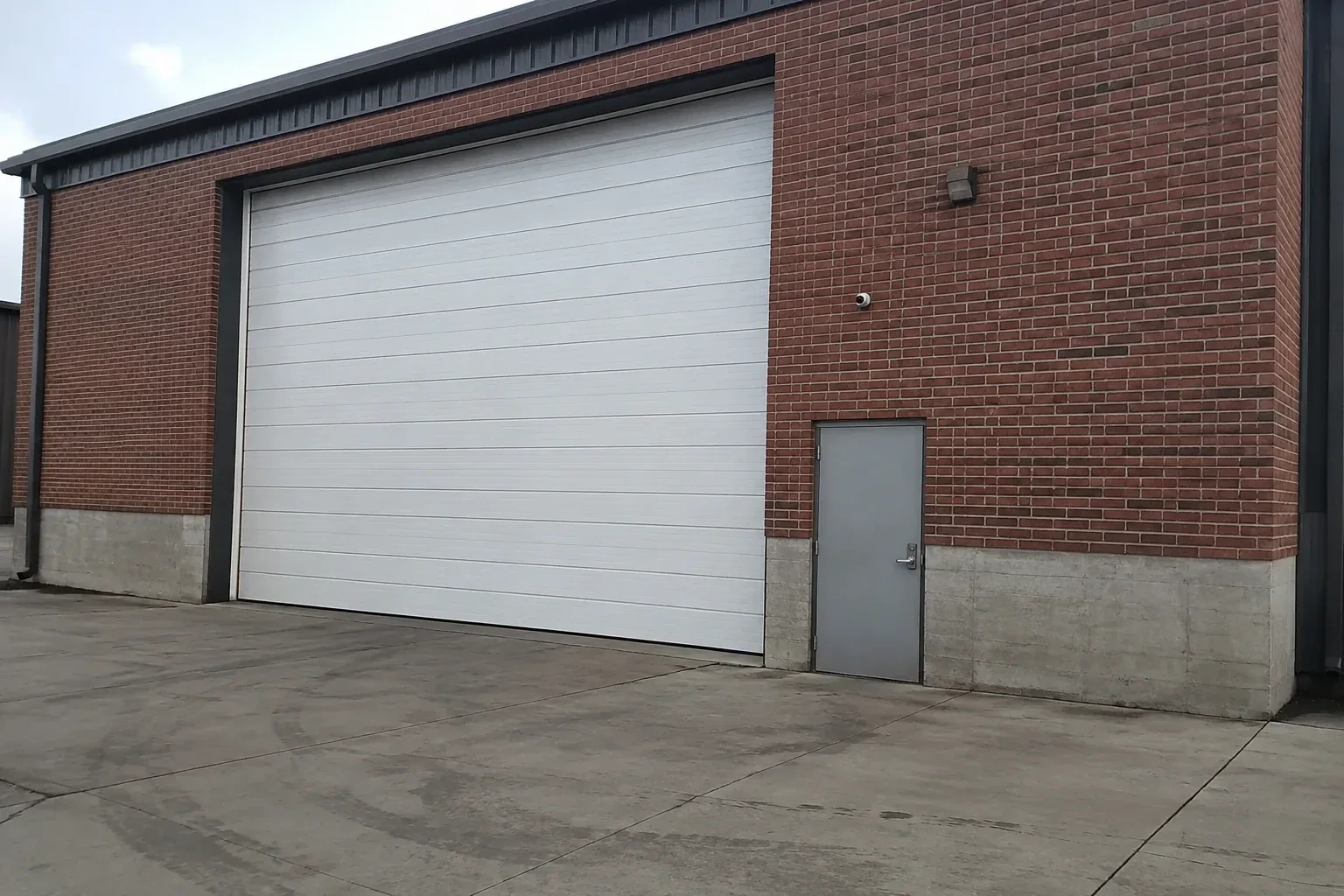
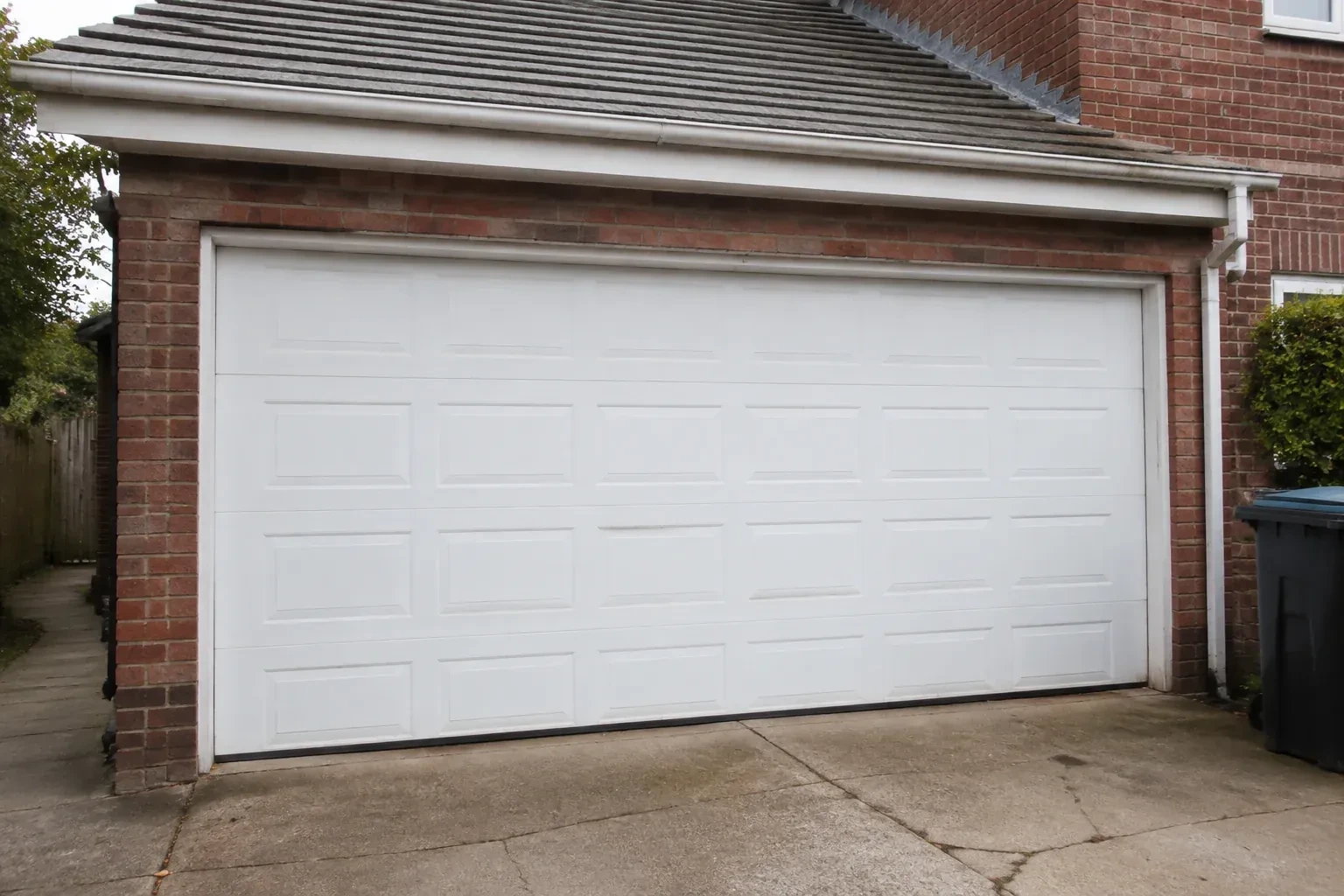
A door that leaks air or admits slush is examined in its fully seated position. The technician compares the bottom edge with the floor, checks compression along the seal and looks for a bent retainer or distorted lower section. Side and header weatherstrip contact is observed without forcing the sections against the jambs. Light gaps can also reveal a door that is out of level or a track set too far from the opening. The assessment connects seal condition with landing position so the repair improves fit without creating binding during travel.
Correcting operator travel
Operator work follows the mechanical repair. The drive chain, sprockets, shaft connection, manual hoist, brake or clutch are inspected and adjusted according to the installed unit's instructions. Open and closed limits are set to the actual door positions without driving sections against stops or compressing seals excessively. Control wiring and stop functions are checked, followed by the photoelectric sensors or sensing edge supplied with the system. Several commanded cycles confirm consistent stopping, reversing and seating from the controls normally used by the facility.
A better seal at the threshold
The renewed bottom retainer and seal follow the floor more evenly, reducing the route for drafts, grit and slush. The threshold still benefits from regular clearing, especially when packed snow or ice changes where the door lands. Drainage near the opening should direct meltwater away instead of leaving it beneath the rubber. Staff can inspect the seal ends for shrinkage, tearing or displacement during cleaning. Catching a small gap early protects the lower panel and helps keep corrosive moisture away from nearby brackets and cable connections.
Commercial Sectional Door Repair
In the van
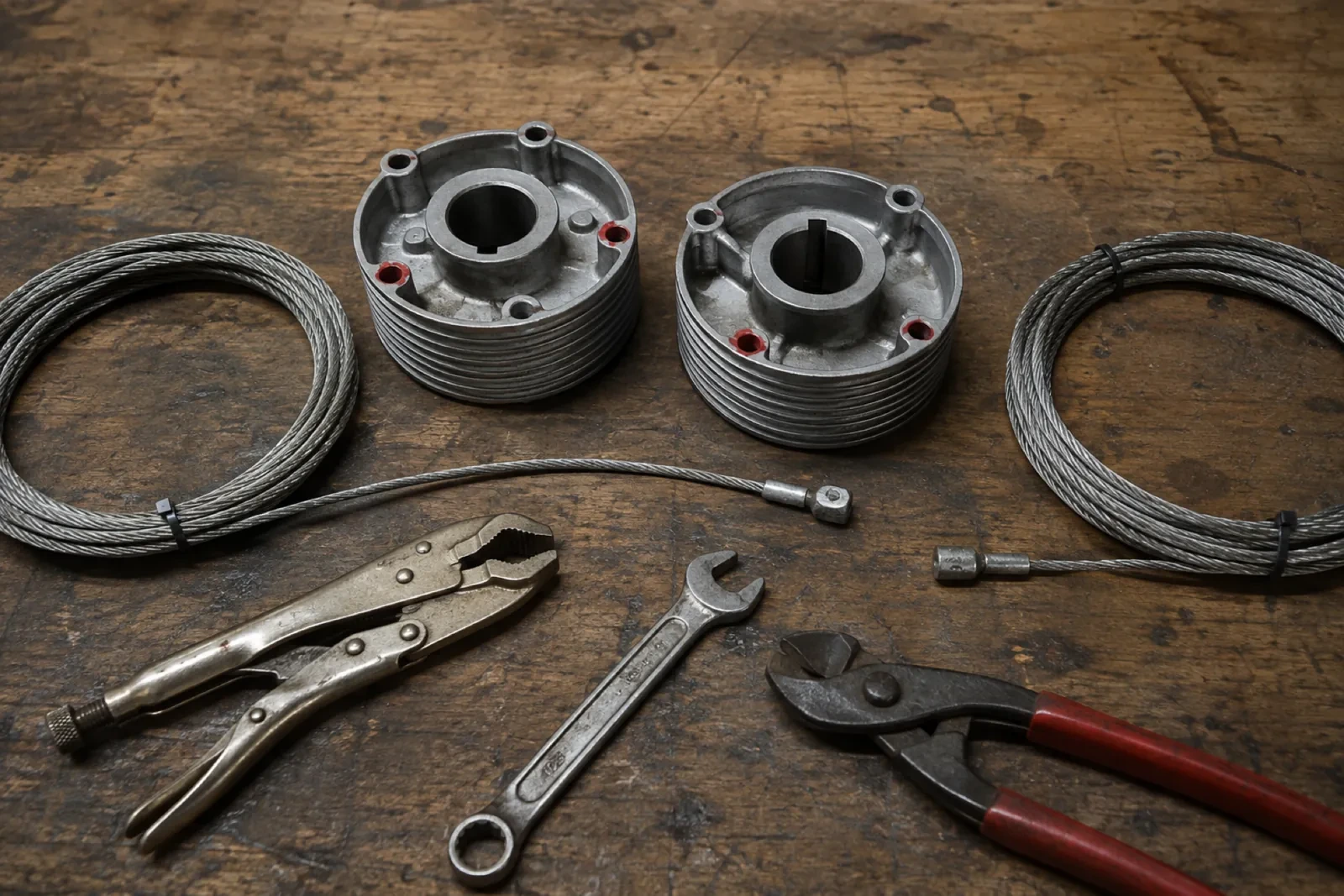
Lift cables and drums
Vertical and horizontal track
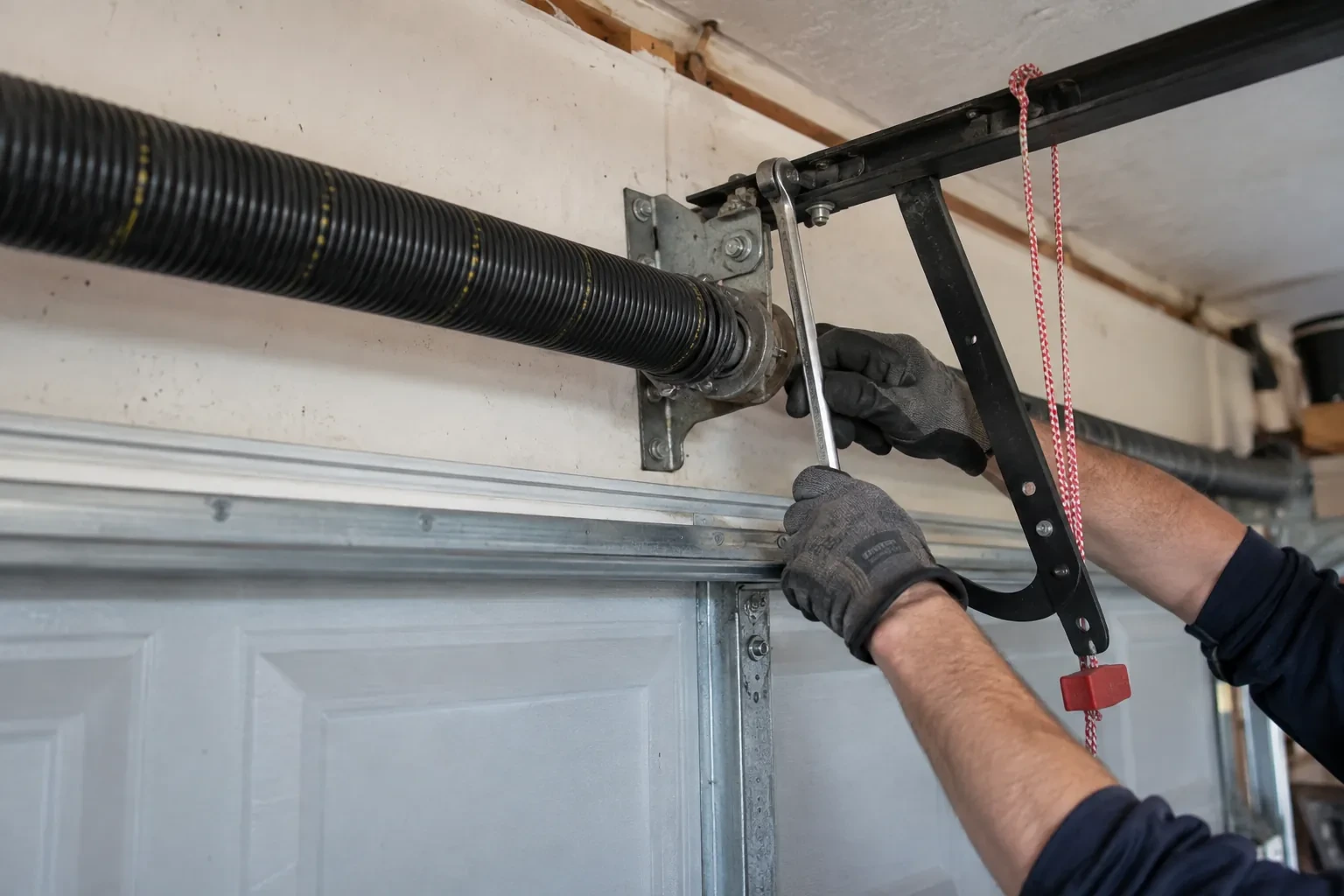
Torsion springs
Bottom seal and retainer
Numbered end hinges
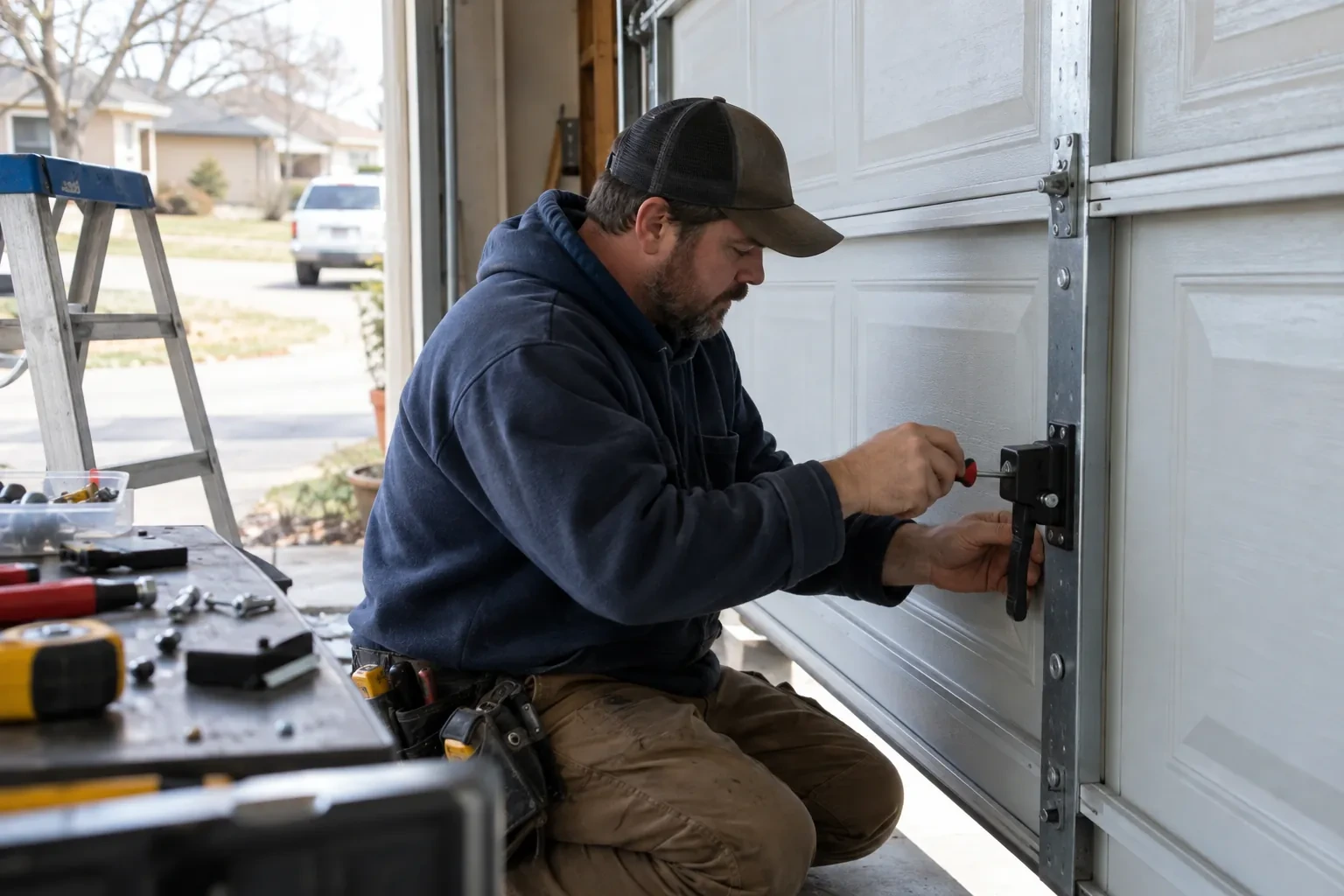
Commercial Sectional Door Repair
What affects the quote
Documentation or rated-assembly needs
Door labels, fire-safety records, site procedures and required test documentation can add coordination and component-verification steps to work on a regulated closure.
Number of affected openings
A single bay with one defined fault differs from a facility request covering several numbered doors, separate symptoms and individual operational tests.
Door size and moving weight
Opening dimensions, panel construction, reinforcement and overall door weight determine component ratings, handling methods and how much support is required during the repair.
What to have ready
- Is the door closed, open or stopped between positions?
- Where during travel does the sound or hesitation occur?
- Can traffic use another opening during the work?
Commercial Sectional Door Repair: questions
QuestionsHow often should commercial door hardware be inspected?
The appropriate interval follows the door and operator manuals, operating cycles, environment and facility maintenance plan. A heavily used exterior bay may need attention more often than a lightly used interior opening. Staff can still observe cables, seals, sensors, sound and travel during normal operation, while tensioned components and adjustments remain part of a technician's planned inspection.
What causes a commercial sectional door to become noisy?
Common sources include roller-bearing wear, loose hinges, dry pivots, a rubbing panel, track movement, shaft-bearing wear and operator-chain vibration. The point in the cycle where the sound occurs helps isolate it. A technician watches and listens during controlled travel, looks for play or contact marks, and services the component creating the repeatable noise.
How are springs and cables handled during repair?
The technician first controls the door's weight and position with suitable supports or clamps. Stored spring energy is then managed with proper winding tools and a defined sequence before connected parts are loosened. Cables, drums and springs are matched to the door and lift geometry, installed with the system secured, and checked for level tension through controlled movement.
Related services
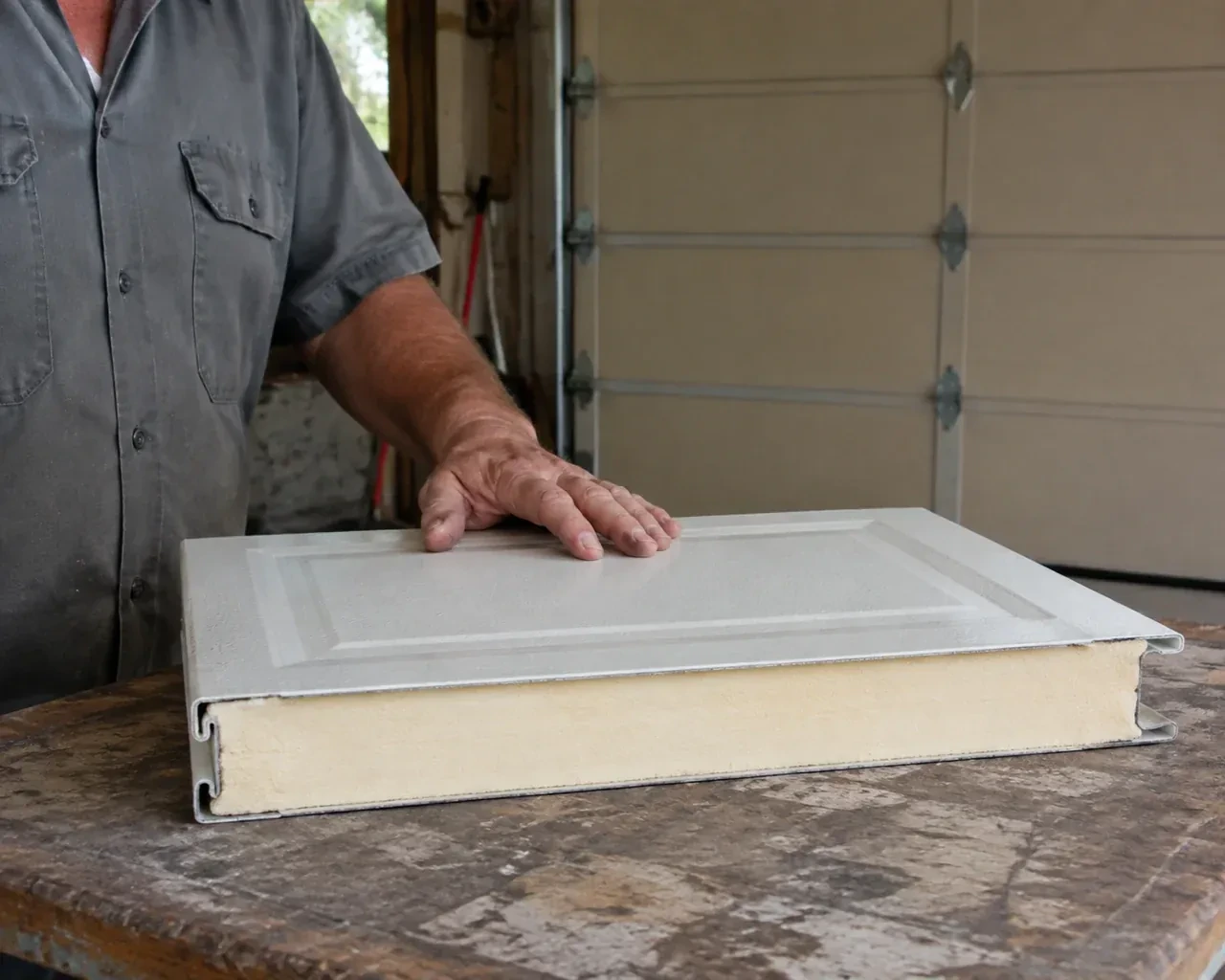
- Insulated Steel Garage Door InstallationA refreshed exterior has made the faded garage door stand out.
- Wind-Rated Garage Door ReplacementStrong gusts make the centre of your wide garage door bow inward and the rollers chatter in their tracks.
- Carriage-House Garage Door InstallationThe existing door has reached the point where panels, rollers and finish all look tired.